Live Wire
06:40ZTHECRADLEMOvernight clashes reported near Kfar Tebnit in southern Lebanon's Nabatieh District06:40ZTHECRADLEMOvernight clashes reported near Kfar Tebnit in southern Lebanon's Nabatieh District06:39ZTASNIMNEWSSmotrich: Israel will never withdraw from Lebanon06:38ZTASNIMNEWSIran MP Seeks Clarity on Border Currency Trade with Afghanistan06:38ZNOELREPORTSevastopol Governor Announces Free Fuel Sales From 10 AM at Crimean Stations06:38ZBBCWORLDOFBrazil convicts Jair Bolsonaro's son of seeking US help in father's legal battle06:36ZINTELSLAVAUS sanctions on Russian oil supplies reinstated after month-long relaxation06:36ZJAHANTASNIIsraeli Finance Minister Smotrich says Israel would stay in Lebanon for years if necessary
Markets
S&P 500750.33 0.60%Nasdaq26,376 1.15%Nasdaq 10029,968 1.89%Dow521.44 0.58%Nikkei94.12 0.06%China 5034.56 1.57%Europe90.01 0.16%DAX41.77 0.17%BTC$65,573 1.27%ETH$1,787 0.89%BNB$606.22 1.53%XRP$1.21 2.02%SOL$73.26 1.03%TRX$0.3178 0.03%HYPE$73.01 0.83%DOGE$0.0868 0.82%LEO$9.68 0.35%RAIN$0.0141 2.86%QQQ$729.86 1.90%VOO$689.75 0.59%VTI$370.37 0.58%IWM$292.08 0.87%ARKK$79.08 0.69%HYG$80.03 0.01%Gold$397.63 0.27%Silver$63.39 0.13%WTI Crude$115.47 4.74%Brent$43.89 4.69%Nat Gas$11.76 2.89%Copper$39.55 0.25%EUR/USD1.1594 0.00%GBP/USD1.3408 0.00%USD/JPY160.38 0.00%USD/CNY6.7564 0.00%
CLOSEDNYSEopens in 6h 43m
The Monexus
Vol. I · No. 168
Wednesday, 17 June 2026
Saturday Ed.
Updated 06:46 UTC
  • UTC06:46
  • EDT02:46
  • GMT07:46
  • CET08:46
  • JST15:46
  • HKT14:46
← The MonexusOpinion

The Strait That Never Closed: Why Hormuz's Reopening Leaves Indian Crews Counting a Different Cost

Reopening the Strait of Hormuz ends a tanker crisis. For Indian seafarers aboard the vessels caught in the middle, the shipping lane's return to nominal flow is not the end of the story.

@hindustantimes · Telegram

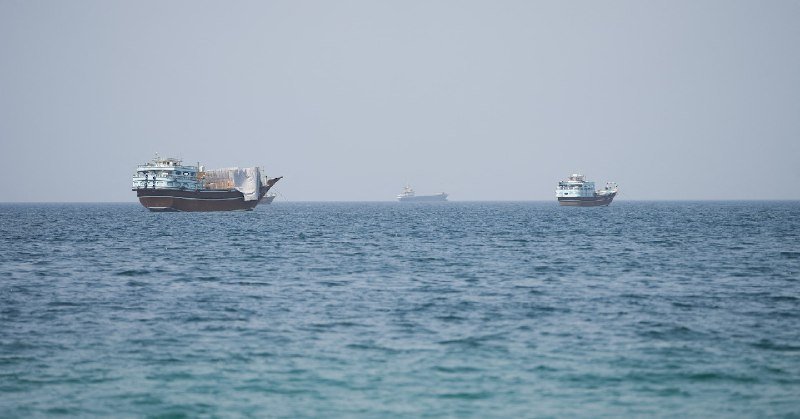
On 17 June 2026, the headlines declared the Strait of Hormuz open again. The choke-point through which roughly a fifth of the world's seaborne crude normally transits had, by most shipping-tracker accounts, returned to something like routine flow. For oil traders, insurers, and the oil ministries that depend on the lane, the reopening is the headline. For the Indian seafarers who spent weeks trapped aboard tankers caught between Iranian Revolutionary Guard patrols and a standoff with Western naval task forces, the lane's return to nominal use is not the end of the story — it is the start of a quieter one that insurance forms and Lloyd's bulletins will not capture.

The reopening of Hormuz closes one set of questions and opens another. The strategic question — whether a corridor the United States Fifth Fleet and Iran's IRGC Navy both treat as a sovereign-adjacent space can be reliably kept open in a crisis — was answered, for now, with diplomacy rather than firepower. The human question is harder, and it has not been answered at all.

What the reopening actually solved

The South China Morning Post's 17 June 2026 dispatch on Indian crews stressed a simple point that the broader coverage has tended to blur: the political and market narrative of "Hormuz reopens" and the lived experience of the mariners inside the cordon are two different stories. Tankers that sat dead in the water for weeks did not simply resume their voyages the moment a deal was announced. Crew rotations had collapsed. Mental-health protocols aboard most commercial vessels are thin at the best of times. Insurance underwriters reassessed war-risk premia in days, not hours; vessels that wanted to resume the Hormuz transit had to renegotiate cover.

For India, the workforce implications are not trivial. Indian nationals account for a substantial share of global merchant marine crew, particularly aboard the crude and product tankers that ply the Persian Gulf. A multi-week stand-down for a portion of that fleet is not an HR footnote. It is a national-labour question with a balance-of-payments dimension, because remittances from seafarers are a quietly significant line item.

The framing the wires chose

Western wire coverage of the Hormuz standoff leaned on the vocabulary of energy markets and great-power posture. Barrel prices, naval deployments, the choreography of an IRGC fast-boat swarm versus a US carrier strike group — these were the images the coverage built itself around. Indian seafarers appeared, when they appeared at all, as a single statistic in a labour-supply sidebar.

The South China Morning Post's reporting, which drew on crew interviews conducted as vessels were finally released, inverted that weighting. The piece is built around the names, the watch schedules, the panic attacks, the WhatsApp calls home. This publication finds that the inversion is the more honest one. A geopolitical "event" that lasts weeks and immobilises dozens of vessels is, by any honest accounting, also a labour event and a mental-health event. The fact that the labour dimension is consistently relegated to the bottom of the wire copy tells you something about whose experience the standard framing was built to register.

The structural frame, in plain language

What this episode exposes is a recurring asymmetry in how global shipping crises are priced. Energy markets, naval deployments, and diplomatic communiqués are all priced in real time — by tickers, by satellite, by intelligence briefings. The human cost borne by the crews who actually work the corridor is priced in nothing. It is borne by the seafarers, by their families, and eventually by the welfare systems of whichever labour-sending country they return to.

India is the largest single source of that labour. New Delhi's interest in keeping the lane open is therefore not only a strategic interest in oil flows — it is also a labour-protection interest in the men and women it trains at institutions like the Maritime Training Institute in Mumbai and the Maritime Training Academy in Chennai, and whose working conditions abroad the country has only patchy oversight of. The reopening of Hormuz does not by itself fix that.

What it would take to actually fix it

A serious answer would include at least three elements, none of which the current diplomatic settlement delivers. First, an industry-wide standard for mental-health screening and ongoing care for crews subjected to extended hostile-environment stand-downs — currently a voluntary patchwork dominated by the largest flag-state operators. Second, a transparent insurance regime so that war-risk premia do not simply price smaller, Indian-crewed operators out of the lane and leave them stranded mid-ocean with no cover at all. Third, an Indian regulatory and consular presence that treats seafarer welfare during crisis stand-offs as a sovereign responsibility rather than a private employer's problem.

None of that is on the table in the current settlement. The shipping lane is open. The market has exhaled. The Indian crews, by the South China Morning Post's account, are not.


Desk note: this publication framed the Hormuz reopening through the Indian seafarers caught inside the cordon — a perspective the Western-wire lede buried under energy-market and naval-deployment language. The structural argument is that crisis pricing is real-time for capital and naval power, and zero for the labour that physically works the corridor. The labour-sending state's interest is therefore not only energy security but worker protection; the settlement delivers neither.

© 2026 Monexus Media · reported from the wire