Iran signals it will sign Geneva memo digitally — and that the Strait of Hormuz and its missiles are off the table
Tehran's foreign ministry has spent a single afternoon drawing three red lines around the deal it is about to sign — and Western commentary is treating them as negotiating posture rather than as the structural shape of the arrangement itself.
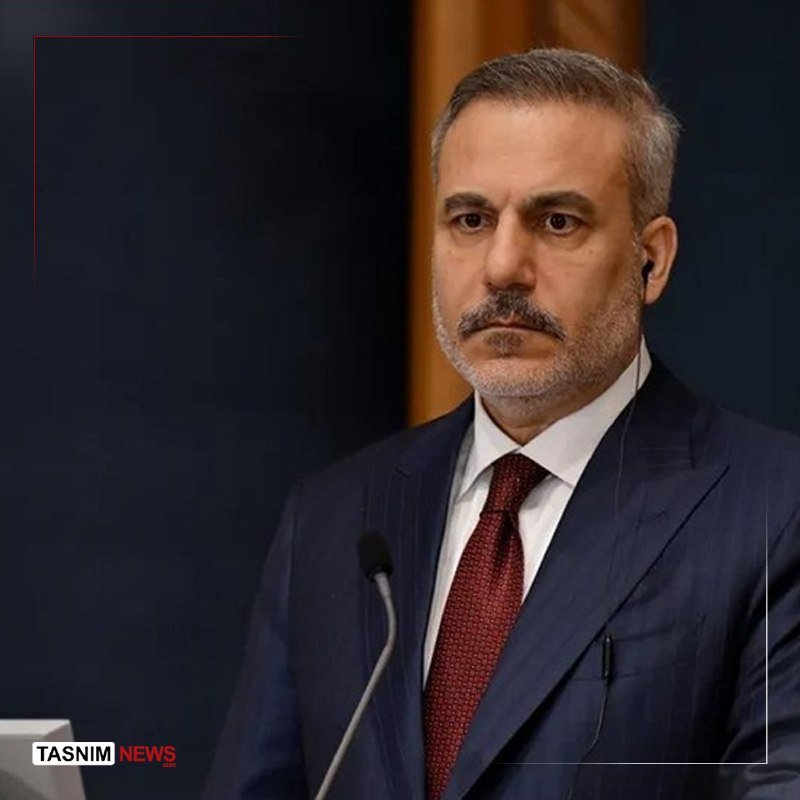
On the afternoon of 17 June 2026, Iranian Foreign Ministry spokesperson Esmail Baghaei told reporters that the text of what he called the "Islamabad memorandum of understanding" had been finalised and was being routed — digitally, not in person — to the presidents of Iran and the United States for signature, with a Geneva meeting of negotiating teams still nominally on the calendar. Within the same hour, Baghaei drew two additional lines around that document. The Strait of Hormuz, he said, was the joint responsibility of Iran and Oman alone — the only two coastal states. And Iran's missile programme, he added, is for firing, not for negotiation, and is not an item anyone else gets to discuss at all. Three declarations, one press cycle, all moving in the same direction: a narrowing of what the deal is actually about.
The temptation in Western commentary is to read these as opening bids — the kind of maximalist rhetoric that gets trimmed away by the time foreign ministers actually sit down. That reading is convenient because it lets the same framework do the work it has done for thirty years: assume the Iranian position is theatre, assume the real negotiating happens at the table, assume the deal, when it lands, will look like the deal Washington wanted all along. Baghaei's phrasing is too specific for that. The digital-signature mechanism, the named exclusivity of Hormuz to Iran and Oman, the explicit refusal to discuss missiles at any venue — these are not concessions being staged for leverage. They are the terms.
What the Islamabad text actually says, as far as anyone outside the room knows
The details that have leaked are the kind that matter to lawyers more than to diplomats. Tasnim, the Iranian state news agency that carried Baghaei's remarks, framed the digital-signature arrangement as a logistical answer to scheduling — the principals, the argument goes, are not in the same place, so the document will travel by secure channel rather than by hand. That is technically true and substantively misleading. A deal signed digitally rather than at a staged handshake is a deal designed to minimise the photo opportunity, and photo opportunities are the currency in which these negotiations are sold to domestic audiences in both Washington and Tehran. The choice to sign this way is itself a signal about who the document is for: governments, not galleries.
The Geneva track — a face-to-face meeting of negotiating teams — was held out by Baghaei as still on the calendar. Whether it produces anything beyond a procedural readout is now the open question. The negotiating teams, in this telling, are ratifying, not bargaining.
The Strait of Hormuz carve-out
The more consequential move was Baghaei's plain statement that the Strait of Hormuz is the business of Iran and Oman and no one else. The line is not new — Iranian officials have made versions of it for years — but its elevation into the same press cycle as a signed memorandum is. The Strait is one of the most surveilled and most-trafficked energy corridors on the planet; roughly a fifth of seaborne oil passes through it. For decades, the implicit assumption inside Western capitals has been that any settlement of the Iranian file would, at minimum, leave Hormuz governance as a multilateral matter — patrolled by coalition navies, insured through Lloyd's, policed under international maritime conventions that the United States and its Gulf allies shaped after 1980. Baghaei is asserting the opposite: that the corridor is a bilateral Iran-Oman file, with all that implies for transit fees, escort arrangements, sanctions enforcement, and the standing of naval task forces currently operating in the Gulf.
If that framing holds, the consequences run far beyond this deal. European and Asian buyers of Gulf energy — the customers who kept the insurance and shipping markets liquid through every previous escalation — will be negotiating passage through a corridor whose security architecture is now claimed by Tehran and Muscat. That is not a marginal adjustment to shipping rates. It is a structural reorganisation of who guarantees the most important energy route on earth.
Missiles off the table — by design
The third declaration is the most under-reported. "Our missiles," Baghaei said, "do not like anyone to talk about them at all." The phrasing is colloquial in Persian; in English it lands as a refusal to dignify the topic. The substance is sharper: a missile programme that is not on the table cannot be the price of admission for anything else, and any Western expectation that the missile file would follow the nuclear file has just been told, on the record, that it will not.
This is the part of the framing most likely to be misread in Western capitals, because it inverts the standard sequence. The assumption since 2015 has been that missile capability is the harder problem and that a nuclear deal would either unlock progress on missiles or be held hostage to it. Tehran is asserting the inverse: the missiles are settled — they exist, they are Iranian, they are not a negotiating item — and the deal on the table concerns only what the deal concerns.
What is actually being settled, then
If you take the three declarations together — digital signature, Hormuz as bilateral Iran-Oman business, missiles non-negotiable — what is left is narrow. The deal is, on this reading, a nuclear file plus a sanctions-release file, with a corridor arrangement stitched in alongside. It is not a regional security settlement, not an arms-control breakthrough, not a normalisation with Gulf monarchies, and not a missile rollback. It is, in short, the kind of arrangement a sovereign Iranian state would sign if it were confident in its own position and saw no reason to give away anything that was not being taken from it.
The counter-narrative — and it is a serious one — is that the digital-signature mechanism is itself a face-saving device for a document whose contents have been heavily negotiated downward by American and Gulf pressure, and that the missile and Hormuz lines are issued precisely because the document does not deliver on either front. Officials in Western capitals, off the record, are already hinting at exactly this reading. Both readings can be partly right: a deal that delivers sanctions relief in exchange for a verified nuclear rollback is a real outcome, and the Iranian public line about missiles and Hormuz can simultaneously be posture and a description of the strategic perimeter the Islamic Republic intends to defend for the next decade.
The structural read
The larger pattern is the one that has been visible, intermittently, since 2019: the United States negotiating with Iran on a narrower set of issues because the broader set is no longer available to it. The multilateral architecture that shaped the 2015 deal — the E3 plus Russia plus China, the IAEA verification regime, the sanctions snapback — is frayed. What replaces it looks more like a bilateral arrangement, conducted through intermediaries, signed digitally to avoid the optics of a handshake. That is not a verdict on this deal's merits. It is a description of the political space in which any deal now has to fit.
Stakes, and what remains uncertain
If the trajectory holds, the winners are the Iranian state (sanctions relief, missile and corridor autonomy preserved), Oman (elevated to co-guardian of the strait), and the buyers of Gulf energy who get predictability. The losers are the multilateral verification regime, the assumption that missile proliferation can be negotiated away in this region, and the Gulf security architecture as currently configured. The time horizon is short: a signed document within days, a Geneva procedural meeting to follow, and the first real test of the Hormuz arrangement when the next tanker-insurance renewal cycle hits.
What the sources do not yet establish is what the digital text actually contains beyond the framework Baghaei described — the verification protocol, the sanctions-release sequencing, the IAEA role. Those details will determine whether this is a settlement or merely a delay. For now, the Iranian foreign ministry has drawn the perimeter of the deal more clearly in one afternoon than most negotiating rounds produce in a year, and the rest of the world is being invited to read it.
This article is published under the Monexus opinion desk and reflects the editorial framing the staff writer applied to the wire: the Iranian position is reported in its own terms, not paraphrased through a Western frame; the structural read treats the digital-signature mechanism and the Hormuz and missile declarations as a single coherent posture rather than as three separate talking points.
Wire provenance
This editorial synthesis draws on the following public wire/social posts:
- https://t.me/wfwitness/17021
- https://t.me/JahanTasnim
- https://t.me/JahanTasnim
- https://t.me/GeoPWatch
- https://t.me/ClashReport
Follow the event.
These dated source records provide context. They do not retrospectively verify this archive article.
Separate what the nuclear watchdog reported from what it could not determine after the June 2025 strikes.