Tehran's $300bn Strait of Hormuz Memo Is a Negotiation, Not a Surrender
Iran's parliament speaker markets a $300bn reconstruction memorandum as a victory built on the Strait of Hormuz. The reality is messier — and more interesting.
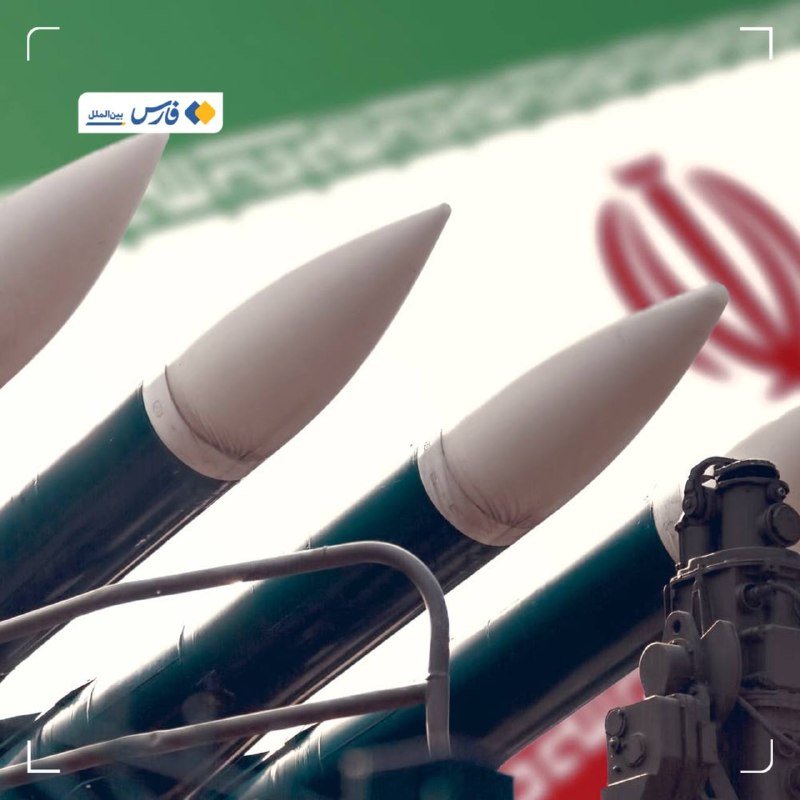
On the evening of 17 June 2026, Iran's parliament speaker, Mohammad Bagher Ghalibaf, took to state-aligned cameras to sell a memorandum of understanding. The pitch was unusual: $300bn for Iranian economic reconstruction and development, formalised transit-service fees through the Strait of Hormuz, and a thirty-day horizon during which the strait's status would be re-evaluated clause by clause. Reporting on the address was published by Fars News Agency and amplified by the Telegram channel Clash Report between 19:49 and 20:38 UTC. What was striking was not the financial scale but the framing. Ghalibaf positioned the package as a victory purchased with the leverage Iran built during its recent war — a war that, in his telling, converted a latent threat in the strait into an actualised one.
The Western wire line on Iran almost never admits that kind of leverage. It treats Tehran as a party bargaining from weakness, pinned by sanctions and weakened by strikes. The memo Ghalibaf described suggests a more complex posture: an Iranian state that believes it has converted a wartime shock into a peacetime instrument. That belief may or may not survive contact with the deal's text. But the rhetorical move deserves a serious read.
What the memo actually says — and what it doesn't
Two clauses matter. According to Ghalibaf's televised remarks carried by Fars at 20:37 UTC, paragraph six of the memorandum commits $300bn to Iranian economic reconstruction and development. That number, if it survives drafting, is larger than several years of Iran's entire non-oil goods exports. The second is the transit-fee mechanism. Per Fars reporting at 20:34 UTC, payment of service fees for crossing the Strait of Hormuz has been established in the memorandum, with the speaker emphasising that the littoral states of the strait have rights and duties under international maritime law. The thirty-day window — a third structural element, referenced at 20:38 UTC — appears to be a phase during which the siege-like conditions around the strait will be lifted, with the deal's permanence contingent on Iran's reading of how the other side has performed.
What is missing is the named counterparty. Ghalibaf told Fars at 20:33 UTC that his "duty is to implement the measures of the leader of the revolution in the negotiations," and to "comply with international and maritime regulations" — but the public messaging does not name who is on the other side of the table. The omission is itself a negotiating posture: the deal's legitimacy, in Tehran's telling, flows from the Supreme Leader's office, and the other party is a secondary actor.
The Strait of Hormuz as a weapon that was already a weapon
Ghalibaf's most candid line, captured by Clash Report at 20:24 UTC, was that during the war he had posted that the strait would never return to its previous conditions, and that "this does not mean that we intend to abuse it." Read alongside his 20:23 UTC observation that "their actions have turned Iran's potential capacity in the Strait of Hormuz into an actualized one," the message is that Iran believes its position has hardened. The strait, on this view, is no longer a piece of geography that is merely policed; it is a piece of infrastructure that Iran now believes it has rewritten the rules of.
That is a more credible claim than the older 2010s-era rhetoric about simply closing the waterway. Closure of Hormuz would, in any standard military scenario, draw a US naval response. A regime that taxes and conditions transit, while operating within the language of international maritime law, is doing something different. It is monetising control of a chokepoint in the register of sovereign service provision. Ghalibaf leaned on that register repeatedly in the 20:34 UTC and 20:20 UTC readouts: international law, littoral state rights, regulated management.
Why the $300bn number is the load-bearing claim
Reconstruction finance at that scale is not a balance-of-payments line item. It is a political declaration about whose economy gets to be rebuilt on whose terms. If the figure is real and is delivered, Iran would have a hard-currency reservoir to manage sanctions pressure, fund import substitution, and stabilise the rial. If it is partly performative, the $300bn still functions as a marker of Tehran's opening ask — a number against which any actual deal will be measured.
There is a structural reason this matters beyond Iran. Gulf energy flows are still priced and insured in dollars; chokepoint politics are usually resolved by the power that prints the reserve currency. An Iranian state that successfully levies transit fees — even discounted, even partial — would be inserting a non-dollar-denominated toll into the most-trafficked hydrocarbon corridor in the world. That is the kind of architecture-building step that the United States, Israel, and the Gulf monarchies have spent two decades trying to prevent. It would not break the dollar system. It would put a small but visible crack in the assumption that the system is unchallengeable.
What remains contested
Several things are still not verifiable from public reporting. The identity of the negotiating counterparty is unnamed. The legal text of the memorandum has not been published. The $300bn figure has not been independently confirmed by any source outside the Iranian state-aligned media ecosystem. The thirty-day window could be a confidence-building measure, or it could be a warning that Iran intends to roll back transit arrangements if the deal sours. Ghalibaf's 20:38 UTC remark — that "some friends were worried whether after 30 days the siege will be lifted" — leaves that question deliberately open.
Two readings compete. The first is that Tehran is selling a partial win as a total one, and that the memorandum is a face-saving exit from a war that the Iranian state did not win. The second is that Iran genuinely has shifted the negotiating centre of gravity and is using its wartime performance to claim structural concessions that no previous Iranian government could have demanded. The truth probably sits between the two, and will be visible in the text the parties eventually sign. Until then, the most defensible position is the one Ghalibaf himself stated: Iran is managing the strait based on international law, and the difference between this round and the previous ones is that the science of victory is now the basis of the talks. Whether that science has actually advanced is the question the next thirty days will answer.
Desk note: Monexus treated the Fars and Clash Report readouts as Iranian state-aligned primary sources, cited with explicit attribution rather than paraphrased as neutral wire copy. We have not invented counterparty, dollar, or text-of-deal claims that the underlying reporting does not contain.
Wire provenance
This editorial synthesis draws on the following public wire/social posts:
- https://t.me/farsna
- https://t.me/farsna
- https://t.me/farsna
- https://t.me/farsna
- https://t.me/ClashReport
- https://t.me/ClashReport