The Strait fee and the signature: what the Pezeshkian–Trump memorandum actually changes
Tehran confirms an electronically signed MoU with Washington and signals transit fees for the Strait of Hormuz. The deal is real; its terms remain opaque, and the architecture of the world's most important oil chokepoint is being rewritten in real time.
On the evening of 17 June 2026, Iran's Foreign Ministry spokesperson Esmail Baghaei confirmed what had been rumoured for 48 hours: a memorandum of understanding between Tehran and Washington has been "officially finalized and electronically signed" by President Masoud Pezeshkian and US President Donald Trump. There will be no ceremony in Switzerland. The document, Baghaei told reporters in Tehran, will pass in digital form, and the negotiating teams' plan to meet in Geneva "remains in place" in some form even as the paper itself moves to a different channel. The confirmation, carried by Iranian state outlet Tasnim and relayed by The Cradle, Euronews and the war-monitoring channel @wfwitness within minutes of each other, marks the most concrete diplomatic exchange between the two governments since the collapse of the 2015 nuclear accord's diplomatic protections and the open military exchanges of 2024. It is also, in the same breath, the moment Tehran has chosen to publicly raise a new variable: a fee for vessels transiting the Strait of Hormuz. (Sources: Tasnim via The Cradle, 17 June 2026, 21:53 UTC; Euronews, 17 June 2026, 21:49 UTC.)
What is being signed, and to what end, is the question that will define the next quarter of Middle East energy politics. The Iranian foreign ministry is calling it a memorandum, not a treaty. The two governments are not normalising relations. What they appear to be doing is constructing a managed arrangement — a set of mutual de-escalation commitments, a verification track, and a price for continued transit through the chokepoint through which roughly a fifth of the world's seaborne crude passes every day. Each of those three components carries its own political weight, and each will be contested by constituencies that the signature ceremony in absentia will not reach.
A signature without a room
The most striking feature of the announcement is what is not happening. The original expectation, circulated earlier in the week, was that the document would be initialled in Geneva by the two negotiating teams. By the evening of 17 June, Tasnim, citing Baghaei, was reporting that the plan to meet in Geneva "remains in place" but that the memorandum itself "will be signed digitally," with no Swiss ceremony. (Source: @wfwitness on Telegram, 17 June 2026, 21:50 UTC, citing Tasnim.) For a document that will redraw the risk calculus for every oil trader and every admiral in the Gulf, the absence of a stage-managed handshake is itself a signal.
There are three plausible reasons the ceremony was downgraded. The first is domestic American politics: a televised Trump–Pezeshkian moment in neutral Switzerland would have invited Republican and Democratic critics alike to demand a Senate debate, or at least a hearing. The second is the reverse: a ceremony on Iranian soil would have collapsed the carefully staged distance between the two governments. The third, and the one that fits the available evidence best, is that the document itself is narrower than the headlines it has generated. A memorandum of understanding is not a treaty. It binds the two executives politically, not legally. Signing it in person would imply a level of mutual recognition that neither side is willing to write into the record.
What the document does, by Baghaei's account, is commit the two governments to a framework: an exchange of constraints on Iran's nuclear and missile programmes, a set of guarantees on sanctions relief, and — this is the new element — a paid-services regime for one of the most heavily used maritime corridors on earth.
A toll for the world's most important waterway
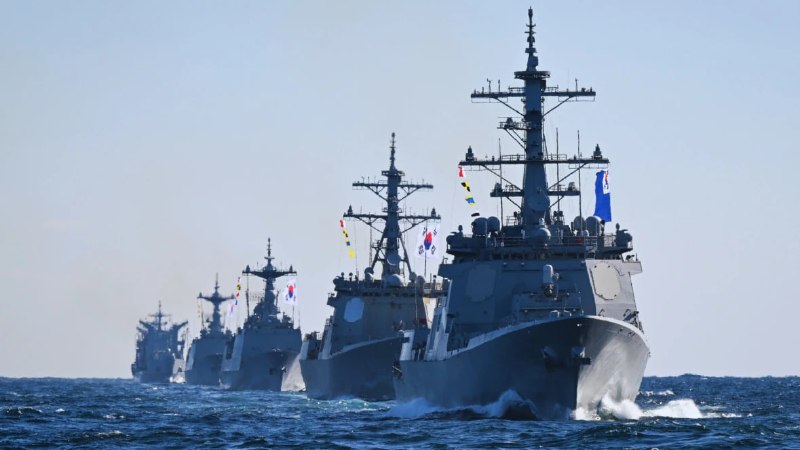
In a separate briefing on the same evening, Baghaei signalled that Iran will "charge fees for services provided to vessels transiting the Strait of Hormuz," with the foreign ministry spelling out the "mechanisms for managing" the corridor. (Source: @wfwitness on Telegram, 17 June 2026, 22:06 UTC, citing Tasnim.) The phrase is careful. Iran is not, on the face of it, claiming ownership of the strait. It is claiming that it provides services — naval escorts, surveillance, traffic management, security against asymmetric attack — and that those services have a price.
The legal position is contested. Under the United Nations Convention on the Law of the Sea, transit passage through international straits used for navigation between one part of the high seas and another cannot be impeded, and charges may only be levied for specific services rendered. Iran's framing — a fee for services — sits inside that legal envelope. The political position is harder. The strait's geography puts Iran's coast on its north shore and Oman's on its south. The strait is, in effect, a narrow channel between Iranian and Omani territorial seas. Iran's argument that it is a service provider, not a toll-keeper, is one that the shipping industry will test in practice long before any court does.
The economics are what will move markets. Even a modest fee, applied to the roughly 20 million barrels of oil and the liquefied natural gas cargoes that move through the strait each day, would generate a substantial revenue stream — and a substantial new variable in shipowners' routing calculations. The Strait of Hormuz has historically been free at the point of use. It is now being repriced, in a document whose full text has not been released.
The Axios track: what the deal is actually about
Reporting from Axios's Barak Ravid over recent days, picked up by The Cradle, has pointed to the substantive core of the negotiation: constraints on Iran's uranium enrichment, including a cap on enrichment purity and a verification regime, paired with phased sanctions relief and the unfreezing of Iranian funds held in third-country escrow. (Source: The Cradle, 17 June 2026, 21:53 UTC, citing Axios reporting on the framework.) Ravid has been the most cited Western scoop outlet on the Iran file in this cycle, and his reporting is what the Israeli, Gulf and European policy communities are reading in real time.
If that framework is accurate, the architecture of the deal has three legs. The first is a nuclear constraint track: Iran commits not to enrich above a defined ceiling, allows IAEA inspectors back into facilities that have been off-limits since 2024, and accepts a continuous monitoring regime. The second is a financial track: US Treasury, in concert with the Gulf states and the European Union, releases a defined tranche of frozen Iranian assets in return for verified Iranian compliance. The third, and most novel, is the security-of-transit track: Iran commits not to harass commercial shipping in the strait, in return for the right to charge a regulated fee for the services it provides.
The arrangement is coherent. It is also, in its way, the first time since 1979 that Iran has been paid — formally, openly, in a written document — for what it provides to the global energy system.
The constituencies that will fight the deal
The memorandum is being signed in absentia for a reason. On the American side, the Israeli government has been a persistent and public sceptic. Israeli strategic doctrine treats any enrichment capacity inside Iran, even at low purity, as a long-run threat. Prime Minister Benjamin Netanyahu's office has not, as of 17 June 2026, endorsed the framework; reporting from Israeli outlets, including Channel 12 and Haaretz in recent days, has emphasised the gap between the Israeli security community's preferred position and the one Washington appears willing to accept. (Source: The Cradle's 17 June 2026 framing of the regional reaction.)
Inside Iran, the constituencies are more fractured. The Pezeshkian government needs a deal to relieve the economic pressure that has, since 2024, produced visible price shocks for staples and a sustained rial devaluation. The Islamic Revolutionary Guard Corps has historically had a strong institutional interest in the strait as a coercive instrument. The strait-fees structure, in particular, will be read inside Iran as a partial monetisation of that instrument — and inside the Gulf monarchies as a partial surrender of a free-transit norm they have relied on for fifty years.
The third constituency is the oil market. Any fee, however structured, will be passed through to end-buyers. Saudi Arabia, the UAE and Iraq — all of whose crude moves through the strait on at least some routes — have a direct interest in the structure of the charge. China's refiners, which buy the majority of Iran's sanctioned-but-tolerated exports, are the implicit off-takers of the financial-track leg of the deal. They are not at the table. They are, in effect, the customers the document is being written for.
What the sources do not say
The thin part of the evidence is also worth naming. The Iranian foreign ministry has confirmed the signature; the text of the memorandum has not been released. The strait-fees mechanism has been described in principle; the rate, the unit of account, the collection agent, and the dispute-resolution procedure have not. The nuclear constraints, as reported by Axios, are described in summary; the verification regime and the snap-back clause have not. The financial track — the size of the unfrozen tranche, the jurisdiction holding the escrow, the release schedule — is the most opaque leg of all.
What is also not in the record is any explicit reaction from the US State Department to Baghaei's evening statement. The signature has been reported on the Iranian side; the confirmation, in American official language, will need to follow. The Cradle and the Telegram channel ecosystem moved within minutes of Baghaei's comments; the Washington wire cycle had not, at 22:07 UTC, matched the confirmation in the same form. The next 24 hours will be the period in which the document is either jointly confirmed or quietly downgraded.
The most useful frame for the deal is a simple one. The 2015 nuclear accord traded Iranian nuclear constraint for sanctions relief, and it tried to make that trade enforceable. It collapsed. The arrangement being signed in absentia on 17 June 2026 is narrower, less ambitious and more transactional. It trades Iranian nuclear constraint for a mix of sanctions relief, frozen-asset release and a regulated revenue stream from the strait — and it tries to make that trade self-enforcing by giving each side a continuing interest in the other's compliance. It is not a peace. It is a price. The question is whether the price holds.
This piece is a long read. Monexus has framed the Pezeshkian–Trump memorandum as a transactional arrangement with three legs — nuclear constraint, financial relief and a newly priced strait — and read it against the Axios reporting that has shaped the Western policy conversation, the Tasnim wire that has shaped the Iranian one, and the structural interest of the Gulf monarchies, the Israeli security community and the Chinese refiners who are the implicit off-takers of the financial leg. Where the sources thin out — and they do, on rate, on text, on the American official confirmation — Monexus has said so rather than guess.
Wire provenance
This editorial synthesis draws on the following public wire/social posts:
- https://t.me/thecradlemedia
- https://t.me/intelslava
- https://t.me/wfwitness
- https://t.me/wfwitness
- https://t.me/euronews
- https://t.me/TheCradleMedia
- https://t.me/wfwitness
- https://t.me/thecradlemedia
Follow the event.
These dated source records provide context. They do not retrospectively verify this archive article.
Separate what the nuclear watchdog reported from what it could not determine after the June 2025 strikes.