The Islamabad Memorandum: How a Digital Signature Reshaped the US–Iran Diplomatic Track
On the evening of 17 June 2026, Iran’s foreign ministry said a memorandum negotiated in Islamabad was being put to presidents Pezeshkian and Trump by digital signature — a procedural detail that may matter more than the text itself.
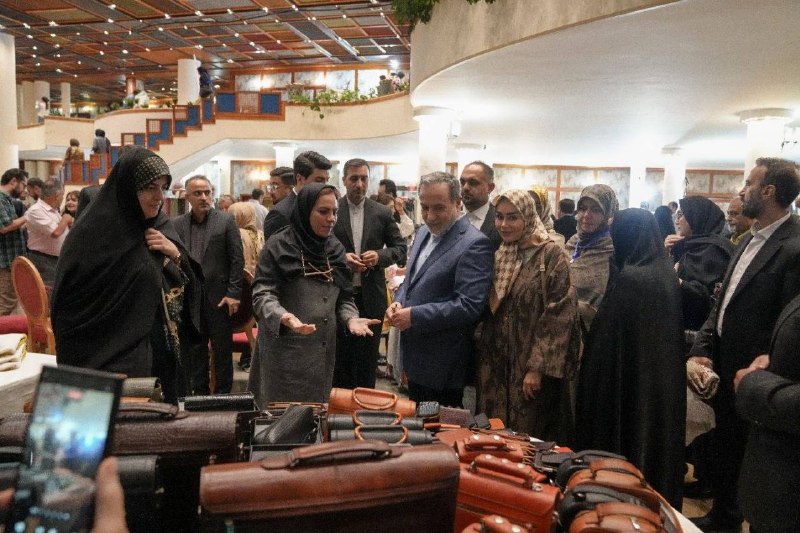
The text, by Tehran’s own account, was already in transit to two presidents. At 21:25 UTC on 17 June 2026, Iran’s foreign ministry spokesperson Esmail Baghaei told state-affiliated outlets that, as he spoke, the document negotiated in Islamabad had "probably reached the presidents of Iran and the United States for signature" — and that, because the parties were not in the same room, the signing would happen digitally. Within twelve minutes, Tasnim reported that the Persian text of the memorandum had been initialled as an official document by both sides. The Farsi-language version carried the same confirmation, sourced to a negotiator close to the Iranian team. The plan for delegations to meet in Geneva, Baghaei added in the same set of exchanges, "remained in place" — but the document itself would not wait for an in-person handshake.
The procedural fact is the news. A US–Iran understanding, negotiated in a third capital and signed at a distance by the heads of state of two countries that have not maintained formal diplomatic relations for nearly half a century, is now a signed instrument in two languages, witnessed by state media on at least one side, and held in the cloud rather than in a vault at the Palais des Nations. That is a different category of document from a press-conference joint statement, and a different category from a tweet. The detail that the signature is digital — not the content of the memorandum — is what makes 17 June 2026 a discrete moment on the diplomatic track.
A memorandum, not a treaty
What the document actually says, beyond its existence, was not disclosed in the 17 June exchanges carried by Tasnim, the foreign ministry spokesperson, or by the channels re-broadcasting those statements. Iranian state media described the product as a memorandum of understanding — a category that, in international practice, sits below a treaty in legal weight and below a political declaration in ceremony. Memoranda of understanding are not typically submitted to parliaments for ratification; they record convergence of view, set out working arrangements, and signal intent. The choice of label matters. It is the format a government uses when it wants to lock in language without triggering the domestic ratification politics that a binding accord would invite on either side of the Persian Gulf.
The timing of Baghaei’s on-record comments — clustered between roughly 21:10 and 21:37 UTC — is consistent with a sprint rather than a settled ceremony. The spokesperson was simultaneously confirming that a Geneva in-person meeting "remained in place" and that the text was already being routed for digital signature, suggesting two tracks running in parallel: a working-level meeting at the Palais des Nations for delegations, and a head-of-state instrument being concluded at distance. That bifurcated structure is itself a tell. It is how governments proceed when they want a paper outcome in hand before a face-to-face meeting risks reopening the text.
The location of the negotiation — Islamabad, capital of Pakistan — adds a second layer. Pakistan sits outside the formal P5+1 architecture that produced the 2015 Joint Comprehensive Plan of Action, but it borders Iran, maintains a working relationship with both Washington and Tehran, and has periodically been mentioned as a back-channel venue. Holding the substantive talks there while reserving Geneva for the delegational layer is a quietly significant piece of venue choreography: it keeps the JCPOA-era institutional setting in the frame for the working groups, while the political handshake is being managed by a third-party host.
The wire read versus the Tehran read
The Telegram-sourced material that framed this article’s reporting cycle came almost entirely from the Iranian side — Tasnim, the foreign ministry spokesperson’s statements as re-broadcast by Tasnim’s English service, and the Farsi-language original via Tasnim’s Persian channel. Western wire confirmations of the text, the digital signature, or the presidents’ receipt of the document had not, as of the cluster of posts at 21:10–21:37 UTC on 17 June 2026, appeared in the available reporting.
That asymmetry is worth naming. The 2015 framework was announced, deniable, then re-announced, and the announcement cadence itself became part of the negotiation. The 17 June 2026 read has so far run in the opposite direction: an Iranian-side confirmation, in real time, of a sequence of events — text drafted, text initialled, text in transit to heads of state, text to be signed digitally. The framing inside Iran is that the deal is, in operational terms, already concluded. The framing on the Western side, where it has begun to appear, is that a memorandum is a step short of a deal. Both can be true, and the live disagreement is over how much weight the digital signature carries.
There is also a more cautious read, which is the read that animates a fair amount of professional diplomacy coverage. Memoranda of understanding signed at distance, in two languages, by heads of state who have not met face to face for the signing, are easier to walk back than instruments concluded in a room full of witnesses. A digital signature can be revoked; a photograph cannot. The history of US–Iran negotiations is, among other things, a history of texts that existed on Tuesday and did not exist on Friday. The instrument that Tasnim describes as having been signed on 17 June 2026 is, on the available evidence, real as of the timestamps. Whether it remains real a week later is a separate question, and one that the wire reporting on both sides will be tested on.
Why the digital signature is the actual story
The procedural choice is doing structural work. A US–Iran understanding in 2026 arrives in a global environment in which the architecture of arms-control diplomacy has been visibly eroding for the better part of a decade. The INF Treaty collapsed in 2019. The Open Skies arrangement followed. The JCPOA itself has been off the formal US track since 2018, with parallel efforts since then producing interim understandings, prisoner swaps, and most recently a set of statements whose legal status was always ambiguous. In that context, an instrument concluded at all is news; an instrument concluded by digital signature is a confession that the formal architecture is not available, and that the parties are working around it.
There is also a domestic-politics reading on both sides. In Washington, a digital signature is deniable in a way that a podium handshake is not — which is a feature, not a bug, for any administration negotiating with a Congress and a domestic political environment that has, on past form, treated any movement towards Tehran as politically costly. In Tehran, a memorandum that produces the word "signed" in two languages, attributed to the foreign ministry and Tasnim, is a deliverable the negotiating team can show to a domestic audience that has been conditioned by four decades of failed talks to expect the next reversal. The form of the document is shaped by the politics both sides need it to serve.
The Geneva layer is the one to watch. Baghaei’s statement that the delegational meeting "remained in place" leaves open the question of who shows up, at what level, and on whose authority. A working-level meeting in Geneva, with a signed memorandum already in hand, can ratify, refine, or quietly dilute the political text. A working-level meeting in Geneva that fails to produce a delegation would, by contrast, suggest that the memorandum was the ceiling rather than the floor. The wire on the Iranian side has, for now, locked in the ceiling. The wire from Geneva, when it arrives, will tell the reader whether the floor is in the same building.
What remains uncertain
The text of the memorandum itself is the first gap. The available reporting confirms that a document exists, that it has been initialled by the negotiating teams in both languages, that it has been sent to the two presidents, and that the heads of state are expected to sign digitally. It does not, on the material available to this publication, disclose the substantive content — the scope of any nuclear constraints, the duration of any arrangement, the question of enrichment, the status of sanctions, the disposition of detained individuals, the verification architecture, or the sequencing of reciprocal steps. A reader cannot, on the basis of the 17 June reporting, tell what either side has given up or what either side has reserved.
The second gap is corroboration from the American side. The Tasnim material is consistent in its account, and a second Iranian state-affiliated source (the Farsi-language channel) carries the same detail in the same minute band, which raises confidence that the Iranian state is, in fact, presenting this as a concluded step. But the digital signature described in the 17 June reporting is a discrete claim — that two heads of state have signed a text — and that claim has not, in the available material, been independently confirmed by a US government statement. The reasonable read is that the claim will be tested quickly, and the next 24 to 48 hours will tell the reader whether the digital-signature language holds up.
The third gap is duration. Memoranda of understanding are easier to issue than to keep. The 2015 framework took roughly two years of patient negotiation; the 2018 withdrawal took roughly fifteen minutes. The instrument being signed in the early hours of 18 June 2026, Tehran time, will be measured by how long it stays where it has been put.
Desk note: Monexus treated the 17 June 2026 reporting cluster as an Iranian-state confirmation of a procedural event (the digital signature of a memorandum) rather than as a confirmed deal. Where the available material is single-sourced on the Iranian side, the article flags that asymmetry. Substantive claims about the content of the memorandum have been deliberately omitted because the available sources do not disclose them.
Wire provenance
This editorial synthesis draws on the following public wire/social posts:
- https://t.me/JahanTasnim/
- https://t.me/tasnimnews_en/
- https://t.me/wfwitness/
- https://t.me/ClashReport/
- https://t.me/tasnimnews_en/
- https://en.wikipedia.org/wiki/Joint_Comprehensive_Plan_of_Action
- https://en.wikipedia.org/wiki/2025_United_States%E2%80%93Iran_relations
- https://en.wikipedia.org/wiki/United_Nations_Office_at_Geneva
Follow the event.
These dated source records provide context. They do not retrospectively verify this archive article.
Separate what the nuclear watchdog reported from what it could not determine after the June 2025 strikes.
- https://t.me/JahanTasnim/
- https://t.me/tasnimnews_en/
- https://t.me/wfwitness/
- https://t.me/ClashReport/
- https://t.me/tasnimnews_en/
- https://en.wikipedia.org/wiki/Joint_Comprehensive_Plan_of_Action
- https://en.wikipedia.org/wiki/2025_United_States%E2%80%93Iran_relations
- https://en.wikipedia.org/wiki/United_Nations_Office_at_Geneva