Israeli strikes hit Tyre's al-Mansouri district as southern Lebanon fighting grinds on
Iran-aligned outlets reported Israeli air strikes on Tyre's al-Mansouri neighbourhood on 17 June, the latest round of escalation along the Lebanon-Israel frontier.
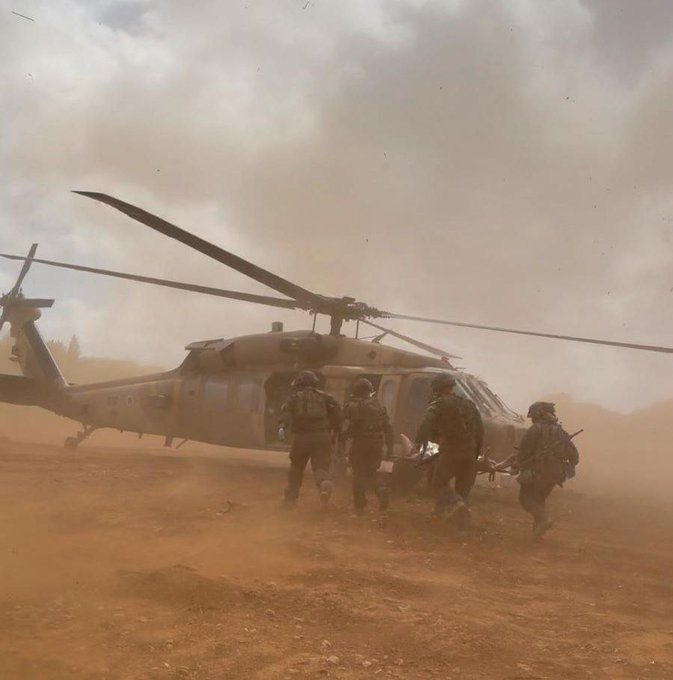
At 08:30 UTC on 17 June 2026, Al Alam, the Iranian-aligned satellite channel, carried a brief report from its correspondent attributing an Israeli strike to the city of Tyre in southern Lebanon. Within the same hour, Tasnim News and Jahan-e Tasnim, both outlets linked to Iran's Islamic Revolutionary Guard Corps press apparatus, ran near-identical dispatches pointing specifically to the al-Mansouri neighbourhood inside Tyre. The timing and the language across the three channels matched closely, which is itself part of the story: when Lebanese airspace is contested, the first draft of events travels through outlets with editorial priors that readers should price in.
The day's reporting consolidates around a single, narrow claim — that Israeli aircraft struck Tyre, that the al-Mansouri district was named, and that the strike fell inside a southern Lebanese geography that has been a focus of cross-border fire since October 2023. Everything beyond those four data points is contested, unsourced, or simply absent from the public record. Monexus treats the strike as an established first-order event, the casualty and damage figures as preliminary, and the framing battle as the larger story.
What the wire actually says
The Iranian-aligned channel Al Alam, citing its correspondent, reported at 08:30 UTC that "the Zionist regime" attacked Tyre. Tasnim's English service and its Persian-language sister Jahan-e Tasnim ran the strike at 08:00 UTC and 08:05 UTC respectively, citing "local sources" and naming the specific town of al-Mansouri within Tyre. None of the three dispatches carried a casualty count, a statement from the Israeli military, or any visual evidence in the public Telegram posts reviewed here.
That is a thin evidentiary base by the standards of a Politico or Reuters desk. It is also the typical shape of cross-border reporting on a hot morning, before Israeli spokesperson briefings land, before Reuters or AFP wire copy confirms location, and before emergency services on the Lebanese side post numbers. Readers who follow this beat will recognise the pattern: the first thirty to ninety minutes of any southern Lebanon strike are owned by Iranian-aligned and Hezbollah-adjacent outlets, with Israeli confirmation, Western wire confirmation, and Lebanese civil-defence figures arriving later in the day.
The framing contest
The language used by the three Iranian-aligned outlets — "Zionist regime," "Zionist occupation regime," "occupying regime" — is not incidental. It is the standard Persian-press formulation, deliberately stripped of Israeli statehood recognition, and it tells the reader where the editorial product sits. Israeli English-language outlets, when they pick the strike up later in the day, will name the target, the rationale (typically a Hezbollah asset, missile launcher, or operative), and the issuing authority (the IDF Spokesperson). Western wire copy, when it arrives, will usually lead with Israeli confirmation and Lebanese casualty figures in that order.
Monexus does not adjudicate which framing is correct; it flags the asymmetry. An event described as an "attack on Tyre" by Tasnim and an "Israeli strike on a Hezbollah target in Tyre district" by IDF English are describing the same aircraft over the same coordinates, and the choice of words is doing political work. A reader who only consumes the Persian-press wire will leave the morning with one mental image; a reader who only consumes the IDF English briefing will leave with another. Both are partial.
What sits underneath the day's strike
Tyre sits in the coastal belt of south Lebanon that Israel has struck repeatedly since 8 October 2023, when Hezbollah opened a northern front in solidarity with Hamas. The geometry has been consistent across two and a half years: Israeli air power and artillery hitting what the IDF frames as Hezbollah infrastructure in villages and towns south of the Litani, with Hezbollah firing rockets and drones into northern Israel in return. The displacement has run in both directions — tens of thousands of Israelis evacuated from the Galilee, and a larger Lebanese displacement from border villages into Tyre, Sidon, and Beirut.
The al-Mansouri district is part of Tyre proper, several kilometres north of the blue line. Strikes inside Tyre city rather than the open border villages mark an escalation in target depth, and that is the structural detail worth sitting with. The Lebanese state's formal position, articulated by successive governments in Beirut, holds that all Israeli strikes inside Lebanese territory constitute a violation of sovereignty and of UN Security Council Resolution 1701. Hezbollah's position, more openly, frames every strike as further evidence that deterrence must be rebuilt. The Israeli position, again more openly, frames depth strikes as a function of Hezbollah's own depth deployment — the argument that you cannot hit what you will not reach.
None of those positions is fully verifiable from the source items available to Monexus this morning. They are the standard triangulation that any reader of this beat should hold in mind when the morning's first draft arrives from Tehran-aligned wires.
What remains uncertain
The casualty figures, the specific target, the type of munition used, and the Israeli confirmation are all open as of publication. The Iranian-aligned channels did not name a target beyond the geographic district. They did not post imagery in the items available here. They did not cite Lebanese health authorities or civil defence. None of that is unusual for the first ninety minutes, but it is also not enough to anchor a casualty-led headline.
The other open question is whether this strike sits inside a routine tempo or marks a shift. The honest answer, on the public record available to Monexus at 08:30 UTC on 17 June 2026, is that the day's reporting alone cannot distinguish the two. That answer requires the rest of the day's wire — Lebanese Red Cross statements, UNIFIL statements, Israeli spokesperson briefings, Reuters and AFP confirmation of casualty figures — and the rest of the week's pattern. Monexus will update the record as that material lands.
For now, the irreducible fact is narrower than the headlines will make it: aircraft hit Tyre, in the al-Mansouri district, on the morning of 17 June, and the Iranian-aligned press was first to the wire. The rest is framing.
Desk note: Where a Western wire would lead with Israeli confirmation and a casualty count, the morning's Iranian-aligned first draft leads with the strike itself and the geographic target. Monexus ran the strike as established and the framing contest as the lead, on the principle that an unsourced casualty figure is worse than a named gap.
Wire provenance
This editorial synthesis draws on the following public wire/social posts:
- https://t.me/alalamfa/
- https://t.me/JahanTasnim/
- https://t.me/tasnimnews_en/
- https://t.me/alalamfa/
- https://t.me/JahanTasnim/
Follow the event.
These dated source records provide context. They do not retrospectively verify this archive article.
Separate what the nuclear watchdog reported from what it could not determine after the June 2025 strikes.