Italy Reopens Tehran Embassy as Geneva Accord Reshapes European–Iranian Diplomatic Map
Italy becomes the first EU capital to restore resident diplomatic representation in Tehran following the Geneva accord, betting that a 60-day US-Iran window will hold long enough to make the wager worth the cost of reversal if it does not.
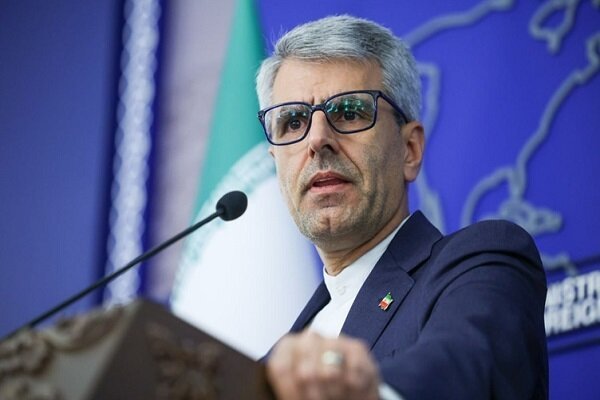
Italy's foreign ministry confirmed on 17 June that its embassy in Tehran would reopen for full operations, the first European Union capital to restore resident diplomatic representation in the Iranian capital since the United States and Iran signed a peace accord in Geneva the previous week. The decision, telegraphed in Rome over the weekend and finalised in a note to parliament, marks the most concrete European response yet to a diplomatic framework whose operational substance will be tested in the months ahead, not the hours after the ceremony.
Italy's move lands inside a fast-moving sequence. The Geneva accord, signed on 19 June at a ceremony both Washington and Tehran publicly confirmed, set a 60-day horizon for Iran to reach a substantive nuclear and sanctions-relief package with the United States. President Donald Trump, speaking the same evening, framed the deadline in characteristically transactional terms: Iran must reach a deal within 60 days or face renewed pressure. A senior Iranian lawmaker, cited the same night, warned Washington over what he called ceasefire violations, an early sign that the political distance between the two governments remains substantial even as the diplomatic machinery begins to turn.
The Italian decision is therefore both signal and scaffolding. It is a signal that at least one EU member state believes the Geneva framework is durable enough to risk a physical diplomatic presence in Tehran after years of de facto downgrading. It is scaffolding because a reopened embassy, by itself, does not transact the technical work of sanctions compliance, nuclear verification, or the political coordination a wider European posture toward Iran will require. The substance of the Italian move will be visible only when the consular services restart, the ambassador presents credentials, and bilateral working groups begin to meet.
Rome's calculation
Italy's read of the Geneva framework is shaped by its own exposure. Italian firms, particularly in the energy, engineering and industrial-machinery sectors, have carried a disproportionate share of European commercial disengagement from Iran since the United States withdrew from the Joint Comprehensive Plan of Action in 2018. Re-establishing a resident embassy is a precondition for any future scramble to recover market position once sanctions architecture begins to soften, and it puts Italian diplomats on the ground ahead of French, German and British counterparts who have so far signalled caution.
The political logic is equally pointed. Rome has positioned itself, throughout the current Middle East crisis cycle, as the European capital most willing to keep a channel open with Tehran without publicly breaking with the transatlantic framework. A reopened embassy is a low-cost, high-visibility way to convert that posture into infrastructure. It also creates a seat at whatever table the implementation phase produces.
None of this resolves the harder questions. Italy has not announced a timeline for the ambassador's return, has not specified when consular services will resume, and has not detailed the staffing levels that will operate out of the Tehran compound. Those omissions are not bureaucratic oversight. They reflect the genuine uncertainty inside the Italian foreign ministry about how stable the Geneva framework will be once the 60-day clock begins to bite.
Tehran's parallel openings
The Iranian side has been moving in parallel. State-aligned Telegram channels have, in recent days, carried imagery of large nightly rallies in central Tehran marking the fourth night of Muharram, with participants explicitly framing the gatherings as expressions of support for the Islamic Republic and the Iranian armed forces. The visual messaging matters: Iran's leadership is signalling to its domestic audience that engagement with Washington does not equal capitulation, a framing it will need to sustain if the Geneva process delivers verifiable concessions on either side.
The same press cycle that confirmed the Italian decision also surfaced an Israeli warning shot across the regional bow. According to the New York Times, as carried by a witness-channel Telegram account, Israeli Prime Minister Benjamin Netanyahu is likely to continue military operations against Hezbollah despite the Israel-Hezbollah ceasefire and the provisions of the US-Iran agreement regarding Lebanon. That reporting, if accurate, places the Italian embassy reopening inside a wider regional geometry in which the Geneva accord is one node among several, not a master framework that resolves adjacent flashpoints.
The Norwegian government's separate move on 19 June, announcing steps to cut trade with Israeli settlements in occupied territory, underlines the same point. European governments are not coordinating a single Iran policy. They are making individual bets, each calibrated to domestic politics and commercial exposure, and the bets point in different directions.
What the Geneva framework actually says
The public record on the Geneva accord remains thin. Both the United States and Iran have confirmed the signing ceremony; neither has published a full text. Trump's 60-day framing, delivered in remarks carried across the wire on the evening of 19 June, sets the tempo: a deal within that window or renewed pressure. The Iranian lawmaker's same-day warning about ceasefire violations suggests the implementation conversation has already begun, and that Tehran intends to police the terms of the agreement as publicly as Washington does.
For European governments, the practical question is whether the accord creates enough stability to justify resident diplomatic re-engagement. Italy has answered yes. France, Germany and the United Kingdom have not, at least not publicly. Their caution is intelligible: resident embassies are expensive to close and politically costly to reopen, and a 60-day deadline is not the kind of horizon on which to commit a full diplomatic complement.
The Geneva framework's structural significance, then, is less what it settles than what it permits. It permits Italy to reopen. It permits Iran to claim diplomatic momentum. It permits the United States to assert that maximum pressure has produced a negotiating partner. What it does not yet permit is the kind of European-wide diplomatic normalisation that would require confidence in implementation rather than ceremony.
The regional geometry
A reopened Italian embassy in Tehran cannot be read in isolation from the rest of the Middle East picture on 19 June. The Hezbollah ceasefire, the Norwegian settlement trade decision, the Israeli signalling on continued operations against Hezbollah despite that ceasefire, and the Iranian domestic rallies all sit alongside the Geneva accord as parts of a single news cycle. They are not a coordinated architecture. They are a set of overlapping bets by governments that share information imperfectly and trust each other only partially.
That is the real story the Italian embassy reopening tells. Italy has decided the bets are good enough to put a flag back in the ground. The flag is not a verdict on the Geneva framework's durability. It is a wager that, within the 60-day window, enough of the framework will hold to make the wager worth the cost of reversal if it does not.
The next concrete tests are not in Rome. They are in Tehran, where the ambassadorial timeline will become visible, in Geneva, where the working groups will meet, and in Washington, where the 60-day clock will begin to compress the room for ambiguity. Until then, Italy has bought itself a seat. Whether the seat comes with a working table is a question the next two months will answer.
Sources
- https://www.middleeasteye.net/live/live-us-and-iran-confirm-peace-accord-signing-set-friday-geneva, Middle East Eye, Live: US and Iran confirm peace accord signing set for Friday in Geneva, 2026-06-19
- https://t.me/presstv, Press TV (Iranian state media), Thousands of Iranian patriots throng Tehran's streets on the fourth night of Muharram, 2026-06-19
- https://www.middleeasteye.net/live/live-us-and-iran-confirm-peace-accord-signing-set-friday-geneva, Middle East Eye, "This must end": Norway moves to cut trade with illegal Israeli settlements, 2026-06-19
- https://www.middleeasteye.net/live/live-us-and-iran-confirm-peace-accord-signing-set-friday-geneva, Middle East Eye, Trump warns Iran must reach deal within 60 days, 2026-06-19
- https://t.me/wfwitness, Witness (warpcast-forwarded wire), NYT: Netanyahu likely to continue military operations against Hezbollah despite ceasefire, 2026-06-19
- https://t.me/tasnimnews_en, Tasnim News (Iranian state media), Geneva accord coverage, 2026-06
Desk note: This article treats the Italian embassy reopening as a diplomatic signal whose operational substance will be tested in the implementation phase of the Geneva framework. Where wire material did not specify staffing, consular services or ambassador timelines, the article has flagged the gap rather than filled it.