Japan's industrial ground is shifting under three quiet shocks
Three separate reports on 17 June 2026 — engine breakthroughs in Chinese cars, a $1.2bn Pizza Hut deal, and an ice-cream cartel raid — sketch the same picture: a Japan whose competitive edges are eroding faster than its politics admits.
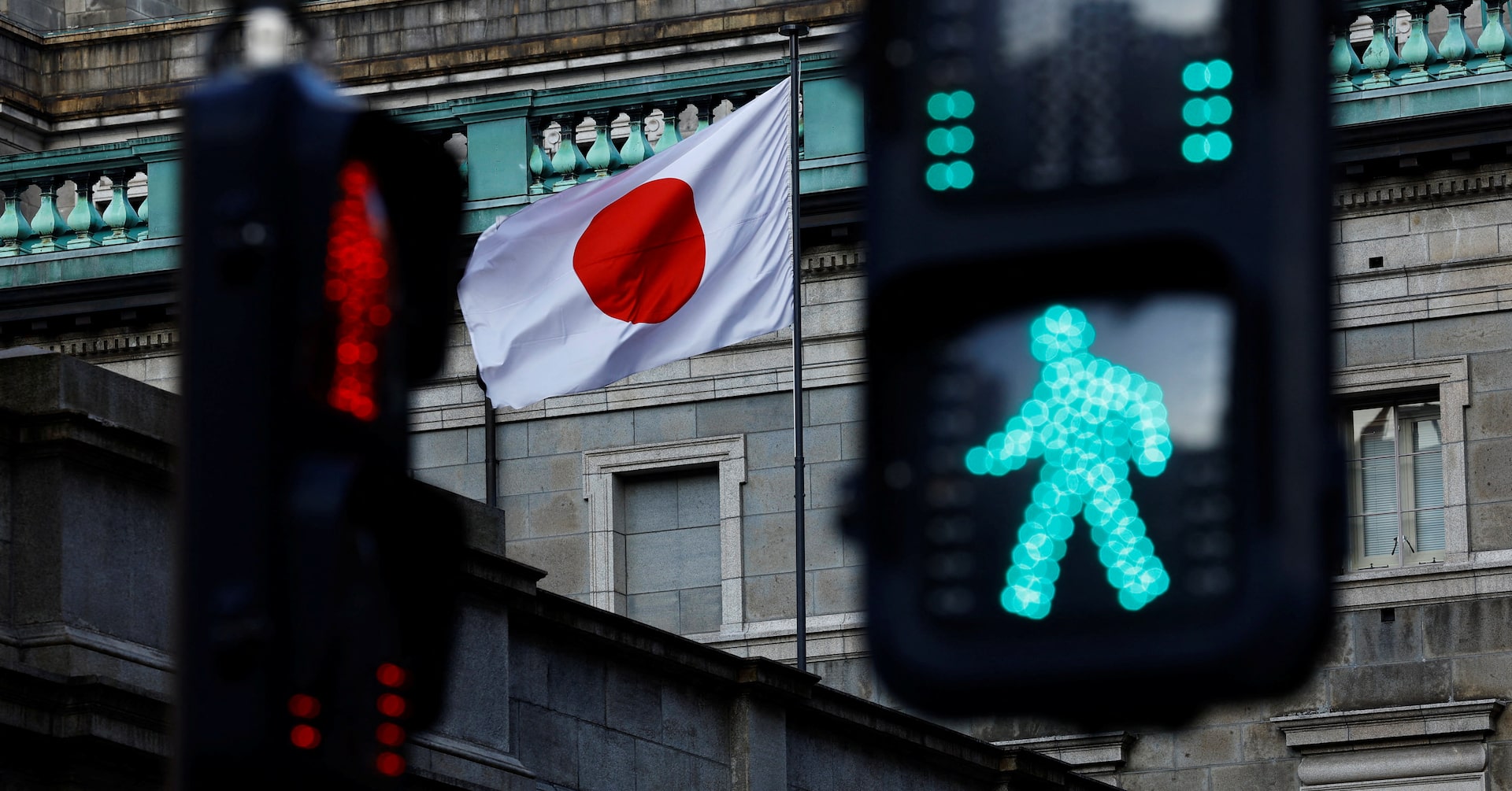
It is rare that a single morning's news flow tells a coherent story about a national economy. Wednesday, 17 June 2026, came close. By 07:33 UTC, Japan's antitrust authority had raided the country's two largest ice-cream makers over alleged cartel pricing, an intervention triggered by record summer temperatures and public anger at supermarket shelves that refuse to move. By 16:31 UTC, Nikkei Asia had dispatched a feature-length report documenting how Chinese automakers have closed in on Japan's long-held lead in internal combustion engine technology, with breakthroughs in fuel efficiency that until recently sat inside the Japanese majors' moat. Somewhere between those hours, Yum China — the operator of KFC and Pizza Hut in the world's second-largest economy — agreed to pay $1.2 billion for full ownership of the Pizza Hut China master franchise, and watched its shares slip on a deal that underlines a quieter migration of global food-service gravity toward Chinese balance sheets.
None of these stories, taken alone, breaks a paradigm. Taken together, on the same day, they describe something more uncomfortable: a Japan whose domestic pricing regime, whose core industrial know-how, and whose inbound consumer flows are all under pressure at once. This publication finds that the pattern matters more than any individual headline — because each piece is, in its own register, an instance of the same slow rebalancing.
The engine moat is no longer what it was
Japan's automobile industry built its postwar identity on the internal combustion engine. Toyota, Honda, Mazda and the keiretsu suppliers around them spent four decades perfecting thermal efficiency, lean-burn combustion and continuous-variable transmissions — the engineering bedrock that made hybrids the global default before battery-electric vehicles re-opened the rulebook. That lead was both commercial and reputational: when a buyer in Jakarta, São Paulo or Hanoi wanted a small, frugal, reliable sedan, the shortlist was Japanese.
According to Nikkei Asia's 16 June reporting, that assumption no longer holds. Chinese manufacturers have registered high-profile breakthroughs in fuel efficiency in recent months, narrowing the gap with Japanese powertrains to a margin measured in single-digit percentage points on standardised test cycles rather than the double-digit gulf of a decade ago. The Chinese gains are not accidental. Beijing's industrial policy has funnelled state and provincial capital into supplier clusters around BYD, Geely, Chery and a constellation of newer entrants; the result, on the evidence Nikkei documents, is a generation of turbocharged small-displacement engines whose specific output rivals — and in some cases exceeds — the Japanese benchmarks.
The competitive pressure is not symmetrical. Chinese OEMs can amortise powertrain R&D across a domestic market of more than a billion consumers, and can ship the resulting vehicles into the European Union, Southeast Asia, Latin America and Africa on pricing that Japanese plants, producing at higher unit cost and structured around a more conservative dealer network, struggle to match. The structural counter is that Japan still owns the brand trust and the residual-value story that makes a used Toyota liquid in markets where Chinese cars are not yet standardised tradeable assets. But the moat has narrowed, and on the published data it is narrowing faster than Japanese product planning assumes.
A $1.2bn bet, and a market that shrugged
In a parallel development earlier the same day, Yum China Holdings — itself spun out of Yum! Brands in 2016 and now the largest restaurant operator in mainland China — agreed to pay $1.2 billion to acquire full ownership of the Pizza Hut China master franchise from its former US parent. The transaction consolidates Yum China's control over a brand it had been operating anyway, removes a perpetual royalty leakage to the United States, and folds Pizza Hut China's roughly 3,500 stores into a single corporate envelope alongside KFC China and Taco Bell's small local footprint.
The investor reaction, on the day, was muted. Yum China's share price slipped as the deal was digested, according to Nikkei Asia's coverage. The cool reception is the more interesting datum than the deal itself. Two readings compete. The first is that buying out a perpetual royalty stream is, on standard valuation logic, a mildly accretive use of capital — and the market should welcome it. The second is that paying full price for a brand whose growth has decelerated against a Chinese consumer that is increasingly choosy about dine-in casual dining is a defensive consolidation dressed up as strategy. The framing is unresolved in the public reporting; this publication finds that the price tag, in relation to Pizza Hut China's recent operating performance, sits closer to the second reading than the first.
The broader significance sits in what is not in the deal: a Western fast-food brand, in the world's second-largest economy, has just been absorbed into a Chinese-listed operator. The direction of travel has been running this way for several years; the Pizza Hut China buyout simply removes the last formal conduit through which margins flowed back to a US parent.
The ice-cream raid, and what it tells you about consumer politics
Domestic story of the morning, by contrast, was the Japanese Fair Trade Commission's raid on the country's two biggest ice-cream producers — Glico and Morinaga, the two firms at the centre of a cartel investigation that has run for months — over alleged coordinated pricing. The action landed against a backdrop of record summer temperatures and intensifying public outrage at sticky grocery prices.
Japan's deflation-era playbook of stable retail prices — once a competitive asset against the volatile supermarket aisles of Europe — has hardened into a domestic political liability. Households, especially in regional cities and in lower-income brackets, feel the squeeze at the register more acutely than at the producer level; and the response from the Kishida government and from the regulators has visibly tightened. The raid signals a more muscular antitrust posture than Japan has historically shown toward its flagship consumer-goods champions. Whether that posture translates into actual fines, structural divestiture or simply a negotiated settlement remains to be seen; the public record, at the time of writing, is the enforcement action itself.
Tourism: the other front
A fourth thread, slightly older but converging, sits underneath the three above. Nikkei Asia reported on 16 June that a growing number of Japanese local governments are introducing dual-pricing systems at historic sites and other tourist attractions — charging visitors from outside the locality, region or country a higher admission than residents. The framing is presented in the source reporting as overtourism management: shrines, temples and parks in Kyoto, Kamakura and the wider Kansai belt have absorbed visitor flows that the original infrastructure was never sized for.
Read against the same morning's other stories, however, dual pricing is more than a tourism instrument. It is a quiet admission that Japan's domestic consumer base has shrunk while inbound flows have grown; that public-good provision is being re-priced along residency lines; and that the political centre of gravity in places like Kyoto is shifting, however tentatively, toward the foreign visitor and away from the local taxpayer. The OECD's long-standing concern about Japan's domestic-demand weakness has, on the ground, become an infrastructure allocation problem.
What the three together mean
Three shocks on the same morning do not constitute a verdict on an economy. But they do describe a consistent shape: a country whose industrial lead is being contested from outside, whose household pricing regime is being contested from inside, and whose consumer flows are being contested from both directions at once. The structural reading — drawn plainly, without recourse to imported theoretical scaffolding — is that the postwar Japanese model depended on three pillars: a productive manufacturing base with global pricing power; a stable, low-friction domestic price level that anchored household budgets; and a manageable ratio of foreign demand to domestic supply. Each of those pillars is under coordinated pressure in the second quarter of 2026.
The counter-narrative is that Japan remains the world's largest creditor, that its currency is the third-most-traded globally, and that the corporate restructurings underway at Toyota, Sony and across the keiretsu are precisely the kind of capital-allocation reforms that long-running stagnation has demanded for two decades. There is genuine merit in that view. But the counter-narrative does not explain why, on a single June morning, the antitrust authority had to physically raid the country's two flagship ice-cream companies to break a pricing consensus — and why, in that same morning's trading session, a $1.2 billion consumer-deal in China drew a shrug rather than a rally.
The honest framing, on the evidence available, is that Japan is not collapsing; it is re-pricing. The pace at which that re-pricing happens, and the political capacity to absorb it, are the variables worth watching from here. The stakes are concrete: regions that cannot fund their schools and roads without resort-style dual pricing; an industrial base that must either match Chinese unit costs or move decisively up the value chain; and a consumer base whose patience with stable-but-elevated prices is visibly finite.
How Monexus framed this: the wire coverage on Wednesday morning treated these as three discrete items. We treat them as one event — the visible surface of a structural rebalancing whose pace has outrun Japan's policy reflex.
Wire provenance
This editorial synthesis draws on the following public wire/social posts:
- https://t.me/NikkeiAsia
- https://t.me/nikkeiasia
- https://t.me/NikkeiAsia
- https://t.me/nikkeiasia
- https://t.me/NikkeiAsia
- https://t.me/nikkeiasia