The Louvre's $100m heist wasn't the crisis. Funding was.
A new director walks into the world's most-visited museum and announces the obvious: the building is exhausted. The October jewellery theft was the symptom, not the diagnosis.
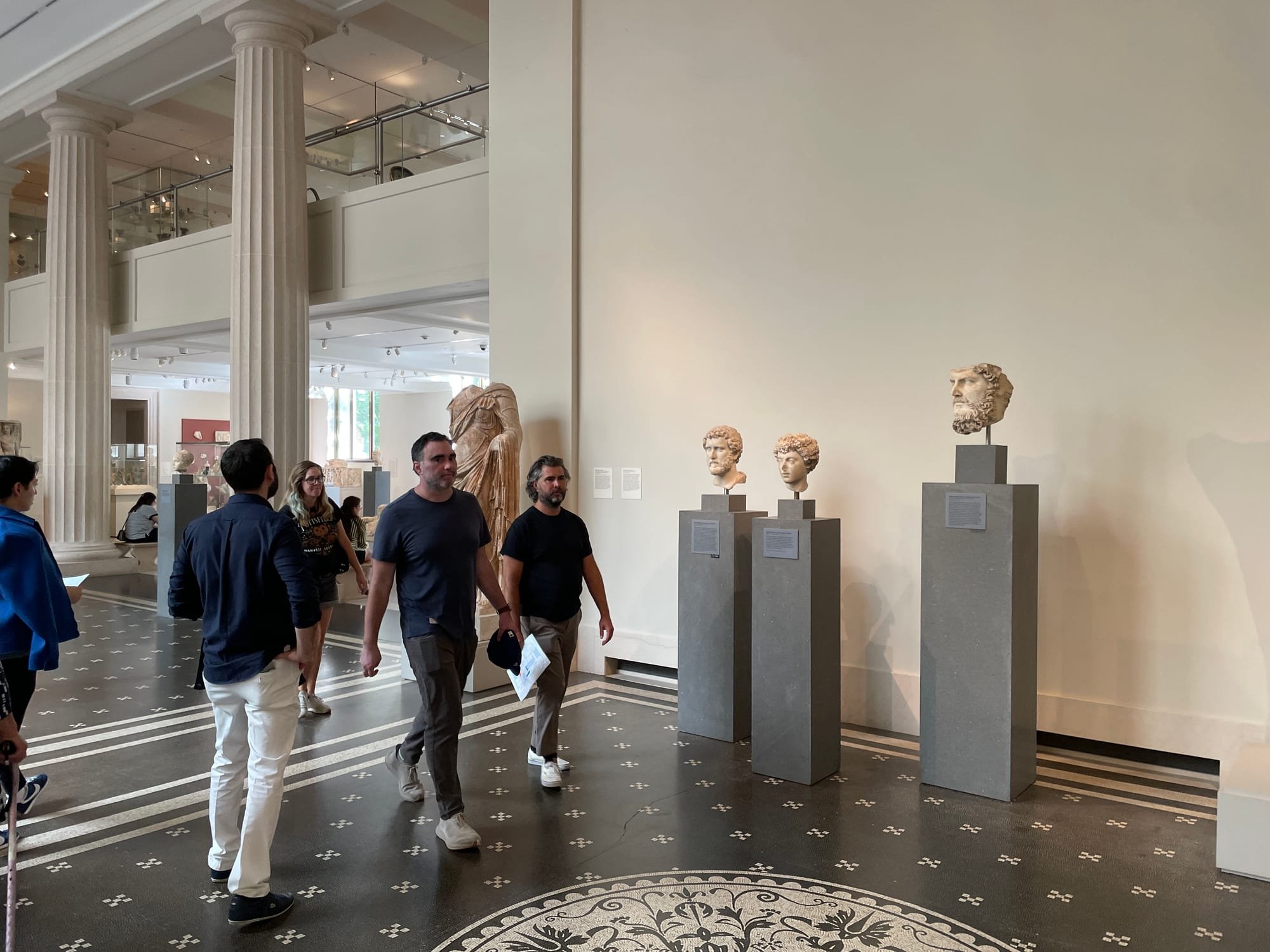
The Louvre's new director used her first full week on the job to say out loud what curators across Europe's flagship national museums have been signalling for years: the institution is running out of steam. Speaking to reporters on 17 June 2026, the director pointed to ageing climate-control systems, overflowing visitor corridors and a maintenance backlog that has stretched past the point where routine repairs can keep pace. The remarks landed less than eight months after a brazen October 2025 jewellery heist exposed physical-security gaps inside galleries that house some of France's most important crown and antiquities collections.
The story is not, on its face, about stolen necklaces. It is about how a country treats the infrastructure of its own cultural prestige when that infrastructure stops paying a political dividend.
What the new director actually said
The director's diagnosis, as reported by FRANCE 24 on 17 June 2026, was unsentimental. The Louvre is struggling to find the funding required to upgrade ageing facilities, even as visitor numbers continue to climb back toward pre-pandemic highs. The admission came with a careful framing: the museum is not failing, but it is being asked to operate a 21st-century visitor economy inside a building whose bones were laid down for an 18th-century court. The October 2025 theft — a roughly $100-million jewellery heist carried out in daylight hours near the Galerie d'Apollon — was treated by the director not as the central scandal but as the latest symptom of a maintenance regime that has been deferred for at least a decade.
That framing matters. It shifts the conversation from law enforcement (how did thieves get in?) to industrial policy (who is paying for the climate-control valves, the fire-suppression retrofits, the queue-management architecture?), and it puts the French state — not the private security contractors — back at the centre of the story.
The structural frame: heritage as deferred maintenance
National museums in Europe have spent two decades behaving like consumer brands. Blockbuster exhibitions, late-night openings, branded cafés, and the steady conversion of permanent collection space into ticketed temporary shows have kept visitor numbers high and, more importantly, kept the institutions politically useful. The Louvre, with roughly nine million visitors a year, sits at the apex of that model: it is both a global tourism asset and a soft-power instrument.
The deferred cost of that model is now visible. Climate control, vitrine security, structural glazing, and crowd-flow engineering were never glamorous line items; they were the kind of capital expenditure that gets cut when a finance ministry is under pressure and the museum's revenues look adequate on paper. Several of Europe's other major national museums — the British Museum, the Rijksmuseum, the Vatican Museums — have publicly wrestled with the same arithmetic in recent years, and the pattern is consistent: deferred maintenance accumulates quietly until a single incident forces an honest conversation.
In the Louvre's case, that incident was the October theft. Thefts of this scale are normally treated as policing failures. The new director's intervention reframes them as governance failures — the predictable result of running a heritage institution on a consumer-revenue model rather than a capital-investment model.
The political economy: who pays for Versailles 2.0
The funding question is, ultimately, a tax question. The Louvre's operating budget blends direct state subsidy with self-generated revenue: ticket sales, exhibition fees, retail, licensing, and the Louvre Abu Dhabi franchise. Each of those streams carries a political cost. Raising ticket prices alienates the domestic audience and contradicts the post-2018 free-admission policy for under-25s and low-income visitors. Cutting capital projects preserves the operating budget but defers the maintenance bill further. Seeking a fresh state appropriation requires a finance ministry that has its own priorities — pension reform, defence, energy subsidies — and that treats the Louvre as politically safe but not politically urgent.
There is also a quieter, structural pressure: the museum's workforce. Heritage conservators, registrars, and facilities engineers are civil servants whose pay scales have not kept pace with private-sector technical wages. A decade of under-investment in those roles means the Louvre's ability to plan and execute major retrofits is itself eroded, independent of any cash-flow question. You can write a cheque for a new HVAC system; you cannot instantly conjure the in-house engineering capacity to specify it.
What the counter-narrative gets right
A reasonable counter-reading is that the new director is performing a soft launch of a funding campaign, and that the "running out of steam" line is a message aimed at the Ministry of Culture rather than a description of an imminent crisis. The Louvre did, after all, reopen on schedule, continue to draw nine-figure visitor revenues, and successfully prosecute (or at least investigate) the October thieves. Heritage institutions are also prone to a particular kind of institutional pessimism: a new director often signals seriousness by enumerating problems their predecessor left unaddressed.
That reading does not contradict the diagnosis; it sharpens it. If the funding gap is real, it has been real for years and has been managed by successive directors through a combination of deferred maintenance, commercial expansion, and political quiet. The October heist forced the conversation into the open; the new director is now choosing to keep it there.
Stakes
If the trajectory continues, the cost falls in two places. First, on the collection itself: fluctuating humidity and temperature accelerate the degradation of wood, parchment, and certain pigments, and vitrine security failures are not abstract risks once a $100-million theft has been demonstrated to be operationally feasible. Second, on France's cultural-positioning in Europe: the Louvre's ability to anchor blockbusters, partner with regional museums, and project French curatorial authority into a more competitive global museum landscape depends on the perception that its infrastructure is reliable. A flagship in visible decay is a quieter form of reputational damage than a single heist.
The honest uncertainty here is the funding number itself. The director named the problem but did not, in the available reporting, attach a specific capital-requirement figure, a timeline, or a list of priority projects. Until those are on the public record, the "running out of steam" diagnosis is a credible opening argument rather than a closed case. What is no longer in dispute is that the Louvre's next decade will be defined less by what it acquires than by what it can afford to keep standing.
— Monexus frames this as a heritage-finance story, not a crime story. The October heist remains a policing matter; the funding gap is a governance one, and it predates the theft by years.