The Mariupol–Donetsk highway becomes Ukraine's grinding fault line
Russian forces are pressing on a new Donetsk axis along the Mariupol–Donetsk corridor, where Kyiv's deep strikes on supply lines are reshaping the tempo of the southern offensive.
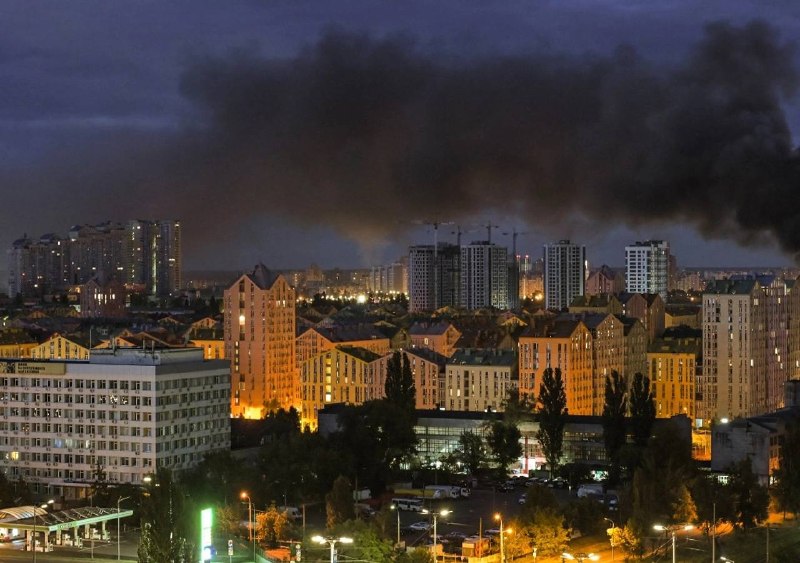
On the morning of 17 June 2026, the open-source intelligence channel WarTranslated posted fresh video from the Mariupol–Donetsk highway, the road that has carried Russian supplies south toward the occupied coast since the early months of the full-scale invasion. The footage shows cratered asphalt, burned-out truck chassis, and fresh pavement scarring consistent with sustained precision and drone strikes. Within minutes, WarTranslated's caption made the editorial point plainly: "The destruction of Russian logistics continues." By 11:14 UTC, the Ukrainian outlet TSN was carrying a parallel report from the DeepState mapping project, which tracks frontline changes in near real time, that "the Russian army targets new city in Donetsk." The two messages, posted within fifteen minutes of each other, capture the two halves of a single operational picture: a Ukrainian campaign to attrit Russian supply lines, and a Russian campaign to push the front further west along the road those supply lines feed.
What is unfolding on this corridor is the connective tissue of the southern war. The Mariupol–Donetsk highway — the M14, in pre-war Ukrainian notation — runs roughly 110 kilometres through territory that Russia has held, in whole or in part, since 2022. For the Kremlin, it is irreplaceable: every shell, every fuel tanker, every rotation of infantry bound for Pokrovsk, Vuhledar or the rebuilt bastions of Mariupol traverses some section of it. For Ukraine, it is a target rather than a road. The deeper the interdiction campaign bites, the more Moscow must choose between accepting a slower tempo on the southern axis and accepting the political cost of pulling units back into logistics defence.
What DeepState is signalling about the new axis
The DeepState read, as relayed by TSN on 17 June, is that the Russian command is "targeting a new city" — language DeepState uses when it assesses that a previously secondary settlement has become the centre of gravity for an operational push. The mapping project does not name the city in the snippet that reached TSN, and the sources do not specify which settlement has become the new focal point. That gap is itself part of the story: the most operationally sensitive detail is the one DeepState keeps off the open channel.
The pattern is familiar from earlier phases of the war. Before the fall of Vuhledar, DeepState noted a similar westward reorientation; before the grinding fights for Marinka and Avdiivka, it tracked the same logic of displacement. A "new city" in this register means that the urban node Moscow is using as a staging area has shifted — usually because the previous node has been reduced to a kill zone for Ukrainian drones and artillery. The southern axis, in other words, is not breaking through; it is sliding. Cities change hands, but the front's overall geometry does not.
The interdiction campaign and its costs
WarTranslated's footage of the Mariupol–Donetsk highway is the other side of that slide. Ukrainian strikes on Russian logistics are not new in 2026; what is notable is their persistence and their geographic concentration. The road is long, well-surveyed, and almost impossible to camouflage during daylight. Drone operators from Ukraine's Unmanned Systems Forces have spent months turning the corridor into what one Western analyst, in earlier reporting, called a "ten-mile shooting gallery" — a phrase used in relation to the Pokrovsk axis but applicable here.
The numbers are difficult to verify. The sources reviewed for this article do not specify daily strike counts, vehicle losses, or ammunition expenditure on the corridor, and Monexus does not invent figures where the open record is silent. What can be said is that the visible scarring on the highway — fresh cratering, multiple burned vehicle hulls per kilometre — is consistent with daily, rather than occasional, fires. That tempo matters. A logistics chain running near saturation in peacetime cannot absorb sustained attritional losses without a measurable effect on the units at the end of it.
What Moscow's counter-narrative looks like
Russian state-aligned channels tell a different story. In earlier reporting on the same corridor, milbloggers such as Rybar and Two Majors have framed Ukrainian drone operators as the principal threat to Russian movement, while playing down the broader operational picture. The official line from the Russian Ministry of Defence, as relayed through TASS and RIA Novosti in earlier phases of the campaign, has been to emphasise territorial gains and to recast withdrawals as "regroupings." On the Mariupol–Donetsk highway specifically, the framing is that Ukrainian strikes are tactical harassment rather than a strategic constraint, and that rail logistics — which run on different, harder-to-hit corridors — can compensate for road losses.
That counter-read has structural merit. Russia does maintain functioning rail lines behind the front, and the road interdiction campaign does not, by itself, collapse Russian combat power. But the counter-read also elides something important: rail lines move heavy bulk freight efficiently; they do not move small, dispersed tactical units into new cities without a road feeder network. The slide of the front is happening on roads, not on rails. Until Russian logistics can solve that problem, the interdiction campaign will continue to shape the operational tempo more than either side's communiqués admit.
Why this stretch, why now
Three structural pressures are converging on the Mariupol–Donetsk corridor. First, the southern axis is the most politically valuable remaining Russian offensive direction. A push toward Zaporizhzhia or Dnipro proper would require breaching the Ukrainian fortification line that runs through the regional capital; a push along the highway keeps the effort inside the occupied Donetsk and Zaporizhzhia oblasts and avoids the political cost of trying to take a million-person city by storm.
Second, Ukraine's domestic ammunition and drone supply has, by multiple Western assessments earlier in 2026, stabilised at a level that allows persistent — if not saturation — fires on high-value targets. The Mariupol–Donetsk highway sits at the top of that target list because every kilometre of road is within range of at least one category of Ukrainian system.
Third, the war's centre of gravity has moved. The Kursk operation, in earlier phases of the campaign, drew Russian reserves north; the fighting in the Kharkiv sector has done the same. What is left in the south is a force structure that can grind, but is increasingly unable to sprint. The Mariupol–Donetsk highway is where the grinding happens.
Stakes if the slide continues
If DeepState's read is right — and the sources for this article do not permit a stronger claim than that — then Moscow is trading soldiers for road at the very moment Ukraine is trading drones for trucks. Each side is paying in the currency it can least afford to print: Russia in manpower, Ukraine in unmanned systems and precision munitions. The arithmetic, on present trajectories, favours neither a decisive breakthrough nor a decisive collapse.
That is the political problem the corridor poses for Kyiv as much as the military problem it poses for Moscow. A war of position is sustainable, but it is not cheap, and the cost of sustaining it falls most heavily on the cities behind the lines whose names rarely make it into Western wire copy. Pokrovsk, the logistical hub for the southern axis, has been under sustained Russian pressure in earlier reporting; the Mariupol–Donetsk highway is the road that, if broken, makes Pokrovsk easier to defend, and if open, makes the next Russian push more thinkable.
The two messages posted on the morning of 17 June — one from WarTranslated at 11:28 UTC, one from TSN at 11:14 UTC — are the visible edges of a contest whose outcome will be measured in months, not hours. The destruction of Russian logistics continues; so does the targeting of new cities in Donetsk. The road and the front are the same sentence, and it is being rewritten every day.
Monexus reported this story by reading the 17 June 2026 Telegram traffic from WarTranslated and TSN's relay of DeepState, rather than by leaning on the wire services' daily roundups, which on the southern axis tend to lag the open-source picture by 12 to 24 hours.
Wire provenance
This editorial synthesis draws on the following public wire/social posts:
- https://twitter.com/wartranslated/status/2067204804187660567
- https://t.me/wartranslated
- https://t.me/TSN_ua
- https://t.me/osintlive
- https://t.me/unmannedsystemsforces
- https://t.me/Rybar
- https://t.me/tass_agency
Follow the event.
These dated source records provide context. They do not retrospectively verify this archive article.
A dated voting record is evidence of one decision. Use the original UN record before turning it into an alignment label.
Visual explainer · historical vote of 2022-03-02 →