Mbappé draws level with Henry as France open World Cup against a fading Argentina
Mbappé has tied Thierry Henry as France's joint record scorer at 27. Hours later he walked out at the 2026 World Cup against an Argentine side increasingly built around the diminishing minutes of a 38-year-old Messi.
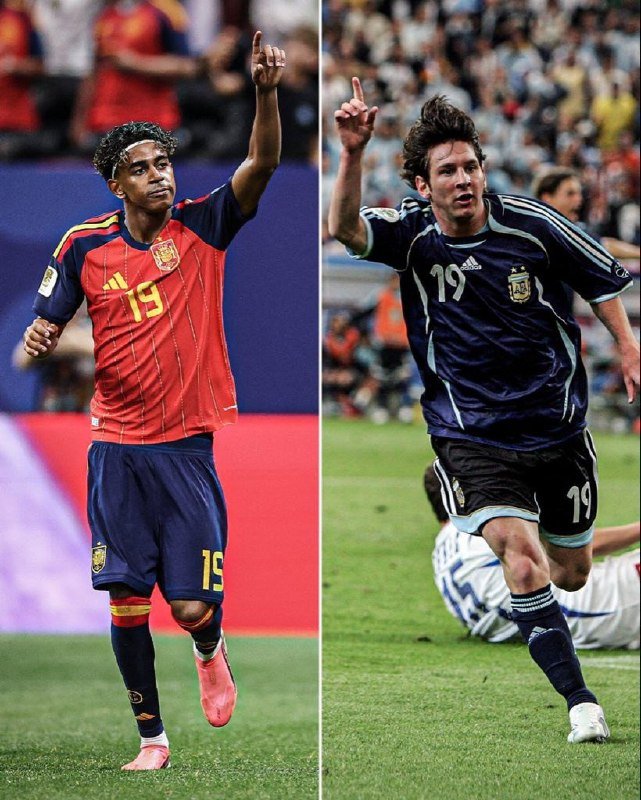
Kylian Mbappé began Tuesday as France's joint all-time leading scorer. By evening he was walking out at a World Cup against an Argentina side still orbiting Lionel Messi. The two facts, stacked on top of each other, sketch the handover the tournament was always going to dramatise.
On 16 June 2026, BBC Sport's "Project Mbappe" feature confirmed that the 27-year-old had drawn level with Thierry Henry on France's scoring list. Hours later, CBS Sports Headlines set the frame for the opening fixture: Messi's latest quest for glory, Mbappé's defensive duties, the first truly mass World Cup match of the 2026 cycle. Two strikers, two trajectories, one stage.
The record, and what it actually measures
Henry's mark — 51 goals — has stood as the benchmark for a generation of French forwards. Mbappé reaching it at 27, with a major tournament still ahead of him in North America, shifts the conversation. The number itself, as BBC Sport's piece implicitly argues, is less interesting than the curve. Mbappé is not catching Henry; he is on course to pass him inside the calendar year. The milestone is a waypoint, not a finish line.
The structural point is sharper still. France's record books have long been dominated by players who arrived as finished products: Henry, after his Arsenal education; Michel Platini, after a full Juventus cycle; Zinedine Zidane, at the peak of his Real Madrid years. Mbappé is breaking the record while still structurally a work in progress — the defensive responsibilities CBS Sports flagged against Argentina are precisely the part of his game that is still being built. The goals lead; the all-round player is catching up.
Argentina's problem, named plainly
The other half of the opening fixture is harder to talk about honestly. Messi is 38. The CBS Sports framing — "Messi's latest quest for glory" — is the polite version. The less polite version is that Argentina's attacking architecture still runs through a player whose minutes, by every available indicator, are finite. The team selection against France will tell us how much manager Lionel Scaloni is prepared to ask of those minutes.
This is not an Argentine problem alone. Portugal faces the same arithmetic with Cristiano Ronaldo. So does Brazil, in a different register, with a younger squad but no obvious heir to the jersey's symbolic weight. The 2026 World Cup is the first in a decade where the tournament's two most marketable narratives are explicitly generational: the last tournament of one era, the first of the next.
The structural read
What ties the two threads together is a question of who carries the tournament's centre of gravity. The 2022 World Cup in Qatar was, in commercial and narrative terms, a Messi tournament by default — Argentina won, Messi won the Golden Ball, and the broadcast product organised itself around his last dance. The 2026 edition, hosted across the United States, Canada and Mexico, is being sold to broadcasters and sponsors on a different premise: that the next cycle belongs to Mbappé, to Erling Haaland, to a cohort of players who arrived fully formed.
Mbappé drawing level with Henry on the eve of the tournament is therefore not just a French statistical story. It is a credentialing moment. It tells the global audience — and, more importantly, the commercial partners underwriting the tournament — that the handover has formally occurred. The interesting contest is no longer whether Mbappé can lead a French charge; it is whether anyone can build a coherent challenge to a French side that, for the first time in a decade, enters a World Cup as the bookmakers' clear favourite.
What to watch in the group stage
Two things will tell us whether Tuesday's framing holds. First, how Scaloni uses Messi. If Argentina's talisman is rested against weaker opposition and unleashed only in the knockout rounds, the squad will be quietly admitting the minutes problem. Second, how Didier Deschamps deploys Mbappé in the defensive phase. CBS Sports flagged the defensive workload; if France's system requires Mbappé to track back in ways that visibly tire him before the quarter-finals, the record-breaker becomes a fatigue story by the second week.
What remains genuinely uncertain is the Argentine supporting cast. Julián Álvarez, Lautaro Martínez and the younger attackers have not yet settled into a hierarchy that functions without Messi as the gravitational centre. The tournament will test whether that hierarchy can be improvised on the fly, or whether Argentina's ceiling remains whatever Messi, on a given night, can still produce.
The records will keep falling. Mbappé will pass Henry, almost certainly before the year ends. The question the 2026 World Cup is actually asking is older and more uncomfortable: what does a football nation do when its central story is running out of pages while the next chapter is still being written.
This publication framed the opening fixture as a generational handover rather than a head-to-head, on the grounds that the more durable story of this tournament is the curve of two careers meeting at one stadium, not the result of a single group game.
Wire provenance
This editorial synthesis draws on the following public wire/social posts:
- https://en.wikipedia.org/wiki/Kylian_Mbapp%C3%A9
- https://en.wikipedia.org/wiki/Thierry_Henry