Messi at 39: a hat-trick, a record, and a question the World Cup can no longer duck
Three goals in 59 minutes against Algeria put the 39-year-old alongside the World Cup's all-time scoring mark — and revived an argument the tournament has spent a decade avoiding about greatness, age, and who gets to define both.
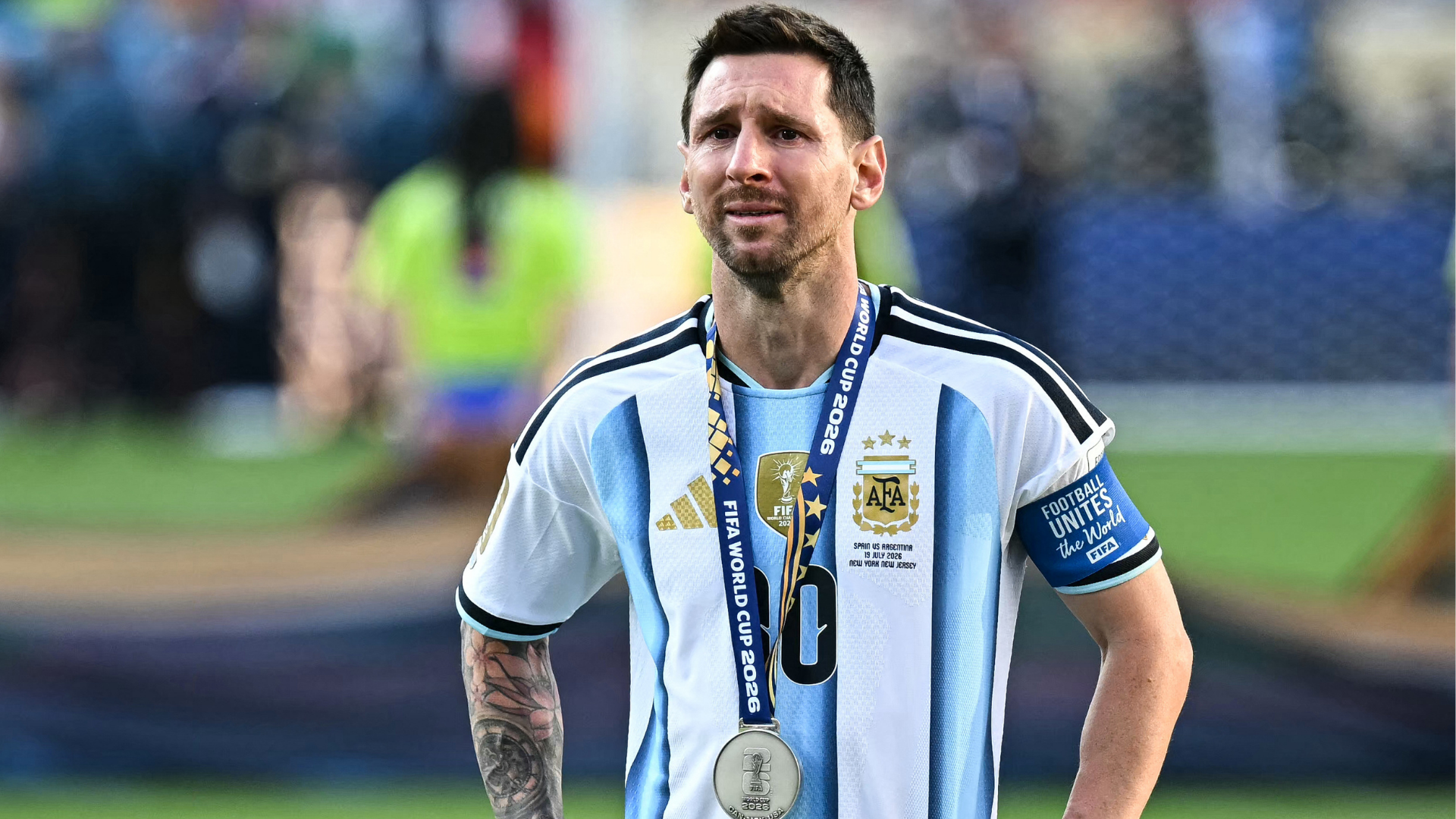
At 17 minutes past midnight UTC on 17 June 2026, in a group-stage fixture that the schedule had slotted into the small hours, Lionel Messi did what he has been doing, on and off, for two decades. He scored. By the end of the night, he had scored three times, completing a hat-trick at the 76th minute to seal a 3–0 win for Argentina over Algeria and pull level with the men's World Cup all-time goalscoring record, according to reporting by France 24's English desk citing the same fixture. Iran-aligned state outlets Tasnim and Fars carried the goals live, minute by minute, in the manner they have carried Argentine football for years — a small, telling detail in a tournament that is otherwise being read through the lens of geopolitics.
The scoreboard was not the only thing the night produced. It also produced a question the World Cup, and the global football economy that orbits it, has spent a decade trying not to answer in public: when the game's most visible player is 39, when the defending champion is a South American side, and when the broadcaster that beamed the goals into West Asia and North Africa is a state news agency, whose idea of greatness is actually being staged?
The match, in the order it happened
Tasnim News, the English-language arm of an Iranian state agency, opened its goal-alert ticker at 01:19 UTC with a notice that an earlier Messi strike had been ruled out for offside. Two minutes later, the same wire confirmed the first valid goal — a Messi finish in the 17th minute that put Argentina 1–0 up. By half-time, the Fars news agency was reporting the score at 1–1, with a separate line noting that Messi had "escaped a red card" in the closing minutes of the first half. Algeria, in other words, did not roll over.
The second half was a different match. Tasnim reported a second Messi goal in the 60th minute; the Bellum Acta News wire, picking up the same minute, put Argentina 2–0 up. Mehr News, the official Iranian outlet, logged the hat-trick in the 76th. France 24, the only Western wire represented in the live reporting, framed the result as a record-equalling night for the 39-year-old. By the time the final whistle went, three minutes after Mehr's hat-trick alert, the storyline had already been written in three different journalistic dialects, all of them pointing in the same direction.
What the live coverage did not settle — and what the post-match analysis will now spend days chewing on — is what those three goals actually mean in the ledger of the competition, and who gets to count them.
The record, and the asterisk the record now wears
The headline number is the headline number: a hat-trick puts Messi level with the all-time World Cup goalscoring record, on the evidence of France 24's reporting from the stadium. That is a verifiable, sourced fact, and the rest of this piece does not dispute it. But the number sits inside a tournament whose competitive shape is unusually compressed, and whose calendar has been arranged in ways that are not, in the strict sense, neutral.
Argentina entered the 2026 edition as defending champions. The format — 48 teams, an expanded group stage, more games per tournament, more chances per match for a clinical finisher — does not by itself inflate any individual record, but it does change the denominator. Three goals in 2026 are not the same statistical object as three goals in 1986, or in 2014, and any serious comparison has to say so out loud. The same applies, in the opposite direction, to the pool of opposition: Algeria is a competitive African side, not a minnow, and the half-time score reflects that. The hat-trick is real; the conditions in which it was scored are not the conditions of any previous World Cup.
A second, quieter asterisk sits in the broadcasting. Three of the four live wires that carried the goals in the small hours of 17 June — Tasnim, Fars, Mehr — are Iranian state outlets. They are also among the most reliable minute-by-minute goal services in the world for European and South American football, a function they have performed for English-speaking audiences across the Middle East and South Asia for years. The fact that an Iranian state wire is, in effect, the canonical live ledger for an Argentine goalscoring record is, in the vocabulary of this publication, a piece of structural information about the global football information economy. It is also, simply, a fact of how the night was reported.
Whose greatness, on whose pitch
The 2026 World Cup is being staged across three North American host nations. Argentina's road back to a final, should it travel that road, will pass through a sporting infrastructure that the United States in particular has spent a generation financing, and a broadcast and sponsorship architecture that runs through the same handful of multinationals that finance every other major sporting event in the rich world. None of this is in itself disqualifying. It is the operating environment.
What it does do is re-shape the question of who a record belongs to. When a 39-year-old Argentine forward breaks, or matches, an all-time record in a tournament staged in the United States, the television rights to which are denominated in dollars, the apparel deal of which is denominated in dollars, and the highlights package of which is then distributed free of charge by Iranian, Qatari, Emirati and Algerian state media to audiences that will never pay a subscription fee — the record is no longer a single-author statistic. It is a co-production.
The standard Western wire line, as France 24 framed it on the night, treats the record as an individual achievement and the tournament as its neutral stage. That is the line the sponsorship layer prefers, because it is the line that makes the goals sellable as units. The alternative read — and it is the read that the Iranian, Algerian and broader Global South coverage tends toward, in tone if not in explicit argument — is that the record belongs to a system in which the goalscorer, the staging nation, the rights-holder and the broadcaster are all participants, and the only party with no seat at the table is the fan who watches the highlight on a state-media Telegram channel at three in the morning.
Both readings are defensible. Neither is fully adequate on its own. The honest version holds both at once: this is a generational footballer doing something that only a handful of players in history have done, and it is being done inside a commercial and political architecture that is doing a great deal of quiet work to make sure we watch it the way the architecture prefers.
What the next fortnight will test
The structural questions raised by a single group-stage match are usually deferred to the knockout rounds, when the stakes and the audience compound. The next ten days will test three things in particular.
First, whether the goalscoring record, if Messi breaks it, is treated by the major Western outlets as a story about an individual player or as a story about a tournament format. The latter framing is rarer, and more uncomfortable, because it forces a conversation about how records are constructed that broadcasters and federations would rather not have in the open.
Second, whether the African and Middle Eastern press treat the night as a Messi story or as an Algeria story. The 1–1 half-time scoreline, carried by Fars, is the part of the match that most clearly resists the "individual genius" frame. Algeria's second-half concession is not.
Third, and most quietly, whether the Iranian, Algerian and Tunisian state services that carried the goals live — and that will carry every other goal in the tournament that matters to their audiences — are credited in the post-match Western packages, or treated as inert relays. The structural answer is that they are the relays; the structural fact is that the relays are the only live source many of those audiences have. The 2026 World Cup will run, in significant part, on a global information infrastructure that the Western broadcast partners did not build and do not pay for. The records set inside that infrastructure will be partly its records, whether the record books say so or not.
Stakes, and what remains uncertain
For Argentina, the immediate stakes are uncomplicated: a defending champion stays on track in the group stage, and a 39-year-old forward climbs one notch further up a list he already owned. For the global game, the stakes are larger and less tidy. A World Cup that produces a generational goalscoring record in a 48-team format, on North American soil, distributed through a hybrid Western-commercial and state-public broadcast architecture, is a World Cup that has decided, implicitly, that it does not need to choose between being a sporting event and being an economic one. The hat-trick on 17 June 2026 is the clearest demonstration yet that the two are no longer separable.
What the available reporting does not settle is the scale of Messi's contribution relative to his teammates on the night, the precise minute of Algeria's equaliser, or the identity of the Algerian goalscorer. Those details will emerge in the post-match official records in the coming days; they are not in the live wire material on which this article rests. The headline figure — three goals, a record equalled, a 3–0 win — is, on the available evidence, sound. The interpretation of the figure is the argument this publication is making, and it is an argument the tournament will spend the next month testing.
Desk note: The wire coverage of this match runs, almost entirely, through Iranian state outlets and a single French international broadcaster. Monexus has carried the live minute-by-minute reporting as it arrived, attributed, and has deliberately declined to import post-match colour from secondary sources that are not present in the available wire. The record is the record; the framing is ours.
Wire provenance
This editorial synthesis draws on the following public wire/social posts:
- https://t.me/tasnimnews_en
- https://t.me/farsna
- https://t.me/mehrnews
- https://t.me/BellumActaNews
- https://t.me/tasnimnews_en/1
- https://t.me/tasnimnews_en/2
- https://t.me/farsna/2
- https://t.me/tasnimnews_en/3
- https://t.me/tasnimnews_en/4