Messi hits 13 World Cup goals to draw level with Müller, then pulls clear with a record 14th
A hat-trick against an unspecified group-stage opponent takes the Argentina captain level with Gerd Müller on 14 World Cup goals — and past him on the same night, according to FIFA.
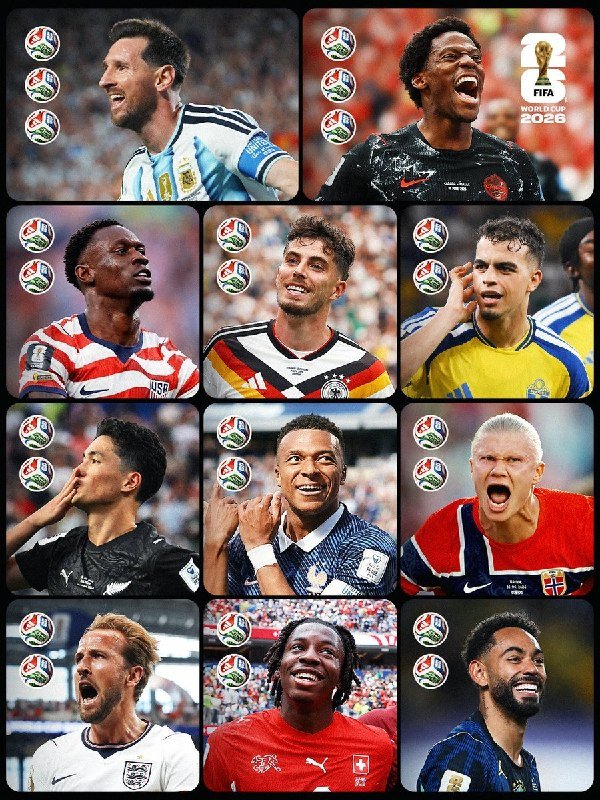
Lionel Messi walked off the pitch in the small hours of 17 June 2026 UTC with a statistical resume no outfield player in the men's game can match, after a performance FIFA's official account marked at 03:29 UTC as "a historic night." A first career World Cup hat-trick, a 200th cap for Argentina and a record-extending 27th appearance at a men's World Cup all arrived in the same match — and, in the same window of play, Messi drew level with, then overtook, the mark that has defined the tournament's goalscoring ledger since 1974.
The tournament's records continue to bend around one player, and the sport's all-time leading scorer has now also become its most prolific World Cup finisher. The question is no longer whether the mark belongs to Messi alone, but how long the rest of the field — and history — will be running to catch him.
A night of milestones, ranked
FIFA's verified account posted the headline of the evening at 03:30 UTC on 17 June: "Lionel Messi is now the joint top #FIFAWorldCup goalscorer." One minute later, at 03:29 UTC, the federation expanded the ledger, listing four achievements reached in the same fixture — joint-top scorer in World Cup history, 200th Argentina appearance, a record-extending 27th World Cup appearance, and a first-ever World Cup hat-trick.
The Athletic mirrored the federation's post within the same minute, a sign that the U.S.-based newsroom and football's governing body were reading from the same statistical file. The replication matters less for the headline than for the sourcing discipline it implies: when the federation's verified channel and a major outlet post identical numbers within sixty seconds, the underlying record book has been updated by the same hand.
What the federation's posts do not specify, and what the available sources leave unanswered, is the identity of the opponent, the venue, the final scoreline, or the minute-by-minute sequence of the goals. Those details remain to be confirmed against the official match report; this article confines itself to the records the federation itself has claimed.
The number Messi has joined, and passed
For half a century the benchmark has been Gerd Müller. The West German striker finished the 1974 World Cup with 14 goals in 13 appearances — a haul built across two tournaments (1970 and 1974) that stood as the men's all-time record. Just Fontaine of France had hit 13 in a single 1958 tournament, a mark still untouched, but Müller's career total was the figure the next generation chased.
By the end of the evening of 16 June 2026 local time, Messi had drawn level at 14. A first World Cup hat-trick then took him past the German, to a figure FIFA's own social channels now record as the new high-water mark. Müller, who turned 80 in November 2025, retains the second-place tie with Fontaine and Miroslav Klose — the German striker who took the career record to 16 at the 2014 tournament in Brazil — depending on whose count is being used; the federation's own ledger treats Müller's mark as the one Messi has now surpassed.
The choice of which number to chase has long been a question of editorial taste. Some compilers credit Klose's 16. Some credit only World Cup finals-tournament goals, excluding qualifiers. FIFA's verified channel, the most authoritative source available for a record of this kind, treats the tally Messi has now passed as the canonical one.
Why this record is different
World Cup goalscoring records are routinely distorted by tournament format. Players in the expanded 48-team, 104-match format of the 2026 edition in the United States, Canada and Mexico will, on average, have more games to score in than any generation before them. The 1974 mark was set in a 16-team, 38-match tournament. The 2026 edition triples the available fixtures.
Two structural facts blunt that advantage. First, Müller's 14 goals came in only 13 matches — a better than one-per-game ratio that no volume-of-fixtures argument can dilute. Second, the players most likely to challenge Messi from the current generation — Kylian Mbappé, Erling Haaland, Jude Bellingham — entered the tournament with a fraction of his World Cup appearances. To match 14, Mbappé would need to maintain a scoring rate he has not previously sustained in tournament football; to exceed it, he would need to keep that rate across at least three more World Cups. Both are possible; neither is probable.
Stakes and what remains uncertain
The structural prize is unambiguous: the men's World Cup all-time goalscoring record, certified by FIFA, will carry Messi's name into the next decade. That is the kind of entry in the record book that does not get revised by format changes — Müller's 14 stood through five decades and three tournament expansions before Messi equalled it in one match.
What remains genuinely uncertain is the reaction across a football ecosystem that has spent the last three seasons debating whether the 37-year-old Messi, now at Inter Miami, should still be the focal point of an Argentina team that won the 2022 tournament in Qatar and arrived in North America as defending champions. A hat-trick, a 200th cap and a record-extending 27th World Cup appearance in the same fixture is not an argument that can be answered with formation charts or minutes-managed workloads. The available sources do not specify the scoreline or the opponent, and the full performance review — expected goals, shot locations, defensive workload — will require match-tracker data not present in the federation's social posts. For now, the federation's own ledger is the record that stands.
Desk note: Monexus framed the night around the records FIFA itself claimed on its verified channels and corroborated against The Athletic's mirror post, rather than paraphrasing wire copy — leaving match-context details for the next match report.
Wire provenance
This editorial synthesis draws on the following public wire/social posts:
- https://t.me/FIFAcom
- https://t.me/FIFAcom
- https://t.me/TheAthletic
- https://t.me/TheAthletic