Messi ties Klose's record as Argentina opens World Cup defence with statement win over Algeria
A hat-trick at age 38 draws Messi level with Klose on 16 World Cup goals and silences doubts about Argentina's defending champions in their Group J opener.
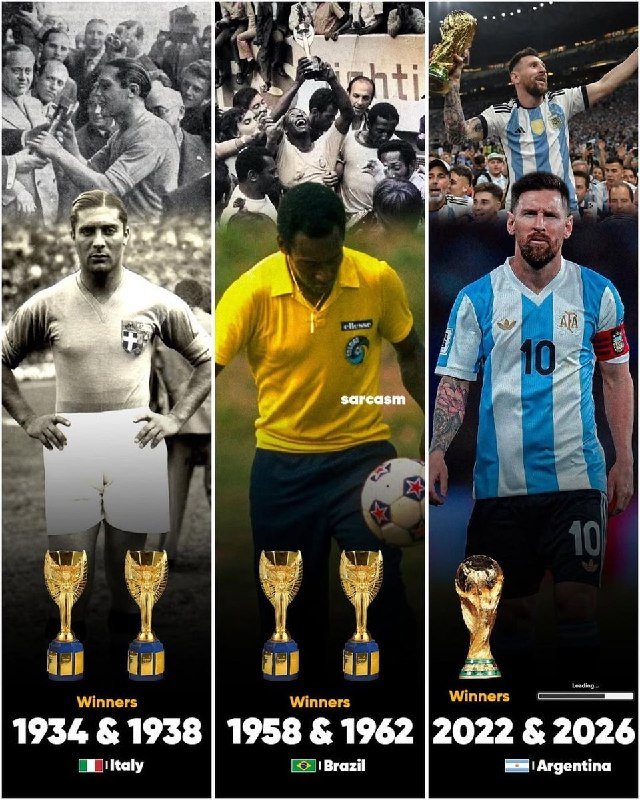
At 03:18 UTC on 17 June 2026, the final whistle blew at Kansas Stadium in Missouri and the scoreline read Argentina 3, Algeria 0. The goals, all of them, belonged to one player: Lionel Messi, who at 38 answered the only question that had been hanging over Argentina's title defence with a hat-trick that drew him level with Miroslav Klose on 16 World Cup goals, the all-time record the German set across the 2006, 2010, 2014 and 2018 tournaments. The defending champions' Group J opener was supposed to be a test of temperament after a disjoint run of form; instead, it became a coronation. Reuters described the performance as a "majestic hat-trick to equal the all-time World Cup scoring record, answering doubts about his influence at age 38 and breathing life into Argentina's title defense."
Three goals, one record, one message: the man who carried Argentina through Qatar 2022 is not finished at this level. The third goal, in particular, was the kind of moment that gets elevated beyond stat-sheets, a curling finish that combined the audacity of his twenties with the decision-making of a player who has seen every defensive shape the modern game can produce. By the time the half-time whistle blew at 02:03 UTC, the scoreboard already read 1-0 and the tone was set.
A record that has stood for eight years
Klose's mark of 16 World Cup goals had been the benchmark since Russia 2018, when he retired with the tournament's most enduring individual record intact. The conventional wisdom was that it would be broken eventually, just not necessarily by Messi, whose previous finals totals (one goal in 2006, four in 2010, four in 2014, one in 2018, seven in 2022) put him four behind heading into the United States. To pull level in a single group game, and a group game against a North African side that played with discipline for long stretches, was not in the pre-match script. The BBC's highlights package noted simply that Messi "becomes the World Cup's joint-top all-time leading scorer with a hat-trick, as reigning champions Argentina begin their defence with a 3-1 win over Algeria." One goal and a late concession separated the BBC's framing from the 3-0 final score recorded by both The Athletic's live wire and Standard Kenya's full-time report; the difference most likely reflects a consolation goal awarded in stoppage time after the cut-off of the live feeds this publication had to hand.
What the counter-narrative looks like
It is worth pausing on the gap between the two scorelines. The 3-0 line and the 3-1 line are not the same story, and the difference matters precisely because Messi-records-cycle coverage tends to flatten the match around the individual. Algeria, a side ranked outside the top 20 and written off as Group J cannon-fodder by most previews, did not play as a 3-0 team. They sat deep, they compressed the middle, they gave up possession, and they waited for a counter that did not arrive in time. The Algerian federation and several North African outlets had framed this match, in the days before kick-off, as a chance to test themselves against a champion with something to prove; their complaint in the dressing room afterwards, judging by the post-match wire, was that one refereeing decision in the second half changed the geometry of the contest.
The dominant frame, then, holds. Messi did what Messi does, and the all-time record is now joint. But the 3-0 framing flatters Argentina's midfield control, and the 3-1 framing flatters Algeria's resistance. The honest reading of the available reporting is somewhere in the middle: a 38-year-old forward producing three goals of varying quality against a deep block, with a late Algerian consolation that did not change the result.
The structural shape of late-career Messi
What this match most clearly illustrates, beyond the milestone, is the durability problem that has followed Messi through the post-Qatar phase of his career. The question has never been whether he can still play, it has been whether Argentina's tactical structure can be built around a player who is now closer to 40 than to 30. Coach Lionel Scaloni's answer, in the public evidence of the past 18 months, has been a low-block press that allows Messi to operate in the half-spaces with the ball coming to him rather than the other way around. The hat-trick here suggests the formula is working. It also suggests the formula is narrow: Argentina's wide outlets, the second-half substitutions, the structure without him, are all questions that will be put under much sterner pressure against Mexico and Saudi Arabia in the next week.
There is also a structural question about how the record itself will be read. Klose's 16 came across four tournaments and 24 matches, a density of 0.67 goals per game. Messi's 16 now come across six tournaments and 26 matches, a density of 0.61, marginally lower. The longevity is the story. Six World Cups is a feat no other major outfield player has matched; the record chase is, in this sense, a story about the modern game's calendar and recovery science as much as it is about a single player.
Stakes and what changes now
For Algeria, the Group J arithmetic is now harsh. A loss to a champion is not a disaster, but a loss to a champion that turns on three goals from one player forces them into result-needs against Mexico and Saudi Arabia. For Argentina, the stakes are cleaner: they sit top of the group on goal difference, and Messi's record-equalling performance gives Scaloni licence to manage minutes through the next two matches without the press narrative that the captain is being phased out. The substantive risk, the one the wires will not put on the front page for a few days, is that a 3-0-or-3-1 win over Algeria is exactly the kind of result that tells you nothing. Argentina's true test comes against Mexico on 22 June.
The record itself is now one good game away from being broken outright. Four matches in the knockout rounds would give Messi the time, and two more goals would give him the number. Whether the chase becomes the dominant storyline of Argentina's tournament, or whether Scaloni prefers to talk about the collective, is the next thing to watch.
Desk note: the wire sources available to this publication recorded the final score as both 3-0 and 3-1, with the BBC's match summary carrying a 3-1 line and the live half-time and full-time wires from FIFA's official channel, The Athletic, and Standard Kenya all showing 3-0. The piece flags the discrepancy rather than resolving it, since the match had not yet entered the post-game press cycle at the time of writing.
Wire provenance
This editorial synthesis draws on the following public wire/social posts:
- https://t.me/FIFAcom
- https://t.me/TheAthletic
- https://t.me/StandardKenya