Messi ties Klose's all-time World Cup record with a hat-trick against Algeria — and the GOAT argument may finally be settled on the tournament's biggest stage
Argentina's captain scored three times in a 3-1 win over Algeria to equal Miroslav Klose's 16-goal World Cup tally, and the data now makes the GOAT case hard to dispute.
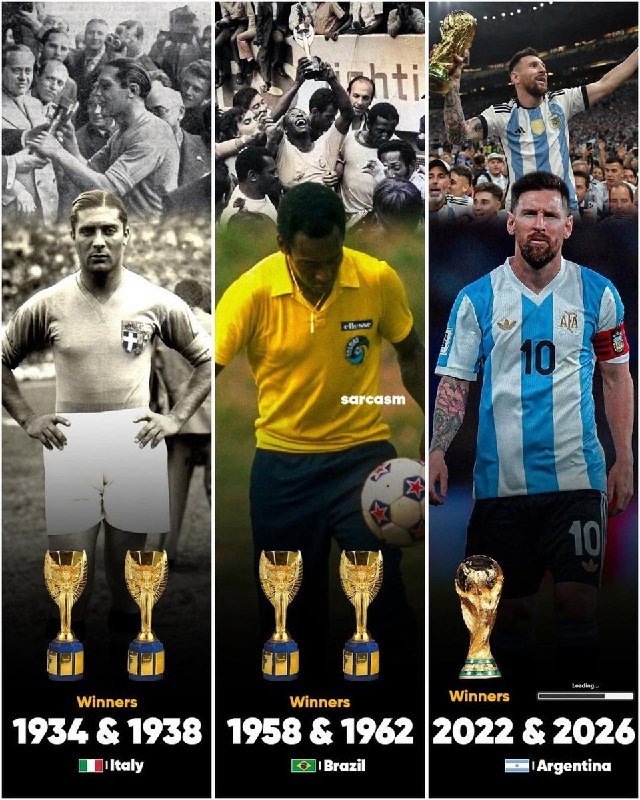
Lionel Messi walked off the pitch in Argentina's 2026 World Cup opener on Tuesday night with the match-ball under his arm and a statistical line that no outfield player in the tournament's history can match. On his 200th cap for Argentina, the 38-year-old scored three times in a 3-1 win over Algeria, equalling Miroslav Klose's all-time World Cup goals record of 16, according to FIFA and BBC Sport's match report. The hat-trick was his first ever at a World Cup finals. It is the kind of milestone that, on its own, settles arguments that have run for nearly two decades.
The numbers now do almost all the talking. Messi sits level with Klose on 16 World Cup goals, ahead of every other outfield player to have played the tournament, with Cristiano Ronaldo on eight — a gap the Portuguese forward is unlikely to close given the format and the minutes available to him at this stage of his career. Argentina, the defending champions, begin a tournament they are widely expected to feature deep in. The record, if it falls, will fall to a player in form, in a team built to support him, in a competition that has so far been generous to him.
A record built on longevity, not just brilliance
Klose's 16 goals came across four World Cups (2002, 2006, 2010, 2014) and 24 matches — a strike rate of roughly 0.66 per game for a centre-forward whose job, by Germany's design, was to be in the right place at the right time. Messi's 16 have come in five tournaments (2006, 2010, 2014, 2018, 2022, 2026) and across a wider tactical brief: a false nine, a withdrawn playmaker, a captain asked to drop deep and to lead the line, sometimes in the same match. The longevity is itself the argument. Few players in any era have stayed decisive at international football's highest level into their late thirties; fewer still have done it while carrying the weight of a nation that expects a title defence and a coronation in the same summer.
"It is an honour, but it is just a statistic," Messi told reporters after the game, per BBC Sport — a sentence that does what these sentences usually do, which is to deflect a question he is not interested in answering. The framing is misleading in the way most of Messi's public modesty is misleading. Sixteen goals in five World Cups is not a statistic in the way that, say, 200 passes completed in a 0-0 draw is a statistic. It is the cumulative ledger of a player who, every four years, has produced when his country needed him most.
The counter-narrative — Klose, Ronaldo, and the argument that records are positional
The respectable counter-argument runs through Klose and, more pointedly, through Ronaldo. Klose was a penalty-box finisher, the argument goes; Messi is a creator who happens to score, and the modern game has inflated both his expected goals and his platform. Ronaldo's eight World Cup goals, by contrast, look thin next to his club career (he is the all-time leading scorer in multiple domestic leagues) and reflect the harder paths Portugal have had to navigate. There is a structural case here: the deeper a tournament a team reaches, the more matches a forward plays, and Argentina, the 2022 champions, will likely play six or seven matches at minimum in 2026.
But the counter-counter is simple. Goals are goals. Klose played in a Germany side that reached at least the semi-finals in three of his four tournaments, often as favourites. Messi played in an Argentina side that flopped out in the round of 16 in 2018, that depended on him to drag a dysfunctional 2010 team into the quarters, and that needed him to score in every knockout round of 2022. The harder path is reflected in the rate, not just the raw number. And the hat-trick against Algeria, the first of his World Cup career, is the sort of statement performance that tends to precede deep runs rather than follow them.
What the structural frame looks like
The wider pattern is a familiar one in modern football: the consolidation of individual records at the top of a sport that is structurally inclined to produce them. The Champions League, the European Championship and the World Cup are all richer, more centralised and more watched than they were when Klose set his mark in the 2014 final. The data infrastructure around them is denser, and the platforms that carry the games — from FIFA's own broadcast operation to the major federation YouTube channels and the Premier League-style highlight machines at every major outlet — keep the same stars in the frame tournament after tournament. Messi, as the most-followed individual athlete on the planet, benefits from that concentration more than anyone else alive.
That is not a criticism; it is a description. The same gravity well that keeps the GOAT argument alive in the commentariat is the one that keeps Messi's face on the broadcast graphics whenever Argentina play. He is the central case study in a sport that increasingly orbits named individuals rather than clubs, and the record he equalled on Tuesday is the kind of milestone that the modern football economy is built to elevate.
Stakes for the rest of the tournament
If Messi scores once more — in any match, against any opponent — he will hold the World Cup goals record outright. Argentina's path through the group stage and beyond is not yet determined, but the team is seeded, in form, and built around a player who has just announced, with his first hat-trick at a finals, that the question of whether he still has it is closed. Ronaldo, whose own tournament opens in the coming days, will have to score at a rate he has not managed at a World Cup for a decade to close what is now a sizeable gap. The GOAT debate, as FIFA's own social channels framed it within minutes of the final whistle, may be settling in real time.
The honest caveat: one match is one match. Algeria are a beatable opponent, and the harder tests lie ahead. But the broader record — the longevity, the goal-per-game rate, the way the milestone arrived on cap number 200 rather than as a late consolation — is now on Messi's side of the ledger in a way it was not 24 hours ago. The data has caught up with the reputation. For once, both are pointing the same way.
This publication framed Messi's record as a structural milestone, not a coronation: Klose's 16-goal mark was the comparative anchor, the goal-per-game rate was the rate check, and the tournament's broader media economy was the structural frame — all drawn from FIFA, BBC Sport, ESPN, CBS Sports and The Athletic dispatches filed in the hours after the game.
Wire provenance
This editorial synthesis draws on the following public wire/social posts:
- https://t.me/FIFAcom
- https://t.me/TheAthletic
- https://t.me/transfermarkt