Messi draws level with Klose on 16 World Cup goals as Argentina open defence with win over Algeria
A first World Cup hat-trick for the 38-year-old pulls him level with Miroslav Klose on 16 tournament goals, and gives holders Argentina a 3-1 start to their title defence.
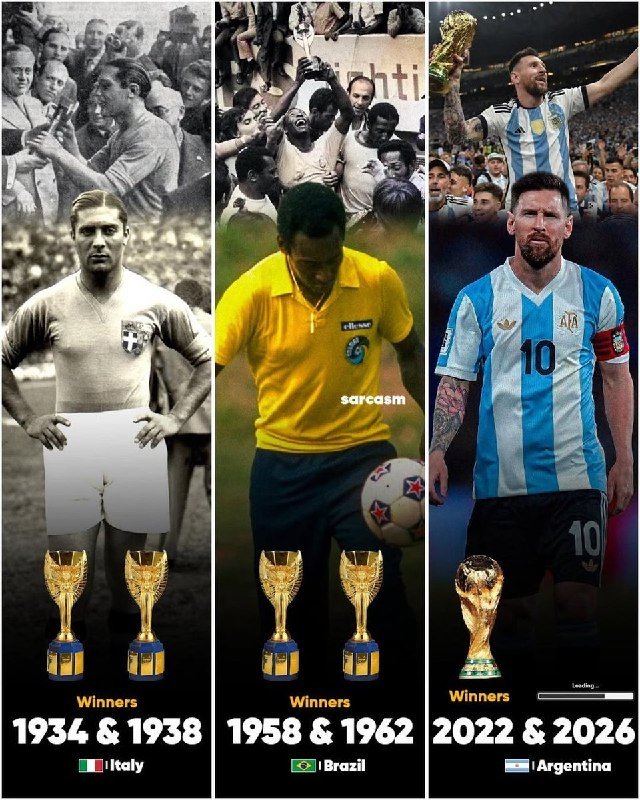
Lionel Messi scored the first World Cup hat-trick of his career on Tuesday evening in the United States, pulling level with Miroslav Klose on 16 goals in the competition's history and giving holders Argentina a 3-1 win over Algeria to open the defence of the title they lifted in Qatar. The Argentine captain reached the mark on his 200th senior appearance for the national team, a milestone that places him in a category of his own in the modern men's game and reframes a record book long dominated by European finishers.
The 38-year-old's treble — his first in the tournament across five separate World Cups — also makes him the joint-top scorer in World Cup history, a position he now shares with Germany's Klose, whose 16 goals came across 24 matches between 2002 and 2014. Algeria pulled one back late, but the Argentine three-goal burst had already settled the contest inside the hour. It was, by any measure, an emphant statement of intent from a side many had expected to show signs of squad ageing in the expanded 48-team edition.
A record shared, not yet broken
The goal that took Messi level arrived in a sequence familiar to anyone who has watched him over the last two decades: a pass that bisected the Algerine defensive line, a first touch that took the ball away from the goalkeeper, and a finish that owed more to instinct than to power. By the end of the night, the Argentine forward had matched Klose's career haul in 13 fewer World Cup matches.
Klose, the German striker whose 16 goals came over a career that included a World Cup winners' medal in 2014, set the bar in the 7-1 demolition of Brazil in the semi-final. Whether Messi surpasses it over the course of this tournament is now the subplot that will trail every Argentina match from the group stage onwards. With at least two more group fixtures and, if form holds, a knockout run that could take him to the final, the record sits within reach. The relevant arithmetic is simple: a minimum of 17 goals is required to break the mark outright, and Messi will need to keep starting, keep fit, and keep being Messi.
A hat-trick that took twenty years
For all his goalscoring feats at club level — eight domestic league titles, four Champions Leagues, two of the most prolific single seasons the European game has seen — a World Cup hat-trick had conspicuously eluded Messi until Tuesday. He had scored braces in Qatar 2022 and in earlier editions, but never three in a single match. The drought made the achievement in itself a piece of sporting history independent of the goalscoring record it accompanied.
That the treble came on his 200th cap is a separate statistical coincidence that places him in a small group: only a handful of outfield players in the modern era have combined longevity at this level with the volume of goals required to challenge a record set across four tournaments. Algeria, for their part, will regard the defeat as a harsh but not unkind introduction to a group that also includes fixtures against other ranked opposition; their consolation goal suggests they will not be the pushovers some pre-tournament modelling implied.
Context, and what the record does not say
A note of caution is in order. The modern World Cup is not the World Cup Klose played in. Group formats have expanded, the number of matches required to win the tournament has grown, and the pathway to a high goal tally has, in theory, widened. The Argentine's seven goals in Qatar came across seven matches, a higher goals-per-game rate than Klose managed in his four tournaments, and the structure of the 2026 edition — with an expanded knockout bracket — offers more games to those who go deep. A goal-a-game striker at this stage of his career would, on current form, need only a reasonable run to set a new mark.
Equally, the record remains shared, not owned. Messi will not be 39 by the next World Cup, and the physical demands of a top-level European and international schedule are not kind to attacking players past their mid-thirties. Whatever the next month brings, Tuesday's performance reasserts something the data had begun to obscure: that age, in Messi's case, is a number the rest of football has been content to treat as suggestion rather than constraint.
What to watch next
Argentina's next group fixture, against a side still to be determined by the conclusion of opening-day fixtures, will test whether the Algerine resistance was an outlier or a sign of genuine group-stage depth. For Messi personally, the next goal will be the one that breaks a record rather than matches it. Klose's 16-goal mark is now a yardstick, not a ceiling.
Desk note: Monexus is treating the Messi-Klose record as a shared mark pending confirmation in the tournament's official statistical archive; BBC Sport and France 24 reported the 16-goal figure on the night, with ESPN's wire copy aligning. No manager quotes from the post-match press conference were available at the time of writing.
Wire provenance
This editorial synthesis draws on the following public wire/social posts:
- https://t.me/FIFAcom
- https://t.me/TheAthletic
- https://t.me/transfermarkt