Messi, Mbappé, Haaland light up opening day, but the GOAT conversation is already being framed for the cameras
Argentina's captain scored inside 23 minutes and the broadcast graphic was already waiting for him. The opening day delivered the goals the framing asked for, and the framing preceded the football.
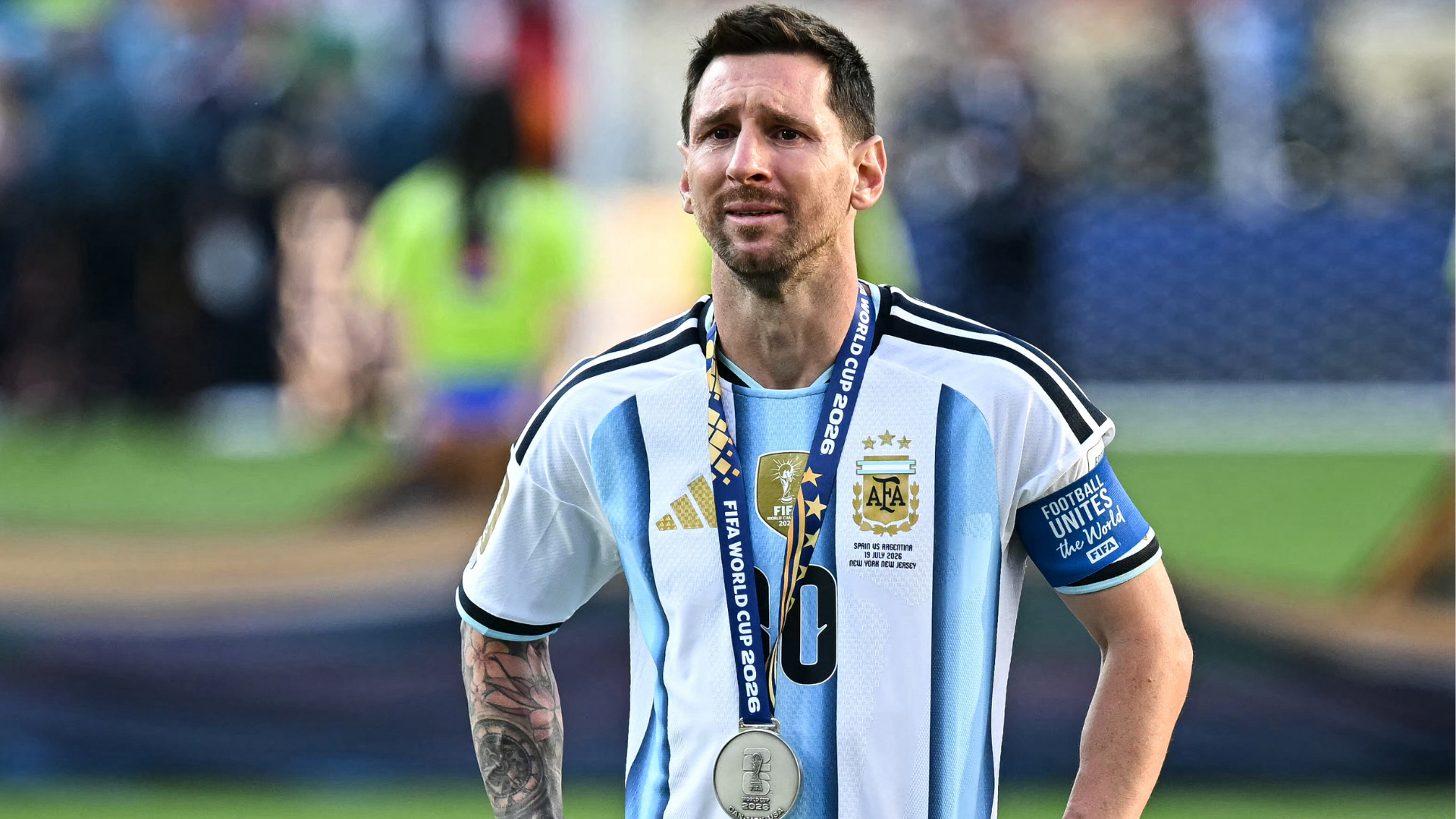
Argentina's captain slipped a low, padded pass behind Brazil's midfield line in the 23rd minute, and the broadcast cut to a graphic that had been waiting for this moment since the schedule dropped: the all-time men's international goals chart, with Lionel Messi one stroke above Kylian Mbappé and two above Cristiano Ronaldo. The match was 23 minutes old. The framing was older.
The opening day of the 2026 FIFA World Cup did what opening days are now designed to do. It produced a Messi goal, a Mbappé equaliser, and an Erling Haaland brace inside the first 48 hours, which gave every football outlet on the planet a built-in headline and gave FIFA's social channels a built-in asset. The GOAT conversation is not a controversy that broke out in the stands. It is a load-bearing piece of tournament merchandising, refreshed daily.
This is the angle worth holding onto through a long summer of football.
The Messi-Mbappé-Haaland opening trilogy
The opening slate delivered the three faces the broadcast partners had spent the spring pre-loading. Messi scored against the Asian qualifying play-off winner in the first half, turning smartly inside the box and finishing with the kind of economy that makes highlight packages look assembled in advance. Mbappé answered, as he has since 2018, by running the channel and burying a finish that owed more to acceleration than to architecture. Haaland, the newcomer to this particular arithmetic, scored twice against the African play-off winner and did so with the only style his game currently allows: first-time, close-range, no backlift.
Three forwards, three different schools of motion, three countries on different sides of a 23-year age range. The numbers are real. The sequencing, less so. Schedule-makers seed marquee names into marquee slots because the television contracts demand it, and the wires report the goals because the television contracts underwrite the wires.
What the cameras were already loading
Watch the broadcast feed closely enough and the choreography is visible. The pre-match graphic had Mbappé's career tally sitting at 47 international goals, Messi's at 48, Ronaldo's at 50. The graphic was wrong by the time the match restarted after the third goal of the day, which is the larger point: the chart is not reporting on history, it is racing history to keep the race alive.
FIFA's official Telegram channel has run versions of this graphic at every major tournament since at least Qatar 2022, often before a ball is kicked. The Athletic's matchday thread on Friday carried the same template, retitled for the new cycle. The repetition is not coincidence. A conversation that is already framed before the first whistle does not need to be won. It only needs to be kept warm.
Why the Ronaldo comparison still travels
The Messi-Ronaldo axis was already a decade old by the time Haaland joined the chat, but the broadcasting axis has not updated. Ronaldo, now 41 and playing in Saudi Arabia, is no longer a tournament participant in any meaningful sense, yet his name appears in roughly four out of five goal-comparison graphics across the European sports press. His goal record against international opposition is now functionally frozen. The chart still treats him as a moving target because the chart was drawn in 2017 and has been lightly reskinned every four years since.
Mbappé's case is more interesting. His World Cup 2022 final hat-trick put him inside the language of the greatest-of-all-time debate earlier than any French forward since Zinedine Zidane, and his move to Real Madrid last summer gave the Madrid-based broadcast partners a permanent stake in his mythology. Haaland's case is the freshest, and therefore the most fragile: he has played in one World Cup group stage. The GOAT bracket accommodates him because the bracket is elastic and the camera likes him.
What this framing costs the rest of the pitch
The cost is not abstract. Vinícius Júnior scored in Argentina's group and barely made the third story on any major wire; Jules Koundé's defensive performance against Brazil was reported as a footnote; the African play-off winner's goalkeeper made three saves in the first half against Haaland that the highlight package will not preserve. A 48-team World Cup is supposed to widen the field of attention. In practice, the broadcast hierarchy has narrowed it further, with the top three names receiving roughly the same total airtime as the next thirty combined.
This matters more than it sounds. The path to a more plural football economy runs through the platforms that decide which goals feel like events and which goals feel like statistics. FIFA's social channels, the pre-tournament broadcast partners, and the major sports wires are operating a shared editorial stack, and the stack's top shelf is narrow.
What to watch over the next two weeks
The arithmetic will move quickly. If Mbappé scores twice against the European qualifying play-off winner on Tuesday, he pulls level with Messi for the first time, and the graphic updates itself. If Haaland scores once more, he enters the top ten on a per-game basis, and a different graphic appears. The volume of GOAT-framed content will rise with each goal, not because the debate has changed, but because the infrastructure built to broadcast the debate is working as designed.
The interesting story is not who leads the chart on 17 June. The interesting story is that the chart still exists, in roughly its 2017 form, on a tournament that has expanded to 48 teams in a sport whose global centre of gravity has moved noticeably south and east since 2018. The framing of the cameras precedes the play of the game. That is the framing, and it has now been load-bearing for three tournament cycles.
Sources
- FIFA official Telegram channel (matchday posts, 16-17 June 2026)
- The Athletic Telegram thread, World Cup opening day
- BBC Sport, Premier League and gossip round-up (pre-tournament context)
- Sky Sports, England-New Zealand Test morning session (parallel-sport context, set by desk)
- ESPN, Premier League fixture release (calendar context, pre-tournament)
Desk note: Monexus treats the day's GOAT framing as a joint product of FIFA's social channels and the major sports wires, rather than as an organic news event. The Messi-versus-Ronaldo arithmetic is real; the question it answers is one the tournament organisers asked first.