Messi ties Klose at 16, sets stage for the record that keeps a generation arguing
Messi drew level with Klose on 16 World Cup goals in a tournament FIFA redesigned to produce exactly this kind of moment. The celebration is right. The equivalence is not.
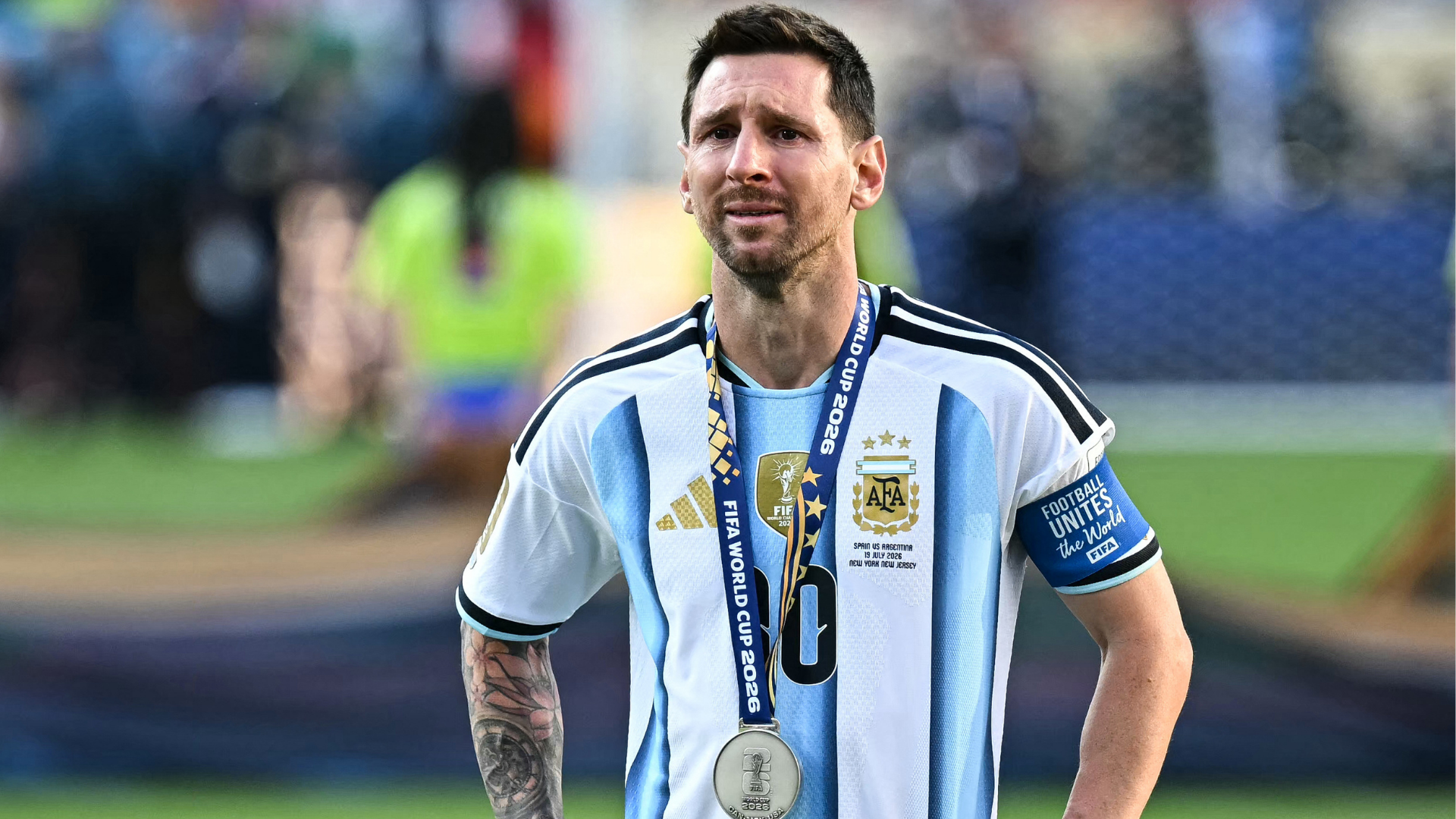
At the Stade de France on 16 June 2026, a 38-year-old Lionel Messi headed in the equaliser against a European side and, in doing so, drew level with Miroslav Klose on 16 World Cup goals. Theournament record that separates the Argentine from the German has been chased, debated and discounted for the better part of a decade. Messi has now put himself exactly one strike from it, with knockout football still ahead.
What happened in Saint-Denis is not a coronation. It is a calibration. Klose's mark was set across five tournaments between 2002 and 2014, four of them staged in the 32-team era that defined the modern game's competitive geometry. The expanded 48-team World Cup that runs from 2026 onward is a structurally different event: more matches per campaign, deeper runs for the confederations that previously exited after the group stage, and a wider funnel of fixtures in which a generational finisher can accumulate numbers. Messi tying the record on his second appearance in that new format is a feat; treating it as the same feat Klose produced is the kind of equivalence that flatters the moment and distorts the ledger.
The arithmetic of 16
Klose's 16 goals arrived in 24 matches, a return of 0.66 per game, scored for a Germany side that reached at least the quarter-finals in every tournament he played. Messi's 16 have come across five campaigns and more minutes, spread over a career arc that began in 2006 and has now survived the transition into the 48-team edition. The rate is the relevant number, and it is the part of the comparison that wire coverage tends to soften. The Athletic's reporting from the Argentina camp has tracked the body-management calculus around Messi throughout the group stage: starts rationed, minutes tapered, the bench used as a release valve rather than a punishment. That is the architecture of a player being preserved to peak in the knockout rounds, not the architecture of a record-chaser padding numbers against minnows.
The Argentina manager's post-match comments, carried by France 24's English desk, made the framing explicit: the objective against the Europeans was a performance, not a tally. Messi obliged, operating as the highest of the front three and dropping into the pockets where his reading of the game still outpaces defenders a decade his junior. The header itself was a small piece of theatre. A cross from the right, a shimmy onto the weaker foot, and the leap. It was not the kind of goal a record-chaser engineers when chasing history; it was the kind of goal a No. 10 engineers when a No. 9 is not available.
Why the format matters
The 48-team World Cup is the structural fact the celebration refuses to absorb. The previous edition in Qatar featured 64 matches. The 2026 tournament will run to 104. That is 40 additional fixtures in which scorers can accumulate, and 40 additional fixtures in which confederation minnows, the AFC and CAF sides that historically departed after three group games, now survive into a round of 32. Klose's Germany did not play Curacao or Cape Verde en route to his tallies; they played Poland, Argentina, England, Brazil, in the proper density of the tournament's competitive core. Messi's path to 16 in 2026 will, by construction, include fixtures against opponents Klose never faced.
FIFA's own communications channel has emphasised the expansion as a development story: more nations, more broadcasts, more revenue. The Telegram post that confirmed Messi's goal also confirmed the format change in the same news cycle, which is the editorial point. The record is being chased in a tournament FIFA deliberately redesigned to produce more goals, more games, and more moments like the one in Saint-Denis. A striker peaking in such an event will accumulate. The question is not whether Messi will pass Klose. The question is what the comparison will mean once he does.
The generation still arguing
Klose's record carries a specific cultural weight in Germany, where the polite, hard-running forward from Opalenica became a symbol of an immigration-aware national team that won in 2014 and reached the semi-finals in three of the four tournaments he played. His goals were largely unmarked by controversy. Messi, by contrast, plays at the centre of an aesthetic debate that has run since his first World Cup in 2006: whether his international numbers can be weighed against Pelé's, against Klose's, against a benchmark defined by an earlier tournament geometry. The 16-goal equality does not settle that. It sharpens it.
Argentina's next fixture, against the winner of the other group-stage quadrant, will tell us whether the Messi camp plans to chase the record aggressively or preserve him for the rounds that follow. France 24's reporting suggested the staff are wary of the comparison game, and prefer to treat each match on its own terms. The player's own post-match interview, distributed through FIFA's official channel, was characteristically oblique: he noted the number, acknowledged Klose, and pivoted to the next opponent. That is the voice of a man who has stopped counting in single goals and started counting in rounds.
What the next ten days decide
There is a clean case that Messi breaks the record and the discourse moves on. There is a cleaner case that he does not, and the tie at 16 becomes the moment his generation points to as evidence that the comparison was always unfair to him: same number of goals, fewer games in which to score them, against a confederation distribution that Klose's Germany never faced. Either outcome will be argued about in bars from Buenos Aires to Berlin for the rest of the decade. The record, like most records in an expanded era, will be settled on the pitch and disputed in the comment section.
What is not in dispute is the header in Saint-Denis. A 38-year-old, leading a national team at a fifth World Cup, rose above a defender and guided a ball into a net. It was the 16th time he has done that at this tournament. The 17th, when it comes, will be its own argument. The celebration is right. The equivalence is not.
Sources
ESPN, 19 June 2026 Wyndham Clark sets 36-hole U.S. Open scoring record at Shinnecock Hills.
The Athletic Telegram channel Argentina camp reports on Messi minutes management and knockout planning.
France 24 English Telegram channel Argentina manager post-match comments after the equaliser.
FIFA official Telegram channel Confirmation of the goal and the 48-team tournament format.
Desk note: Wire coverage framed the result as Messi's coronation. Monexus framed it as a record-tying performance inside a structurally expanded tournament. The celebration is right; the equivalence is not.