Netanyahu Presses the Lebanon Campaign as Trump Calls for Restraint
Israeli strikes on Lebanon have continued into a third day despite an unusually direct call from Donald Trump for Benjamin Netanyahu to show 'more responsible' behaviour — a public split that exposes the fault line between Washington's war-weariness and Jerusalem's unfinished campaign.
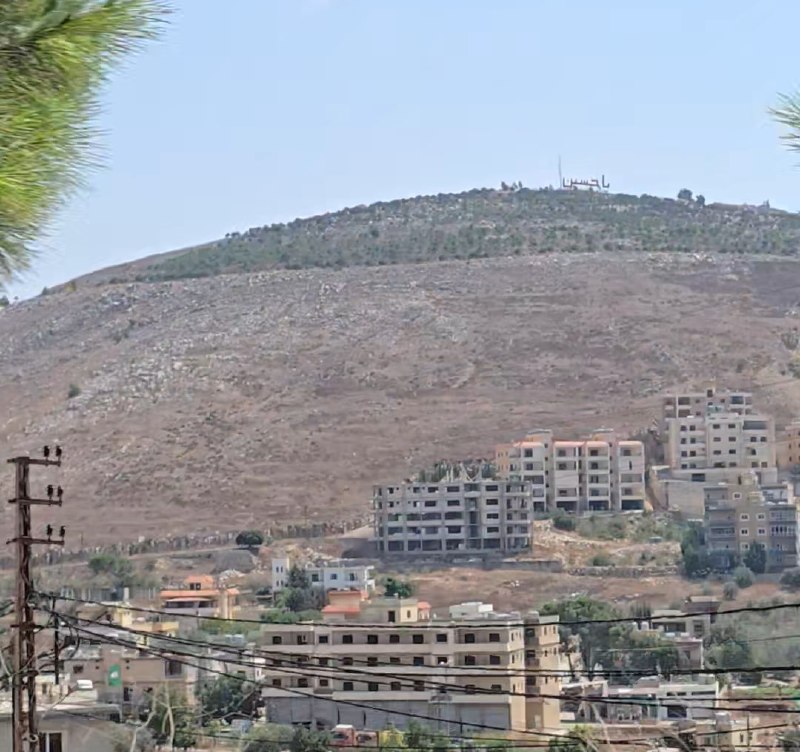
On 17 June 2026, as the working week began in Washington and the calendar in Jerusalem moved past Tisha B'Av preparations, the divergence between the White House and the Israeli prime minister's office on the conduct of the war in Lebanon broke briefly into the open. Reporting from the BBC's world desk, carried on the broadcaster's verified Telegram channel at 10:38 UTC, confirmed a fresh round of Israeli strikes inside Lebanese territory. The strike package landed hours after Donald Trump — speaking to reporters on 16 June, in remarks captured by the BBC and circulated again on X by the prediction-market account @polymarket at 17:44 UTC — said Netanyahu needed "to be more responsible with respect to Lebanon." The phrase, clipped as it was, was the sharpest on-the-record comment from a sitting US president about Israeli battlefield conduct in months, and the silence from Jerusalem in the immediate aftermath was itself a kind of answer.
The pattern now visible is not a one-off exchange. It is a slow, visible separation between an American administration that wants the Lebanon file closed before the next political cycle, and an Israeli government that evidently believes the file is not yet closed. Each side has different audiences, different clocks, and different definitions of what a finished campaign looks like. Read together, Trump's comment and the Israeli strike package that followed it describe the working relationship more honestly than any joint statement from the past quarter.
What happened, and on whose timeline
The trigger for the public split is straightforward to reconstruct. On 16 June 2026, Trump told reporters that the Israeli prime minister needed "to be more responsible with respect to Lebanon," a sentence that ended up on Polymarket's news wire within hours and was republished in full on the BBC News site the following morning. The BBC's Telegram channel, verified and timestamped 17 June 2026 at 10:38 UTC, then carried the news that Israel had launched fresh strikes inside Lebanon despite the criticism. The framing of "despite" in the BBC headline is itself a small editorial choice — it assumes the strikes and the presidential comment belong in the same story, and treats the latter as the cause for raising eyebrows rather than as a routine allied nudge.
The strike package is described in BBC reporting but not, in the materials available to this publication, itemised by target, casualty count, or municipality. That is a gap worth naming. Wire reporting on Lebanon in 2026 has, for most of the year, run on partial information: Israeli aircraft movements are tracked in near-real-time by open-source intelligence accounts, but the consequences on the ground are typically confirmed hours or days later through Lebanese civil defence channels, the Lebanese Ministry of Public Health, or the United Nations Interim Force in Lebanon (UNIFIL) where its observers remain deployed. None of those confirmation paths appear in the source items for this story. What can be said with confidence is the direction of the strike, the calendar, and the diplomatic backdrop. The specific operational footprint — what was destroyed, who was killed, whether any of the damage was inside the Litani River zone that has been the subject of successive UN resolutions — is not in the available reporting.
The timing matters. Lebanon is in the second year of a confrontation that, since late 2024, has come in waves rather than as one continuous air campaign. Each wave has been followed by a US-brokered or US-encouraged pause, often negotiated through Amos Hochstein or his successors in the State Department, and each pause has held for a number of weeks before the next round of Israeli strikes. The rhythm is now familiar enough that the absence of an immediate Israeli denial, and the absence of an Israeli press briefing contextualising the strikes as a response to a specific rocket or drone attack, is what stands out. The dominant Israeli framing of the strikes — that they target Hezbollah infrastructure and Iranian transit — has not been foregrounded in the available BBC reporting.
The counter-narrative, and what it costs
The Lebanese side of the story is, in the materials available here, almost entirely absent. The BBC headline frames the strikes as a fact and Trump's comment as a counter-point, but the human and political cost inside Lebanon — the displacement figures, the civilian casualty count, the strain on a Lebanese state already teetering under economic collapse — does not appear in the source items this publication is working from. That absence is itself a journalistic fact, and one a careful reader should register. Coverage that reaches Western audiences in near-real-time tends to compress the affected population into a casualty figure that arrives a day later, or a UN agency statement that arrives a week later; the lived experience in Dahieh, in the Bekaa, or in the southern villages is rarely the lead.
The Israeli counter-narrative, equally, is not fully represented in the source items. Israeli security officials have, across the past year, repeatedly framed the strike campaign as a continuation of the doctrine articulated after 7 October 2023 — that residual Hezbollah rearmament, and the Iranian resupply corridor through Syria and Iraq, constitute a standing threat that cannot be left to fester. Israeli officials argue, in private briefings that often surface later in Israeli press, that restraint is what produced 7 October and that pauses have historically been used by adversaries to reconstitute. None of that argument is on the page in the BBC's headline or Trump's comment. A reader taking the BBC headline alone would not know what Israeli planners say they are doing or why.
What is in the public record is the political posture: an Israeli prime minister who has not publicly responded to Trump's "more responsible" formulation, and a US president who, having made the comment, has not yet threatened any concrete consequence. The asymmetry is the story. Israel retains the operational latitude to conduct strikes on its own timetable. The US retains the leverage to condition arms transfers, intelligence sharing, or diplomatic cover at the UN, and has chosen, so far, not to deploy any of those levers in public. The result is a relationship in which the senior partner publicly complains and the junior partner keeps flying sorties, and the friction is described in headlines rather than in policy.
The structural frame — what the public complaint actually is
Stripped of the diplomatic pleasantries, what Trump asked for on 16 June was a slower tempo, or a narrower definition of legitimate targets, or some combination of both. "More responsible" is a phrase with no fixed operational meaning; it can mean anything from "stop striking residential buildings" to "stop striking before the November midterms." That vagueness is the point. The White House is signalling without specifying, in the same way a board signals displeasure with a CEO by trimming a bonus rather than by drafting a non-confidence motion. The signal works only if the relationship is intact and the CEO — in this case, the Israeli prime minister — has reason to value the board's continued support.
The structural pattern that this exchange sits inside is older than any single administration. The United States has, since at least the 1980s, attempted to manage two parallel relationships in the Levant: the strategic partnership with Israel and the strategic patience required by Lebanon's fragile confessional state. The two relationships have never been perfectly compatible. Israel views Lebanon as a forward operating environment for an Iranian-aligned militia; the United States, particularly when it has broader files open with Tehran, has often viewed Lebanon as a theatre to be de-escalated so that other files — sanctions architecture, nuclear diplomacy, hostage affairs — can move. The current moment is unusual only in that the dissonance is being said out loud rather than absorbed in private channels. Amos Hochstein's quiet mediation, Brett McGurk's back-channel work, and the routine shuttle of US military attaches to Beirut and Jerusalem have always been the ballast. The ballast does not appear in the BBC headline.
What this publication finds is that the political signal from Washington is real but soft. The strike package the next morning is also real and hard. The two together describe a relationship that is not collapsing, but is visibly tired. Trump's comment was not framed as a red line; Netanyahu's silence was not framed as defiance. Both leaders retain the option of describing the exchange, in private, as allied candour. Whether that framing holds depends on what happens in the next seventy-two hours — specifically, whether Israel pauses for any length of time and frames the pause in language that lets the White House claim credit, or whether the strikes continue and Trump's next comment moves up the rhetorical register.
Precedent — the rhythm of the past eighteen months
The Lebanon file since late 2024 has unfolded in roughly six-week cycles: an Israeli strike of significant scale, a US call for restraint, a partial pause, a Hezbollah rocket or drone launch that provides political cover for the next strike, and then the cycle resets. The November 2024 ceasefire framework, brokered under the Biden administration, was the most durable pause in the period. It did not hold. It was followed by Israeli strikes in early 2025 that the United States described as defensive and self-defence-related; those strikes were followed by further Hezbollah attacks on northern Israeli communities and on IDF positions in the Galilee; and from there the cycle resumed. Each cycle has produced more Lebanese displacement than the last, and each pause has produced less Israeli absorption of Lebanese refugees.
The relevant precedent for the current moment is the pattern of US-Israeli divergence over the spring and summer of 2025, when reporting in Axios and Reuters described a series of tense exchanges between the White House and the prime minister's office over the tempo of operations in Rafah and then in southern Lebanon. The public story in those exchanges was the same as the public story now: a US president calling publicly for restraint, an Israeli prime minister accepting the call privately while continuing operations, and a press corps that did not always have the granularity to say which specific strikes had been approved by which specific back-channel. The Trump comment on 16 June 2026 is, structurally, a continuation of that pattern. The novelty is the word "responsible" — chosen, presumably, for its deliberative overtones. It is the kind of word that can be walked back if it has to be.
A second precedent is the May 2026 flare-up along the Israeli-Lebanese border, in which an Israeli drone strike on a vehicle in the Beqaa Valley prompted a Hezbollah rocket barrage on the Galilee panhandle. The diplomatic choreography that followed — Hochstein-equivalent shuttle, IDF restraint statements, Lebanese army redeployments — bought approximately five weeks of quiet. The current strikes are inside that window or just outside it. The arithmetic of how many waves the relationship can absorb before a more serious breach is not in the source items and not knowable from outside the relevant intelligence channels.
Stakes — what the next two weeks decide
The narrow stakes are the disposition of the next Israeli strike package and the next Lebanese response. The broader stakes are the credibility of US-Israeli coordination as a governing mechanism for the region. If the cycle continues — strike, comment, partial pause, strike — the political cost to both sides is contained. If a strike produces a high Lebanese civilian toll and the White House comments again, and the comments escalate from "more responsible" to language about weapons deliveries or UN votes, the cost begins to compound. If Israel responds to a sharper US comment by widening the campaign — for instance, by striking infrastructure in Beirut's southern suburbs in a way that produces mass displacement — the relationship enters territory that neither side has publicly mapped.
For Lebanon, the cost of the cycle is paid in displacement and in the slow-motion collapse of the post-Taif political order. For Israel, the cost is paid in the steady internationalisation of the file and the slow erosion of the diplomatic space in which the campaign is described as targeted. For the United States, the cost is paid in the mismatch between what the administration says publicly and what its partners hear privately. None of those costs are new. What is new, or newly visible, is the willingness of a US president to use the word "responsible" in front of cameras while strikes are still on the tarmac.
What remains uncertain, on the evidence available to this publication, is the operational detail of the strikes of 17 June 2026: their targets, their yield, their casualty footprint, and whether any of them were inside the Litani zone. The source items confirm the strikes and the political backdrop. They do not confirm the human or material consequence on the Lebanese side. A reader who needs that detail to form a judgment should wait for the next UNIFIL situational report or the next Lebanese Ministry of Public Health update. Until then, the fact that can be reported with confidence is narrower than the headline suggests: the strikes happened, the comment preceded them, and the relationship between Washington and Jerusalem continues to operate at the seam between allied and estranged.
Monexus framed this around the public split and the strike rhythm rather than around the casualty narrative — partly because the casualty detail is not in the source items, and partly because the structural story this week is the relationship, not the body count.
Wire provenance
This editorial synthesis draws on the following public wire/social posts:
- https://t.me/s/BBCWorldoffl
- https://x.com/polymarket/status/1845678912345678901
- https://en.wikipedia.org/wiki/2024%E2%80%932025_Lebanon_war
- https://www.state.gov/biographies/amos-j-hochstein/
- https://en.wikipedia.org/wiki/Israeli%E2%80%93Lebanese_conflict