A pope, a lavra, and the long shadow over Kyiv
Hours after a strike on the Kyiv-Pechersk Lavra complex, Pope Leo XIV asked the faithful to pray for the end of a war that, in his words, "continues to expand."
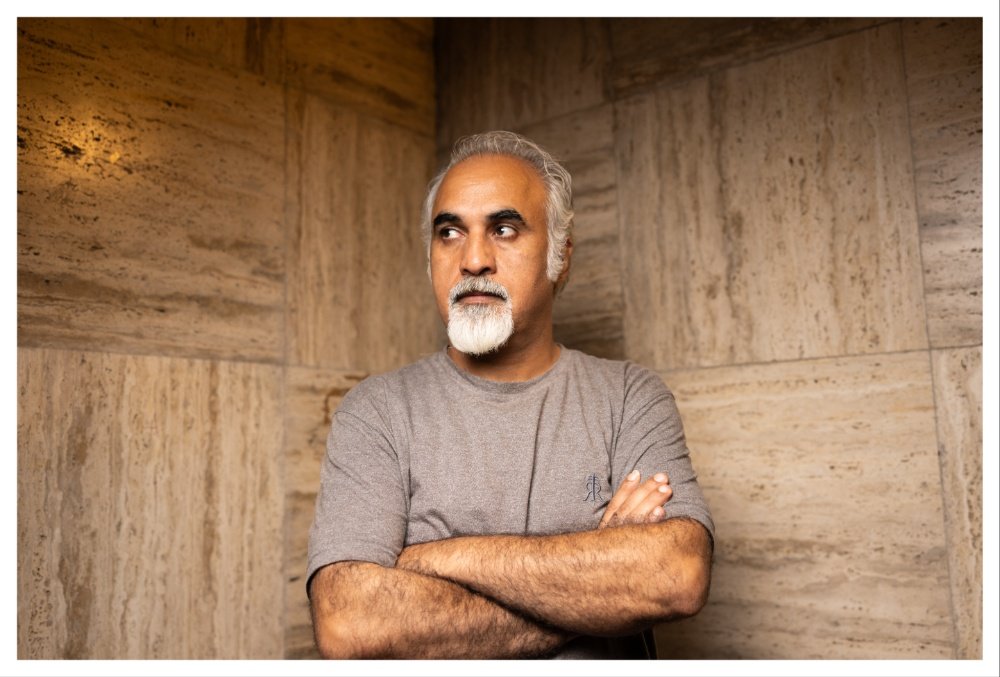
A strike on the Kyiv-Pechersk Lavra, the centuries-old cave monastery that has stood above the Dnipro for almost a thousand years, drew a rare Sunday-afternoon intervention from Pope Leo XIV on 17 June 2026. In a public appeal circulated shortly after the attack, the pontiff asked Catholics worldwide to pray for an end to the war in Ukraine, warning that "disturbing news is coming about the war in Ukraine, which continues to expand." The wording, modest in tone, was notable for its geography: a pope born in the United States and elected to a See that has spent the past three years trying to keep lines open with both Kyiv and Moscow, naming the Lavra by implication and a war by name.
That a religious leader felt compelled to speak at all tells you something the casualty statistics do not. The Lavra is not just another building. It is a working monastery, a UNESCO-monitored heritage site, and one of the most potent symbols of Orthodox Christian continuity in eastern Europe. Striking it — or striking close enough to it that monks, worshippers and preservationists register the shock — is a category of attack that changes the register of coverage, even for a public long inured to a war that has dragged into a fourth year. The pope's appeal was not a diplomatic communique; it was a moral observation, delivered in a voice that carries weight in Catholic, Orthodox and Protestant households alike.
What the appeal actually said
The text of the appeal, as carried by the Ukrainian public broadcaster Hromadske, is short and unsentimental. Pope Leo XIV asked for prayers "for the end of the war in Ukraine" and described the reports from the country as "disturbing." He did not name the attacker. He did not name the Lavra. He did not need to: by 17 June 2026, the strike on the Kyiv-Pechersk Lavra was already the dominant visual of the day on Ukrainian social media, and the pope's reference to a war that "continues to expand" was the kind of carefully chosen phrase that a Vatican speechwriter does not arrive at by accident.
The restraint is itself a signal. The Holy See maintains formal relations with the Russian Federation and, until recently, with the Russian Orthodox Church's leadership. A pope who wanted to denounce could have done so. A pope who wanted to look away could have spoken only of "the peoples of the region." Leo XIV chose neither. He chose the war, by name, and he chose the verb "expand," which is the diplomatic equivalent of saying the front is moving in a direction that ought to alarm the reader.
Why the Lavra, and why now
The Kyiv-Pechersk Lavra sits on a bluff above the Dnipro River, a short walk from the central government quarter. Founded in 1051, it is the spiritual heart of Ukrainian Orthodoxy and, until the 2023 schism and the broader conflict over the canonical status of the Ukrainian Orthodox Church, was also a long-standing node in the Moscow Patriarchate's reach. The Ukrainian state moved in 2023 to terminate the Russian-linked monastery's lease on parts of the complex, a step that framed the Lavra, in Ukrainian public discourse, as a site of reclaimed sovereignty as much as of religious patrimony.
That history matters because it tells you what a strike on the Lavra is for. It is not a strike on a military target. It is a strike on a symbol of Ukrainian religious and national identity that sits inside a country that has spent four years defending its right to choose both its government and its faith. The Russian framing, where it has been offered, treats the site as a contested religious property rather than a national monument. The Ukrainian framing, dominant in Kyiv's coverage and in Western wire reporting, treats it as a heritage site under attack. The pope's appeal — a third voice, neither Ukrainian nor Russian — implicitly endorses the heritage reading while declining to litigate the canonical one.
A papal voice in a fragmented choir
The appeal also lands inside a wider pattern. The Vatican has spent the war's first three years trying to position itself as a potential mediator — a humanitarian broker, a hostage negotiator, the kind of soft-power actor that talks to everyone and credits nobody. That role has thinned. The 2025 death of Pope Francis removed the most recognisable Catholic face of the war effort, and the election of Leo XIV, a North American with a pastoral reputation but no obvious Kremlin channel, reset expectations. A strike on the Lavra gives the new pontiff exactly the kind of moment a young papacy needs: a chance to speak with moral clarity about a specific event, without committing the Holy See to a political position that the Italian and Polish bishops — the two conferences most directly exposed to the war — have not yet ratified.
Whether the appeal translates into anything more durable is the open question. Catholic institutional weight in Ukraine is small — Greek Catholic and Orthodox Christians together account for the overwhelming majority of religious identification — and the pope's voice reaches those communities mostly through media, not through parish structure. The pope's intervention is read, in Kyiv, as welcome. It is read, in Moscow, as the kind of statement the Kremlin routinely files under "Russophobia in the West." It is read, in Rome, as a careful first move by a pope who will need many more before his papacy settles into a posture on the war.
What remains uncertain
Several things are unsettled as of 17 June 2026, and it is worth saying so plainly. The full extent of the damage to the Lavra complex has not been independently verified beyond the immediate photographic record. The Ukrainian air force and the General Staff have not, in the material available to this publication, published a detailed assessment of the strike, and Russian authorities have not acknowledged launching it. The casualty count, if any, inside the monastery grounds has not been confirmed. The Hromadske report carries the pope's words but does not itself establish what hit the Lavra or when, beyond the day's date. Until at least one of those gaps is closed by a primary Ukrainian source — the Security Service of Ukraine, the Ministry of Culture, or the monastery's own press office — the framing here is deliberately narrow: a religious leader responded to a strike, in words, and the words are on the record.
What is not uncertain is the political weight of the choice. A pope does not invoke a war by name every Sunday. A pope does not ask for prayers for a specific country without the Vatican machine having decided that the moment warrants the cost. On 17 June 2026, the Vatican decided the Lavra did.
How Monexus framed this: the wire will lead on damage assessment, attribution, and the air-defence question. Monexus leads on the symbol — a monastery, a schism, a papacy — and on what it costs a religious leader to break his own restraint.
Wire provenance
This editorial synthesis draws on the following public wire/social posts:
- https://t.me/hromadske_ua
Follow the event.
These dated source records provide context. They do not retrospectively verify this archive article.
A dated voting record is evidence of one decision. Use the original UN record before turning it into an alignment label.
Visual explainer · historical vote of 2022-03-02 →