Qalibaf reframes Iran's security doctrine: domestic strength over the Security Council
On a tour of air-defence sites, the parliament speaker signalled that Tehran is recalibrating its deterrence pitch away from international legitimacy and toward a sovereign-popular frame.
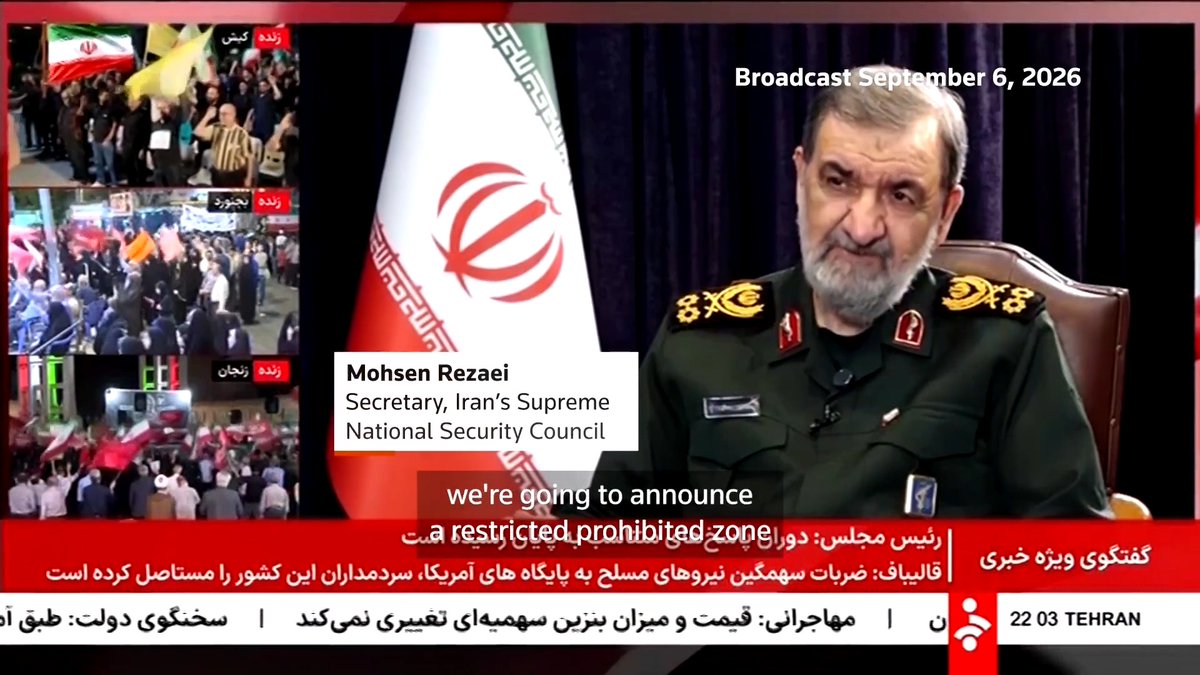
On 17 June 2026, Mohammad Bagher Ghalibaf, speaker of the Islamic Consultative Assembly, used a tour of the country's air-defence network to deliver a pointed re-statement of Tehran's security priorities. The remarks, carried by Tasnim's English service in the early evening UTC window, deliberately inverted the usual diplomatic register: the most important guarantee for the Islamic Republic, Ghalibaf said, is the strength of Iran and the unity of the people, not the resolution of the Security Council. The framing matters because it locates legitimacy in the domestic political compact and the conventional deterrent, rather than in the multilateral architecture that has, for two decades, defined how Iran has sought relief from sanctions and isolation.
The choice of venue amplifies the signal. An inspection of integrated air-defence systems is not a routine parliamentary outing; it is the kind of trip reserved for moments when the regime wants to underline the technical credibility of its shield. Pairing the visit with a doctrinal statement that downgrades the Council's role reads as a deliberate policy communication, not a stray remark. The message is that Tehran intends to be defended first by what it builds and what its people tolerate, and only secondarily by what the UN Security Council can be persuaded to write into a resolution.
From diplomatic cover to deterrent certainty
For most of the post-2015 period, the dominant Iranian pitch to its own public and to outside audiences was diplomatic: a negotiated file, signed and verified, that traded constraints on the nuclear programme for relief from sanctions and a measure of international acceptance. The Joint Comprehensive Plan of Action was the high-water mark of that posture. Its unraveling, and the regional shocks of 2023-2025, have visibly eroded the returns. The Council, in Tehran's telling, was never a reliable guarantor — major-power vetoes repeatedly insulated the file from the kind of punitive action Iran's critics demanded, but they also insulated Iran from the kind of binding security assurances its negotiators had hoped to extract.
Ghalibaf's wording is calibrated to that disappointment. A "resolution of the Security Council" is, in Iranian legal and political discourse, a loaded phrase: it can mean the sanctions architecture, the snapback debate, or a future endorsement. By telling audiences that the country's guarantee lies elsewhere, the speaker is preparing public opinion for a posture in which the Council is treated as theatre rather than tribunal. Sovereign immunity from outside pressure — and the conventional means to enforce it — replace the language of legal recognition.
What the counter-frame looks like
The line is not a wholesale repudiation of diplomacy. Iranian leaders, including Ghalibaf, continue to participate in regional talks, in technical exchanges with the International Atomic Energy Agency, and in the intermittent back-channels that have punctuated the last twelve months. The Tasnim dispatch itself frames the tour as evidence of an active, functioning deterrent that supports, rather than substitutes for, negotiation. Critics in Washington and several European capitals will read the same words as a closing of the diplomatic window — a signal that Tehran is hardening, that sanctions relief is no longer the centre of gravity, and that the only pressure that registers is the one applied to the cost calculus of any future escalation. A second reading, more sympathetic to Tehran, is that a country surrounded by active conflicts and armed with a deterrence complex that has been operationally tested in 2024 and 2025 has little reason to over-invest in paper guarantees that have repeatedly failed to constrain adversaries. Both readings rest on the same sentence; they diverge on what weight to give it.
Structural frame: sovereignty priced in local currency
The deeper pattern is a familiar one in this century of sanctions statecraft. When the multilateral system is read as biased — and the Council's long history on the Iranian file, in Tehran's account, is precisely that — governments shift the metric of success from what international bodies will endorse to what their own population and armed forces can absorb. The move is not isolationist; it is a recalibration of the currency in which security is priced. Domestic political unity becomes a strategic asset because it reduces the leverage of externally induced pressure. Industrial depth in the defence sector becomes a negotiating chip in its own right: the ability to sustain a long, attritional contest is itself a form of bargaining power. Ghalibaf's pairing of "strength of Iran" with "unity of the people" is a recognition that, in a sanctions-saturated environment, the two terms are operationally inseparable.
The same logic is visible, with different accents, in other capitals that have recalibrated their security doctrines in response to perceived abandonment by the liberal international order. What distinguishes the Iranian variant is the parliamentary staging: the speaker of the Majlis, rather than a uniformed commander, is the messenger. That choice matters. It signals that the doctrine is intended to be read by a domestic audience as much as by a foreign one, and that the regime is willing to bind its security narrative to its own legislature in a year of contested regional arithmetic.
Stakes, and what remains uncertain
The near-term stakes are interpretive. A speech like this is read in chancelleries as a leading indicator; traders in energy markets watch the same words for the implied temperature of negotiations. If the line settles into a sustained posture, expect two consequences. First, the diplomatic track narrows: Iran's negotiating partners will be pressed to offer terms that look like the "strength and unity" formula — credible defensive capacity and political cohesion — rather than Council-mediated legal recognition. Second, the deterrent becomes the message: investments in air defence, missile production, and the supporting industrial base will be defended with a louder political voice, and procurement decisions will be justified in parliamentary debate as well as in operational planning.
What the sources do not yet clarify is whether the speaker is announcing a settled doctrine or staking out a position inside an internal debate. The Tasnim dispatch carries the line without elaboration, and the framing of the tour as a routine inspection leaves room for either reading. It is also not specified how the statement aligns, in timing, with the technical exchanges the Atomic Energy Agency has pursued in recent months. A more complete picture would require confirmation from the foreign ministry, the presidency, and the Supreme National Security Council, none of which had published a coordinating read-out as of the dispatch. The dispatch also does not name which air-defence units were visited, the scale of the systems inspected, or whether foreign-made components were discussed. Those omissions are typical of official messaging on this file, but they limit the granularity of any independent assessment.
For now, the most defensible reading is narrow and literal. The speaker of Iran's parliament, on a tour of the country's air-defence installations on 17 June 2026, told a domestic-facing audience that the country's security rests on its own strength and the cohesion of its people, and that a UN Security Council resolution is not the principal guarantor of either. The statement is short. The questions it raises are not.
Desk note: Monexus carried Ghalibaf's quote at the same weight any wire would carry a parliamentary speaker's doctrinal remark, and flagged the absence of coordinating read-outs from the foreign ministry and the Supreme National Security Council rather than imputing a settled policy. Where Western outlets are likely to lead with a "diplomacy is dead" frame, Monexus held the line on what the source actually says — a reweighting of guarantees, not a refusal of them.
Wire provenance
This editorial synthesis draws on the following public wire/social posts:
- https://t.me/tasnimnews_en