Qalibaf's sword and the grammar of Iranian deterrence
The speaker of Iran's parliament says diplomacy and rockets travel together. Reading the remark as theatre obscures what it tells us about how Tehran actually calibrates restraint.
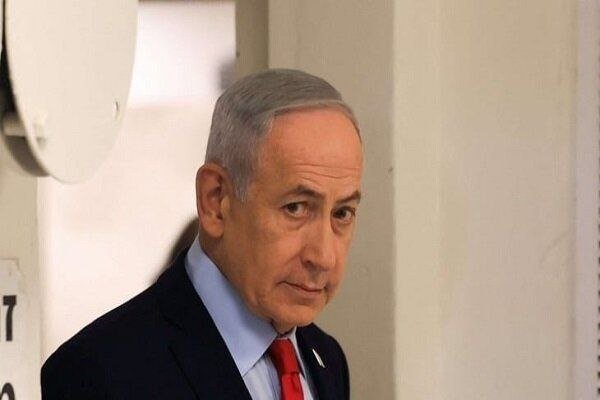
On 17 June 2026, the Speaker of Iran's Majlis, Mohammad-Bagher Ghalibaf, used a televised forum to do something more interesting than threaten a war. He explained, on the record, how he and his counterparts in Tehran think about the moment a rocket is fired and the moment it is held back. The comment, distributed by Fars News Agency in a series of dispatches between 19:42 and 19:48 UTC, was delivered as a personal testimony by a serving speaker of parliament. It deserves to be read on its own terms, not as noise around a crisis.
The thread's substance is straightforward. Ghalibaf says he follows "the work of diplomacy with the culture of fighting." He says that when the suburbs of Beirut — the Dahiya district that has been a Hezbollah stronghold and a frequent Israeli target — were struck, he walked out of a negotiation review meeting and posted that Iran would respond. He says the response was nearly fired. And he says, pointedly, that "the other party" asked Iran not to fire. Iran fired anyway, he implies, and readied for the counter-response. The throughline is the line he repeats: "when we talk about negotiations, our sword is also ready." That is not the language of a man outsourcing his deterrence to an ally. It is the language of a man who wants the audience at home and abroad to understand that the restraint, when restraint occurs, is a deliberate act by the Iranian state, not an absence of capability.
Reading the remark as strategy, not as theatre
The instinct in Western commentary is to translate these statements into a single word — bluster — and move on. That translation is lazy, and it gets the operating logic backwards. The Iranian system has spent four decades communicating in a register where capability and the will to use it must both be visible, on the same platform, often in the same breath. When a sitting speaker of parliament describes a recent episode in which a rocket launch was held, then nearly launched, then launched, then braced for a counter-strike, he is not freelancing. He is performing the function the constitution assigns the Majlis speaker: signalling, to domestic constituencies and to adversaries, that the state that is talking is the same state that is armed.
The structural point is that Iranian crisis behaviour is bifurcated, by design. There is a diplomatic track and there is a kinetic track, and the two are run by overlapping personnel who openly describe the overlap. Ghalibaf is the most senior serving official to make that overlap this explicit in a public setting in 2026. Whether one finds that posture reassuring or alarming depends on one's prior; what is not in dispute is that the posture is now on the record, with a timestamp, in the voice of a man who can convene a review meeting and walk out of it.
What he was not saying
Ghalibaf was also careful, on the thread's evidence, not to claim authorship of the rockets. He used the language of response to an attack on Dahiya — a Hezbollah-associated district struck in the Israel–Lebanon front of the war — and he described firing into "the occupied territories," a phrase Iranian officials use for Israeli territory rather than for Lebanon. The dual reference matters. It allows the speaker to honour the armed alliance with Hezbollah without claiming operational command of it, and to reserve for the Islamic Republic the symbolic first-mover role that Iranian state media expects its leaders to perform. This is not a small distinction in Iranian domestic politics. It is the line between defending the axis and leading it, and it is the line Ghalibaf walked in real time.
Why the Western wire has not led with this
Western coverage of the speech, to the extent it exists, has tended to treat the Ghalibaf clip as one more data point in the escalation series. The reading this publication finds more useful is the opposite. The clip is a piece of deterrence theory, stated plainly by a principal, in a forum where Iranian domestic audiences were the primary target. It tells the foreign reader something the foreign reader often misses: the restraint Iran exercises between strikes is not the absence of a sword. It is a sword being sheathed, and a speaker of parliament standing up to remind the audience of what is in the scabbard.
The counterpoint is fair. The same remarks, read by an Israeli audience that has absorbed years of rocket fire from Iranian clients, will register as threat rather than as explanation. The Iranian system intends both readings. That dual-readability is not a bug of the messaging; it is the message. Tehran's leverage depends on the home audience hearing resolve and the foreign audience hearing that resolve is being managed, not abandoned.
The stakes in plain prose
What is genuinely new, if anything in this clip is new, is the public linkage of negotiation review to launch decision in a single narrative. A future crisis on the Israel–Lebanon front, or a future strike on Iranian assets, will now be processed in the region with this clip as a reference point. Officials in Washington, Jerusalem, and Beirut will read it as a script Tehran has pre-written for itself. Officials in Tehran will read it as proof that the script works. The remaining uncertainty is whether the script survives a crisis in which the sword, once drawn, is asked to do something the speaker did not anticipate.
This article drew on Fars News Agency reporting; the analysis is Monexus's own.
Wire provenance
This editorial synthesis draws on the following public wire/social posts:
- https://t.me/farsna/
- https://en.wikipedia.org/wiki/Mohammad-Bagher_Ghalibaf
- https://en.wikipedia.org/wiki/Dahiya
Follow the event.
These dated source records provide context. They do not retrospectively verify this archive article.
Separate what the nuclear watchdog reported from what it could not determine after the June 2025 strikes.