Twelve prisoners walk out of Qezelhesar as the Islamic Republic clocks a Muharram release
Twelve prisoners walked out of Qezelhesar prison on Wednesday under a Muharram amnesty the Islamic Republic has framed as tribute to Imam Hussein. Monexus reads the release against the wider choreography of mourning, mobilisation, and refusal.
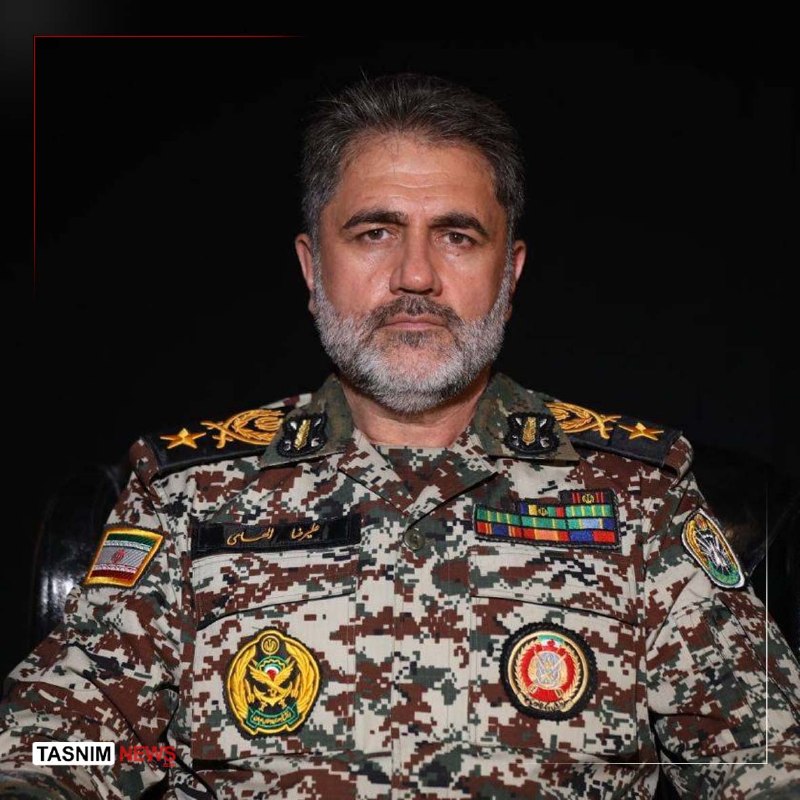
Twelve prisoners walked out of Tehran's Qezelhesar prison on Wednesday under a Muharram amnesty that the Islamic Republic has framed as an act of mercy at the holiest stretch of the Shia calendar. The timing is the story. Tasnim, the news agency tied to the Islamic Revolutionary Guard Corps, carried the line that the release honours the spirit of Imam Hussein in the month of Ashura, and Iranian state television has spent the nights since filling the streets around it.
On the surface this is a domestic legal story: a periodic pardon, a list of names, a court order signed in the customary fashion. Read in context, it is a small data point in a larger pattern of governance by spectacle. The Islamic Republic has long used religious commemorations to set the tempo of its political calendar, and the present moment, with the country still absorbing the shock of recent Israeli and US strikes on its nuclear and missile infrastructure, gives the season a particular weight. A release at Muharram is not a concession. It is a signal about who counts, and who does not, in the eyes of the state.
A long habit, a particular moment
Qezelhesar is one of Iran's largest and most crowded prisons, a facility that local rights monitors have catalogued for years as overcrowded, medically neglected, and prone to protests that get beaten back behind closed doors. Periodic amnesties tied to religious holidays are not new. They recur at Nowruz, at the birthday of the Prophet, at the death of Imam Reza, and at Muharram, the opening month of the Islamic lunar calendar that culminates in Ashura, the commemoration of the killing of Hussein at Karbala in 680 AD.
The state's preferred frame for those amnesties is religious. Tasnim's English wire casts the Qezelhesar release as a tribute to Hussein's sacrifice, drawing the political present into the orbit of the sacred past. The hard part, as ever, is the gap between the headline and the names behind it. State reporting rarely identifies those released, the offences for which they were held, or the conditions under which clemency is granted. Independent monitors such as the Human Rights Activists News Agency (HRANA) and the International Human Rights movement of the Iranian peoples, where they publish, treat each release as a partial inventory rather than a complete accounting. The reader is left with two records running in parallel: the official list, and the documented silence around everything the list does not contain.
The street, and what it carries
The release lands inside a city already mobilised. On Thursday evening, the fourth night of Muharram, Press TV reported that thousands of people had packed central Tehran for the nightly mourning processions and the rallies held in support of the Islamic Republic and the Iranian Armed Forces. The wires that night mixed two registers: grief for the martyrdom of Hussein, and affirmation of the state that claims to inherit his cause. Both have been visible at Iranian state funerals and public commemorations for decades; what is unusual in this cycle is the overlay of a recent war.
June's strikes against Iranian nuclear and missile sites, and the regime's public insistence that the damage has been contained, have made every public assembly a stage-managed demonstration of resilience. Press TV's framing of the Tehran crowds as "patriots" joining mourning with backing for the armed forces is the register to watch. It tells you what the establishment wants the holiday to mean in 2026: not a season of quiet contemplation, but a season of solidarity under bombardment.
What the outside is signalling
Against that backdrop, the outside world has been busy in ways that sharpen the picture. On Friday, Iran's Foreign Ministry spokesman ruled out IAEA inspections of the war-damaged nuclear sites, dismissing reports that Tehran was preparing to invite the agency's inspectors back in. The phrasing, carried by Press TV, frames the refusal in the language of sovereignty and wounded dignity. Whether or not a technical negotiation is underway is a separate question; what is on the record is the public posture.
Elsewhere in the region, the picture is just as crowded. On Thursday, Tasnim's English wire carried a claim from local sources in Syria that drones believed to belong to the "International Coalition" had targeted a headquarters of the Turkestan Islamic Party in the Idlib countryside. The framing in Tasnim is the framing of the Syrian opposition's northern strongholds as a playground of foreign airpower. It is not the only framing on offer, and the underlying strike, if it happened, has its own forensic footprint, but the way it lands in the Iranian state ecosystem is what matters here: it reinforces the line that Iran's rivals are stirring trouble on every border.
Taken together, the prisoner release, the mourning rallies, and the diplomatic refusal on nuclear inspections describe a single performance. The Islamic Republic, under physical and economic pressure, is choosing to play its strongest card: the fusion of religion, sovereignty, and mass mobilisation. A dozen names walking out of Qezelhesar is a small beat in that performance, but it is the one most legible to anyone who follows the prison beat.
What to watch into Ashura
Three things will matter in the days ahead. First, whether further releases follow in the run-up to Ashura itself, and whether the announced total, which Iranian media tends to publish in aggregate at the end of the holiday, moves in step with the heightened tone of this year's commemorations. Second, whether independent monitors can publish a parallel ledger of who was and was not included. Past cycles have shown that amnesties often pass over political prisoners, dual nationals, and those held on security charges in facilities run by the Intelligence Ministry or the IRGC, even as common-criminal detainees are returned to their families. The composition of the list is the test of what the amnesty actually means.
Third, and most consequential, whether the religious calendar continues to be the load-bearing structure of Iranian domestic politics at a moment when the security calendar is also accelerating. The street in Tehran on the fourth night of Muharram was told to do two things at once: mourn Hussein and rally behind the armed forces. That dual instruction will be issued again at higher volume in the days before the tenth of Muharram. The question for the state is whether its usual instruments of mobilisation, religious broadcast, bazaar networks, and clerical authority, are sufficient to carry that load this time around. The answer will not be visible in a Tasnim headline. It will be visible in the size of the crowds, the texture of the slogans, and the silence around the names that did not make it onto the list.
Desk note: Monexus uses Iranian state-media wire items as primary-source reportage on the establishment's own messaging, not as stand-alone factual ground for the underlying events. Where independent monitors such as HRANA and the International Human Rights movement of the Iranian peoples publish parallel counters, those are surfaced as the documented gap the official frame leaves behind.
Sources
- Tasnim News (English), Local sources in Syria report strike on Turkestan Islamic Party headquarters in Idlib countryside. 2026-06-19. https://t.me/tasnimnews_en/30149
- Press TV (Telegram), Iran rules out IAEA inspections of war-damaged nuclear sites. 2026-06-19. https://t.me/presstv
- Press TV (Telegram), Thousands of Iranian patriots throng Tehran's streets on the fourth night of Muharram. 2026-06-19. https://t.me/presstv
- OANN (Telegram), Trump issues dual endorsement in S.C. gubernatorial race. 2026-06-19. https://t.me/OANNTV
- Open Source Intel (Telegram), Fire at Wyndham's Viva Dominicus Beach resort, Dominican Republic. 2026-06-19. https://t.me/osintlive