Seoul's quiet rebalancing: civilian buffer trimmed, retail piles into SpaceX
On 17 June 2026 South Korea announced a narrower civilian restricted zone near the DMZ, citing improved defense readiness — the same week retail traders in Seoul reportedly poured $800 million into SpaceX on its first trading day.
At 07:25 UTC on 17 June 2026, Reuters reported that South Korea will redraw the civilian restricted line that runs near the Demilitarized Zone dividing it from North Korea, narrowing the buffer that has kept farming villages, hikers and tour buses away from one of the most heavily armed frontiers on earth. The justification, carried in the same wire, is a familiar bureaucratic phrase — "improved defense readiness" — but the policy is a small, telling reweighting: Seoul is willing to bring civilians back to the edge of the line because the military now believes the edge is more firmly in its own hands.
Two threads running through Seoul this week describe the same country from two angles. The first is the state, recalibrating the boundary it keeps between its people and the army to its north. The second is the household, swinging hundreds of millions of dollars into a privately held American space company on the first day its shares trade. Read together, they sketch a South Korea that is simultaneously a more confident security actor and a more aggressive retail-capital exporter — and both moves point in the same direction: outward.
What Seoul is actually doing at the line
The civilian restricted zone is not a demilitarized zone in the strict sense; it is a South Korean-administered buffer inside the South, designed in an earlier era of artillery exchanges and infiltrations to keep its own citizens out of harm's way. Reuters's reporting does not yet specify the new width or the timetable. What it does establish is the principle: the zone is being narrowed, on the government's own assessment that the military posture on the southern side has improved enough to make the trade-off acceptable. South Korean sources have framed previous adjustments of this kind as confidence-building, both domestically and toward Washington, where every visible tightening of readiness on the peninsula is read as a quiet vote of confidence in the alliance.
The immediate counter-narrative, surfaced by analysts who watch North Korean state media, is that Pyongyang will read any softening of the buffer as a softening of resolve — a chance to probe, to test, to demonstrate that Seoul's risk calculus is moving in a direction the North can exploit. That reading is plausible and is being made. It is also the same reading that, taken to its logical conclusion, would have left the buffer permanently frozen in 1953, regardless of how the South's military, intelligence and missile-defense architecture has changed since.
The retail pile-in next door
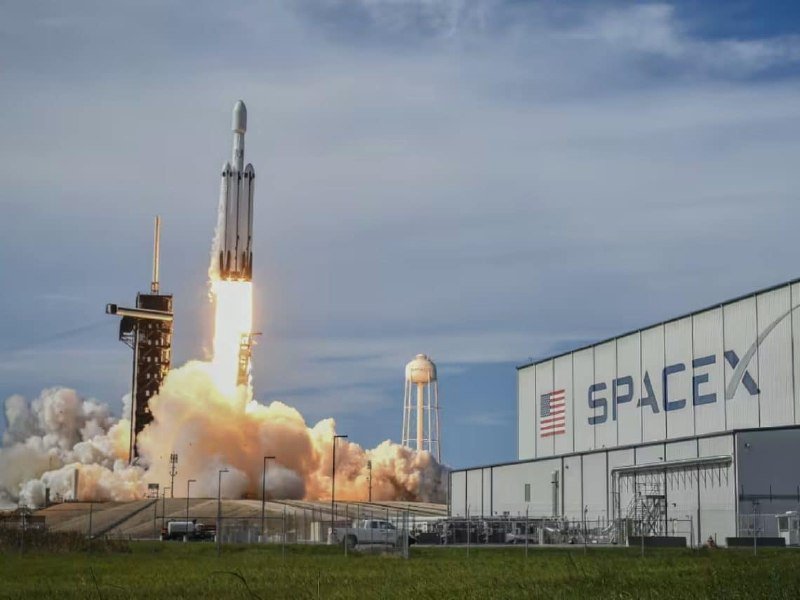
In the same news window, a separate datapoint arrived from Korean trading desks: retail investors in South Korea are reported to have funnelled around $800 million into SpaceX on its first trading day. The figure, attributed to Korean-language market reporting and circulated by prediction-market aggregators, is a single-day number for a single stock, and it should be treated as preliminary. But the directional claim is consistent with what has been true of Korean retail capital for the last three years: it is global, it is fast, and it tilts heavily toward a small number of high-momentum American private-market stories made newly tradable.
If confirmed at scale, the implication is that a non-trivial slice of Korean household balance sheets is now exposed, in a single name, to the operating and valuation risk of a company whose projected end-of-month valuation — sitting at roughly $3 trillion on prediction markets as of mid-June 2026 — depends on launch cadence, Starship flight-test progress, defence and intelligence revenue, and the continued willingness of late-stage private buyers to mark the order book up rather than down. A 52% implied probability of that $3 trillion mark is, in effect, a market-priced bet on the company's commercial and political trajectory for the rest of 2026.
The structural picture, in plain prose
The through-line is that the same Korean state and the same Korean households are now reaching past the peninsula in opposite hands. One hand is pushing a cautious line further north, into territory that used to be off-limits to civilians, on the assessment that the South can absorb whatever comes back. The other hand is pushing household capital further west, into a private US company whose valuation is increasingly a function of how the global defence, space and intelligence architecture prices its own future. Both are bets that the current arrangement — US alliance on the security side, dollar-denominated private markets on the capital side — will hold for at least the next reporting cycle.
That is not a controversial bet to make in 2026. The alliance is intact, Korean won liquidity is abundant, and the SpaceX float, whatever its eventual valuation, is the most liquid expression of an industrial theme (low-earth-orbit capacity, defence launch, sovereign-satellite contracts) that Korean investors have been able to buy into directly. The risk is concentration on both sides of the bet. A single company's trajectory sits on the household side; a single adversary's read of a redrawn line sits on the security side. The two are not connected, except in the political weather they both help set.
Stakes and what to watch
If the buffer narrowing is confirmed with specifics — a stated new width, a published schedule, named villages readmitted — the political story will be whether Seoul can frame it as a normal confidence measure, or whether it is forced into a defensive posture by an immediate North Korean rhetorical response. Pyongyang's English-language outlets have already been the loudest critics of every prior adjustment; the question is whether the new line crosses a rhetorical threshold of its own.
On the capital side, the watch-items are cleaner: the final tally of Korean retail into the SpaceX float, the next mark on private-market comps, and the trajectory of that 52% probability of a $3 trillion valuation by month-end. Each of those numbers is a public datapoint; none of them requires a guess about geopolitics. The interesting question is whether Korean policymakers, having let the household float do what it wanted, will start to read the same concentration risk into retail flows that they have historically worried about in property and crypto. The signals so far are mixed. The signal that is hardest to miss is the one in the wire: on 17 June 2026, Seoul is leaning outward, in two registers, on the same morning.
Monexus framed the buffer move as a routine posture adjustment rather than a provocation, and treated the $800 million retail figure as preliminary until a Korean primary source (KRX, Korea Financial Investment Association, or a major Korean wire) confirms the number — the lead Western wires had not by 07:25 UTC.
Wire provenance
This editorial synthesis draws on the following public wire/social posts:
- http://reut.rs/3S4BXns