Thermal balloons, village strikes, and the information fog over south Lebanon
Initial accounts of Israeli airstrikes and thermal-balloon deployments over south Lebanon circulated on 17 June 2026 via a single outlet — a useful prompt to ask why so much of the region’s breaking news travels without independent verification.
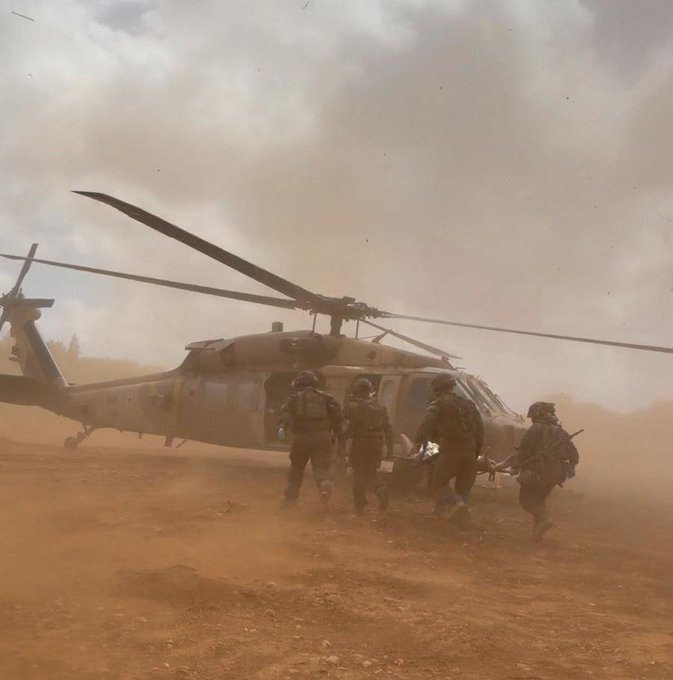
Two short dispatches moved across Telegram at 14:21 and 14:36 UTC on 17 June 2026. The first said Israeli warplanes had dropped thermal balloons over southern Lebanese towns including Tebnine. The second reported explosions in the village of Hadatha, also in the south. Both bulletins carried the same outlet’s fingerprint, the same wording, and the same absence of independent corroboration.
That absence is the story. South Lebanon is once again the place where a kinetic event — or several — is being narrated almost entirely through a single lens, before the wires, the UN, or the Lebanese state have caught up. The pattern is now routine, and the editorial questions it raises matter more than any individual strike.
What was reported, and by whom
According to The Cradle Media, Israeli aircraft dropped thermal balloons — incendiary devices traditionally used to ignite fires and signalise airspace — above Tebnine and adjacent southern towns at roughly 14:21 UTC on 17 June 2026. Fifteen minutes later, the same outlet said explosions were heard in Hadatha, a village in the same southern belt. No casualty figures, no coordinates, and no second source were attached to either bulletin.
Israel has not, as of this writing, confirmed or denied the specific operations. The IDF’s English-language channels had not posted a corresponding briefing at the time of publication, and Reuters, AP, AFP, the BBC, and Al Jazeera had not yet carried the items. That asymmetry — one outlet carrying the full weight of the initial claim — is itself the structural fact.
The single-source problem
Lebanon’s south is one of the most heavily monitored theatres in the world, and one of the least independently reported. Western wire bureaus in Beirut operate under restrictions that have hardened since 2023; local Lebanese outlets lean either towards Hezbollah-adjacent framing or towards the Hariri-era mainstream that has thinned in recent years. Into that gap have stepped Beirut-based outlets with explicit editorial alignment — The Cradle on the resistance axis, Iran International on the opposition axis — each capable of moving a story faster than anyone else, and each carrying a perspective a reader has to price in.
The risk is not that any one of these outlets is fabricating. The risk is that an unsourced claim becomes the working assumption of the day before it can be tested. A thermal balloon, an explosion, a strike on a motorbike, a precision hit on a village commander — each of these is plausible, each has precedent, and each of them deserves the same procedural scepticism.
What we do not know
The Cradle is the only source for both bulletins. The two villages named — Tebnine and Hadatha — are real and sit in the Tyre and Bint Jbeil districts respectively, areas that have experienced repeated exchanges since October 2023. Whether the explosions reported at 14:36 UTC were caused by the balloons described at 14:21 UTC, by a separate strike, by outgoing fire, or by something else entirely, is not established by the available material. The scale of damage, presence of casualties, and identity of any targets are similarly unspecified.
A reader looking for the basic who-what-where-when in conventional wire terms will not find it yet. Until Reuters, AP, AFP, Al Jazeera, or the Lebanese army’s own communications put a frame around the afternoon, the bulletins amount to an early, single-vendor version of events that the rest of the news system has not yet endorsed, modified, or rejected.
Why the framing matters
Western coverage of the south has historically privileged the language of Israeli security spokespeople and translated local reporting only through that lens. The pendulum correction has been the rise of outlets that centre the Lebanese and, by extension, the resistance perspective. Both approaches compress a more complicated reality. A strike that an Israeli brief calls a "targeted operation" may be a populated-village bombing to a Lebanese journalist; an "explosion" reported by an aligned outlet may turn out to be a roadside device detonated by Israeli engineering troops rather than an air strike.
The editorial discipline that the situation demands is not neutrality-as-refusal-to-claim. It is the willingness to publish what is known, label what is single-sourced, and refuse to launder early bulletins into the appearance of settled fact. A thermal-balloon report is a thermal-balloon report; an explosion is an explosion. Neither is, on its own, a narrative.
The stakes
If unverified single-source bulletins continue to set the day’s frame, two things happen. First, the information environment inside Lebanon itself becomes harder to read, which complicates evacuation, humanitarian, and diplomatic response. Second, the international press corps, which increasingly follows Telegram rather than boots on the ground, inherits that distortion wholesale. The result is a public sphere in which outrage, denial, and policy all run ahead of the evidence by hours or days.
The afternoon of 17 June 2026 is small enough — two short bulletins, one outlet, no second confirmation — to serve as a clean case study. Something probably did happen in south Lebanon today. The shape of what happened is, for now, a gap.
The desk framed these dispatches as a single-source event rather than a confirmed strike, in line with Monexus’s standing rule that wire provenance is recorded honestly in the source ledger even when the bulletin itself is brief.
Wire provenance
This editorial synthesis draws on the following public wire/social posts:
- https://t.me/thecradlemedia
- https://t.me/thecradlemedia
- https://t.me/TheCradleMedia
- https://en.wikipedia.org/wiki/Tebnine
- https://en.wikipedia.org/wiki/Bint_Jbeil_District