Southern Lebanon again: what an overnight artillery exchange tells us about the diplomacy that isn't happening
Lebanese accounts of Israeli artillery around Nabatieh al-Fawqa and a medical evacuation at Qala Shaqif on 17 June point to a quiet escalation the international press has barely registered.
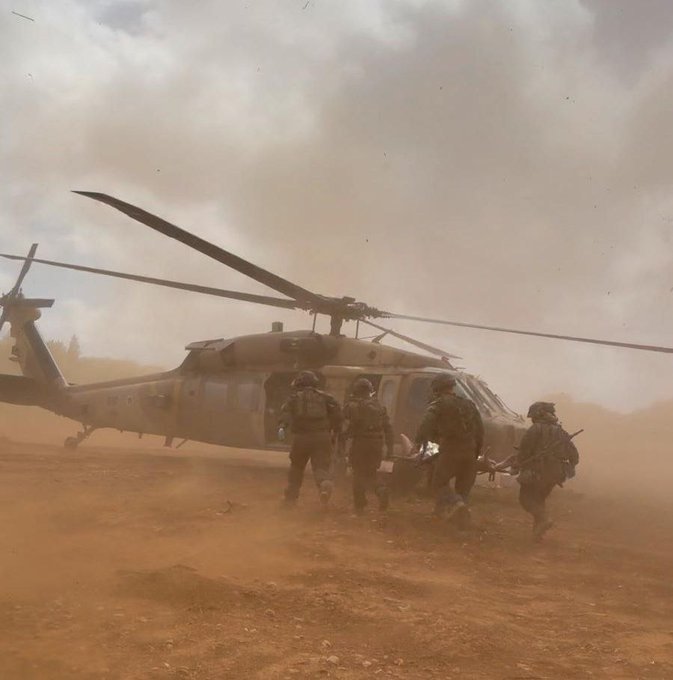
In the early hours of 17 June 2026, Lebanese sources reported that Israeli artillery struck the heights of Ali al-Taher and the area surrounding the town of Nabatieh al-Fawqa in southern Lebanon, with a separate account describing a medical-evacuation helicopter of the Israeli military landing at Qala Shaqif on the Lebanese side of the frontier. The reports, carried by Iranian state-affiliated outlets Tasnim and Jahan-Tasnim in the 03:57–04:53 UTC window, are not the first such accounts of the week, and they are unlikely to be the last. They arrive in a diplomatic vacuum: there is no live, named negotiating track on the southern Lebanon front, and the international press has been consuming most of its Middle East bandwidth on the Gaza file and on Iran's nuclear posture. The result is a slow-burn front that is being under-reported precisely because nobody in a Western capital is asking it to escalate.
The pattern matters because southern Lebanon has been a pressure-relief valve, a flashpoint, and a strategic rear area for Iranian-aligned Shia armed groups for the better part of two decades. When the artillery clock starts ticking there, it usually does so in coordination with something larger — a negotiating failure elsewhere, a weapons transfer, a political crisis in Beirut, or a deliberate message to Washington. Which of those it is this time is the part the available reporting does not tell us, and the part the next seventy-two hours will.
The overnight picture
The two Iranian-linked wires that surfaced the incidents — Tasnim's English channel and the Persian-language Jahan-Tasnim feed — placed the events in roughly the same hour on 17 June. Artillery fire on Ali al-Taher and the outskirts of Nabatieh al-Fawqa was reported at 03:57–03:58 UTC, with a follow-up at 04:53 UTC describing a rescue helicopter of the Israeli army landing at Qala Shaqif, reportedly to evacuate wounded personnel. Lebanese sources, quoted in both wires, framed the helicopter as a medical asset, not a combat platform. The framing is worth flagging: Iranian state media has an interest in depicting the Israeli operation as bleeding, and a medevac landing is a usable piece of optics even if the underlying facts are mundane.
What is not in dispute, on the limited evidence available, is that Israeli fire and an Israeli military movement both occurred in southern Lebanon on the morning of 17 June 2026. What the sources do not specify is the calibre of the fire, the target, the casualty toll, or the Israeli operation that produced a wounded soldier. The Lebanese government has not, on the open wire, issued a public count of civilian casualties for this specific episode. The IDF has not, on the open wire, issued a same-day English-language statement on the artillery incident. Both silences are themselves part of the story.
The counter-narrative that the wires will not lead with
There is a familiar way this story gets told in the Western press: Hezbollah-aligned units fire first, Israel responds proportionally, the diplomatic dance continues. The Iranian-affiliated wires invert that sequence: Israel strikes, Hezbollah-aligned units or local Lebanese civilians absorb the cost, an evacuation at the frontier reveals Israeli losses that the Israeli press is not supposed to publish. Both tellings are partial, and the truth almost always sits between them — a sequence of escalations in which attributing the first shot is itself a political act.
The structural point is that the framing of who-shot-first is decided less by what the night-vision footage shows than by which capital needs the incident to read a particular way. Beirut, Tehran, and Jerusalem each have an interest in the chronology that suits their own bargaining position, and the wires that travel to Western readers tend to default to the version that flatters the closest ally. A staff-writer's job is to keep the chronology conditional, not to crown a winner.
What this sits inside
Southern Lebanon in 2026 is not a self-contained theatre. It is the southern flank of a wider contest over Iran's deterrent posture, the Lebanese state's authority inside its own border, and the United States' tolerance for an open-ended Israeli campaign against Hezbollah-aligned units after the Gaza war. The artillery exchange on 17 June lands inside a year in which Israeli operations against Iranian-aligned assets in Syria have continued at a low tempo, in which Iran's nuclear file has lurched between talks and threats, and in which Lebanon's own army has been quietly mapping the disarmament of non-state armed groups without a clear timetable.
In plain terms: when southern Lebanon flares, it is usually because something further up the chain — Tehran, Washington, or Tel Aviv — is signalling. The overnight flare-up is small in the absolute sense, but the absence of a named mediator is not. The UN Special Coordinator for Lebanon, the French, and the Americans have all been intermittently active; none of them is on the record in the available reporting as having picked up the phone for this incident within the first twelve hours. That absence is itself the structural story.
Stakes and forward view
If the night of 17 June is a one-off — a counter-fire exchange, a medical evacuation, a quiet handshake at the frontier by morning — it will be a footnote by Friday. If it is the leading edge of a new operational tempo, the price will fall on three groups in roughly that order: Lebanese civilians in the border villages, the Lebanese Armed Forces' own standing in the south, and the diplomatic bandwidth that the Lebanese state has left to spend on its own presidential and economic crises. Israel will absorb the diplomatic and intelligence costs; the United States will absorb the bill at the UN Security Council. Tehran will absorb the cost only if the incident becomes the pretext for a strike on its territory, which is a tail-risk scenario, not a base case.
The honest summary is that the available sourcing is thin, the actors are not yet on the record in their own words, and the diplomatic phone book that would normally pick up such a call appears, for now, to be closed. The story to watch is not the artillery, which is loud, but the silence around it, which is louder.
This publication is following the southern Lebanon file on the assumption that the absence of a named mediator is itself the news. Where wire reporting has not yet caught up with the morning's events, we say so explicitly rather than back-fill from prior cycles.
Wire provenance
This editorial synthesis draws on the following public wire/social posts:
- https://t.me/tasnimnews_en
- https://t.me/tasnimnews_en
- https://t.me/JahanTasnim
Follow the event.
These dated source records provide context. They do not retrospectively verify this archive article.
Separate what the nuclear watchdog reported from what it could not determine after the June 2025 strikes.