The Lonely Frame: Trump, the G7 Family Photo, and the Slow Erosion of Allied Trust
At the 2026 G7 summit in Kananaskis, a single group photograph has done the work of a thousand communiqués — and the body language is not flattering for Washington.
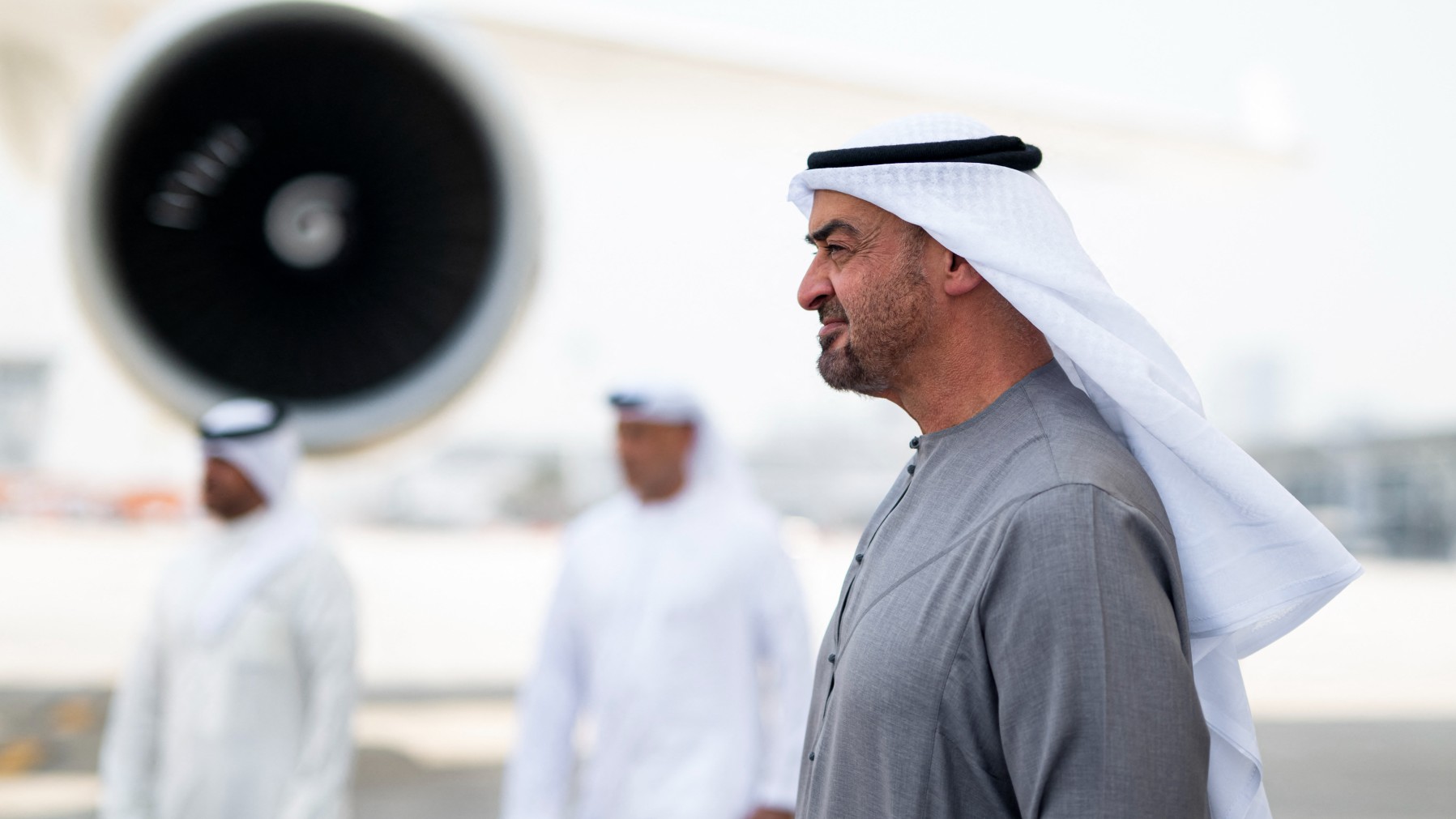
At 12:58 UTC on 17 June 2026, a still image began to move around the world's diplomatic press corps with the speed usually reserved for crisis alerts. The frame was almost too banal to merit a second look: the customary G7 family photograph, taken on the tarmac of a Canadian air base, with the leaders of the United Kingdom, France, Germany, Italy, Japan and Canada arranged in a tidy arc, smiling in the direction of the lens. The President of the United States was not in the frame. By 13:07 UTC, the chyron — "Trump 'makes an entrance' at the G-7 summit and declares: I'm the boss!" — was already cycling through aggregator accounts. By 13:11 UTC, a social-media post captured the political temperature in a single sentence: "This picture shows Trump's diplomatic disaster. None of the US allies feel comfortable around Trump."
Three posts, three time-stamps, one picture. The visual is now doing the work that a thousand communiqués used to do. It is also doing the work that decades of trust used to do. What the 2026 G7 summit in Kananaskis, Alberta, has so far produced is less a policy programme than a slow, televised erosion — the moment in which the choreography of allied consensus visibly broke, and the rest of the world was invited, in real time, to watch.
The picture and what it does
Family photographs at G7 summits have always been more than protocol. They are the public ledger of who is in the room, who is being acknowledged, and — just as importantly — who is being excluded. In decades past, even tense summits produced a managed image of unity: shoulder to shoulder, arms linked, a soft grin pressed into service of a hard transcript. The image is the message. The message is: we still have a seat at the same table.
The frame from Kananaskis breaks the convention in two directions at once. The first is compositional: an empty space where the American president should have been. The second is narrative: the same news cycle in which Trump reportedly arrived late and declared himself “the boss” (per the @englishabuali Telegram post at 13:07 UTC). The two halves of the story — a leader not aligned with his peers, and a leader announcing hierarchy in lieu of consensus — are precisely the framing that the allied body language appears to confirm. The chyron does not have to do the editorialising. The camera has already done it.
Diplomatic reporters in Canada noted the visible effect on the ground: a stand-off posture in the greeting line, shortened bilaterals, an absence of the ritual back-slapping that the institutional G7 has used for half a century to paper over disagreements. The frame the wire services were sending was not quite a rupture — no one used that word in the first hours — but it was unmistakably a hinge. The question of the day, in the corridors of the summit, was no longer whether the United States remained the senior partner of the Western alliance. The question was whether the Western alliance still had a working language at all.
The counter-narrative, taken seriously
The White House line — surfaced in accompanying wire copy from sympathetic outlets and amplified by Trump's own Truth Social account — is that the frame is being misread. A president who arrived late and broke the choreography was, in this telling, refusing to perform an outdated ritual. The "family photo" is read by critics of multilateralism as a stage-managed piece of political theatre: smiling leaders pretending unity while signing communiqués that have already been drafted in Washington. From this angle, a president who declines to pose is not isolating himself; he is refusing to lend his image to a process he no longer believes is honest. There is a coherent version of the argument: the G7 in its 2020s form has been a slow-moving talk-shop, struggling to act on debt restructuring for low-income countries, on vaccine equity, on climate finance, on the architecture of cross-border technology controls. The decision to walk in late, declare primacy, and skip the group shot is then less a tantrum than a posture: a refusal to pretend that the institution still commands the deference of its most powerful member.
That argument has real merit, and any honest reading of the 2026 G7 has to grant it. But it is also the argument that has, over four years, accompanied a measurable thinning of the tools the alliance actually has. NATO's conventional force posture in Europe has been rebuilt on assumptions that include Washington as the senior logistics hub. The European Central Bank's swap lines, the Federal Reserve's dollar-liquidity backstop, the joint statements on semiconductor export controls — none of these survive an American president who treats alliance as a performance rather than a structure. The Kananaskis frame, in other words, is not the cause of the erosion. It is the symptom. The cause is the cumulative effect of a hundred smaller moments in which the United States has chosen to act as a unilateral pole rather than a coalition leader.
What the rest of the world is reading
For every foreign ministry outside the G7, the Kananaskis frame is being studied not for what it says about Donald Trump — the President is a known quantity, and ministers have been calibrating for four years — but for what it says about the G7 itself. The reading from New Delhi, Brasília, Jakarta, Pretoria and Ankara is structurally simple: the era in which the G7 could credibly claim to set the global agenda is closing faster than the institution's own communiqués acknowledge. The frame the wire services sent on 17 June 2026 accelerated that perception considerably.
There is a Global South counter-narrative that, on the merits, has been waiting for this moment. The G7's climate finance commitments have, by the Glasgow and Baku pledges, run years behind schedule. The G7's debt-restructuring machinery is, by the IMF and World Bank's own accounting, slower than the timelines of the countries it purports to help. The G7's stance on technology controls has, since 2023, looked less like a coordinated posture and more like a series of national exceptions bolted together. None of this is secret; all of it has been on the public record. What was missing was a moment in which the optics confirmed the substance. The empty chair in the family photograph is, for the rest of the world, that moment.
The structural frame here is not new, but it has become legible in a way it was not even two years ago. A unipolar order run from Washington has been transitioning, in slow motion, into a more plural arrangement. The Kananaskis frame is one of the rare visual artefacts in which that transition is captured in a single image. Whether the transition produces a coherent successor order — a G20 that works, a BRICS+ that delivers, a UN Security Council that acts — is the open question of the decade. What is now in the open is that the G7 is no longer the obvious answer to it.
Stakes and what comes next
The most immediate stakes are operational. A G7 summit that visibly fractures on the family photo is a G7 summit at which the closing communiqué is read as a press release rather than a directive. Market desks will have noted, in the first hours of trading on 17 June 2026, the small but real repricing in European defence names and in the currencies of smaller G7 partners that depend on the American security guarantee. The dollar's reserve-currency status is not at immediate risk; nothing in one frame changes that. But the marginal buyer of US Treasuries — a Saudi sovereign wealth fund, a Korean public pension, a Brazilian state bank — now has a fresh data point in its model. The frame is not a thesis. It is a discount factor.
The second-order stakes are institutional. Allies do not leave alliances in a single summit. They leave them in a series of micro-decisions — a bilateral not signed, a procurement contract not awarded, a port call not authorised — that, taken together, look exactly like a rebalancing. Poland, the United Kingdom, France, Germany and Japan have spent the last four years building out independent capability: a European air-defence consortium here, a hypersonic research programme there, a sovereign chip-fabrication plant on a third site. The Kananaskis frame is the cover under which those programmes are now being accelerated. No leader in the room will say so on camera. The decisions, however, are already moving.
The third-order stakes are geopolitical. A world in which the Western alliance is visibly less unified is a world in which the bargaining space of every other capital expands. Beijing, Moscow, Tehran, Ankara and New Delhi each have different versions of what they would like to do with that space, and they will not always agree. But the negotiating leverage of every one of them is, on a single day's evidence, marginally higher. The empty chair in the family photograph is, in that sense, not a Trump story. It is a global-power-distribution story. The President provided the choreography. The distribution of power in 2026 supplied the rest.
What remains uncertain
The sources do not specify what was said in the closed sessions of the 2026 G7 in Kananaskis. The wire reporting in the first hours of 17 June 2026 was overwhelmingly visual and body-language driven; the substantive communiqués were not yet public at the time of the most-circulated posts. It is therefore possible — plausible, even — that the final declaration will contain stronger language on Ukraine, on critical minerals, on AI safety, or on the architecture of cross-border payments than the family photo would suggest. Summits have surprised in the past. The body language at the photo call is not, by itself, a transcript of the talks behind it. The cautious reader should hold both possibilities in mind.
What is harder to argue with, on the evidence now in the public record, is the visual itself. A President of the United States did not pose with his peers at the customary moment. The wire services sent the frame. The rest of the world read it. And the read — from ministries, markets, and publics in the Global South as much as from NATO capitals — is that the order the frame represents is thinner than it was a year ago. Whether that thinness produces a better-shaped successor order, or merely a more contested one, is the question the next eighteen months will answer.
The empty chair, in the meantime, does not stop being a story. The camera has already done its work. The communiqué will now have to do the rest.
Desk note: Monexus framed the Kananaskis moment as an artefact of a longer transition rather than a one-day spectacle. Wire coverage emphasised the body language; this publication read the frame against four years of accumulating allied capability-building in Europe and Asia, and against the slower shift in bargaining leverage visible from the Global South.
Wire provenance
This editorial synthesis draws on the following public wire/social posts:
- https://x.com/sprinterpress/status/
- https://t.me/englishabuali/
- https://t.me/ClashReport/