Trump's G7 balancing act: a hard-won Iran deal, a Hormuz price tag, and a Netanyahu audience watching at home
A tentative deal with Tehran and a transactional ask of Europe collide at the G7, while Donald Trump's standing inside Israel craters from a net +23 to net -23 in three weeks.
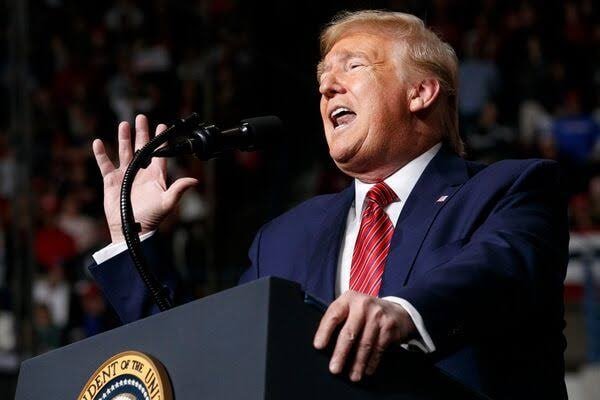
The arithmetic landing on the table at this week's G7 is the kind of grand-bargain diplomacy that, on paper, ought to vindicate a second-term presidency. On 17 June 2026, Donald Trump arrived at the summit with a tentative agreement to wind down the months-long US–Israeli war with Iran, a request that European allies help secure the Strait of Hormuz in return for renewed American backing for Ukraine, and a self-assured posture that he openly described to fellow leaders as that of "the boss," according to footage circulated by Clash Report on Telegram on 17 June 2026 at 09:38 UTC. The same morning, NPR's lead coverage described the Iran agreement as "dominating" the summit while flagging that "big questions remain" about its durability and its economic fallout.
What the cameras do not show is the political math back home — and inside Israel, the constituency whose security is most directly bound up in any Hormuz arrangement. According to a figure circulating on X via @sprinterpress on 17 June 2026 at 09:44 UTC, Trump's net approval rating inside Israel has fallen from +23 to -23 in three weeks. Read alongside the open question of whether the deal will actually reopen the waterway, that number frames a more precarious summit than the optics suggest.
A deal in name, a chokepoint in fact
The headline out of the G7 is the tentative US–Iran agreement. NPR's morning write-up on 17 June 2026 at 09:00 UTC makes the basic mechanics plain: the war "rocked the global economy and decimated Trump's standing at home," and the deal is the lever the administration is using to pull prices and politics back from the edge. The follow-on piece, also timestamped 17 June 2026 at 09:00 UTC, makes the harder point — Trump "told ships to 'start your engines,'" but "that's not happening yet," because Iran's residual control of the Strait of Hormuz continues to inflict global pain while the waterway's reopening remains conditional and contested.
That gap between announcement and reality is the political vulnerability. A deal that does not move tankers is, for the global economy and for Trump's domestic audience, indistinguishable from no deal at all. It is also, for Tehran, the leverage point: the slower the reopening, the longer Iran retains a bargaining chip without firing a shot.
The Ukraine–Hormuz trade Trump is pitching to Europe
The second track of the summit is transactional in the older, harder sense. Reporting summarised on the Kyiv Post official Telegram channel on 17 June 2026 at 08:48 UTC has Trump telling G7 partners that he is "ready to boost support for Ukraine and increase pressure on Russia — but wants European allies to help secure the Strait of Hormuz in return." The post notes that "G7 leaders didn't reject the proposal" — a careful formulation that captures the state of play precisely. Nobody said yes; nobody said no.
The framing matters. Washington is converting a security good it has historically underwritten for free — freedom of navigation through Hormuz, a US Navy mission since the 1980s — into a bill it wants allies to share, while offering in exchange precisely the kind of continued Ukraine commitment that Kyiv and several European governments have spent two years lobbying to lock in. Read narrowly, it is a cost-shifting exercise. Read more generously, it is an attempt to lock European navies into the post-war Hormuz architecture in a way that gives the deal institutional weight rather than resting solely on US platforms. Both readings can be true at once.
The audience Netanyahu is not in the room
Inside Israel, the politics of the deal cut the other way. The @sprinterpress figure — a 46-point swing in net approval, from +23 to -23 in three weeks — is consistent with a population that watched its government join a US-led war with Iran and is now watching a tentative exit that leaves strategic questions unanswered. Israeli outlets have documented deep scepticism inside the security cabinet about any arrangement that does not produce a structural rollback of Iran's nuclear and proxy capability; the Hormuz component complicates that further, because Israeli planners have historically been wary of multinational frameworks that dilute unilateral freedom of action in adjacent waters.
That sets up an awkward triangle. Trump needs the G7 to credibly underwrite the Iran arrangement. He needs European navies to share the Hormuz burden. And he needs an Israeli government that does not publicly repudiate a deal its own intelligence services are already casting as incomplete. The summit's optics — the joking "the boss" moment captured by Clash Report — read as confidence. The numbers underneath read as a leader with thin margins on multiple fronts at once.
Stakes, and what the wire is not yet telling us
If the deal holds and Hormuz reopens in a verifiable way, the political economy is straightforward: oil benchmarks soften, inflation arithmetic improves into the US autumn, and Trump goes into the midterm cycle with a foreign-policy headline he can defend. If it does not — if Iran slow-walks verification, or if European navies treat the US ask as an unfunded mandate — the same summit becomes a record of an overextended administration trading promises it cannot guarantee for commitments it cannot collect.
What the available reporting does not yet resolve is the substance of the verification regime around the Strait. NPR's morning write-up names the question but not the answer; the Kyiv Post summary names the proposal but not its cost-sharing arithmetic; the Israeli-side polling is a single point on X and would need replication across established Israeli pollsters before it can be treated as anything more than directional. The Ukrainian counterparty question is similarly open — Zelenskyy's office has not, in the items on file, signed on to the linkage, and Kyiv's prior position has been to resist any framing that conditions support for the invaded country on unrelated third-country tasks.
What can be said with the evidence in hand is this: the G7 of 17 June 2026 is the first summit in some time where the central drama is not the communique language but whether the announced architecture survives contact with the next 30 days. The Iran deal is the headline. The Hormuz bill is the price. Ukraine is the currency. And the Israeli audience, watching from outside the room, is the constituency whose buy-in the deal still has not secured.
This publication's framing tracks the wire on the basic sequence — deal first, Hormuz second, Ukraine third — and reads the Israeli polling swing as the leading domestic indicator that the summit's transactional logic has not yet closed.
Wire provenance
This editorial synthesis draws on the following public wire/social posts:
- https://t.me/Kyivpost_official
- https://t.me/ClashReport
Follow the event.
These dated source records provide context. They do not retrospectively verify this archive article.
Separate what the nuclear watchdog reported from what it could not determine after the June 2025 strikes.