Trump's Strait of Hormuz calculus: free-rider economics and the new burden-sharing language
A single sentence on European minesweepers, dropped on 17 June 2026, signals a sharper transactional turn in US Gulf policy — and exposes how 'burden-sharing' has mutated from alliance doctrine into a price list.
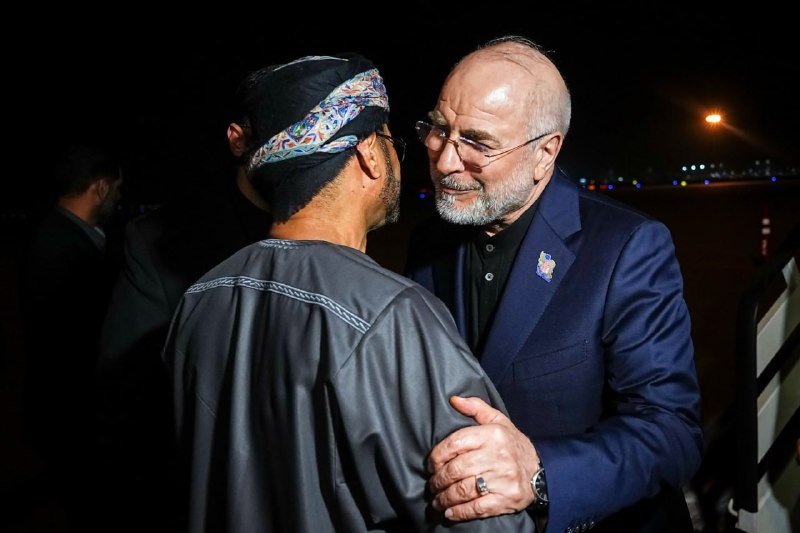
On 17 June 2026, in remarks carried by Fars News International, Donald Trump set out the new American doctrine of the Gulf in two sentences: "We don't need European minesweepers in the Strait of Hormuz, we don't need them, but if they want to send them, I think that would be fine." Paired with his claim that the United States had "profited 40 times the cost of the war" by removing Venezuelan crude from the market, the comments sketch a foreign policy in which the provision of public goods — the security of the world's busiest oil chokepoint, in this case — is reframed as an à-la-carte menu that allies are invited, politely, to start paying for.
This publication has argued before that the language of "burden-sharing" is doing more work in 2026 than at any point since the early Cold War. The Hormuz exchange is the clearest example yet. The chokepoint is not a marginal waterway. It is the maritime throat through which the overwhelming majority of Gulf crude reaches Asian and European refiners. Mines are also not a hypothetical threat. The 1980s Operation Earnest Will and the more recent IRGC harassment campaigns of commercial tankers are within living memory of every regional navy commander. So when the US President publicly downgrades the need for allied minesweepers while leaving the door open to their deployment, he is not making a naval point. He is making a pricing point.
What Trump actually said — and what he didn't
The Fars-captured quote is studiously casual. It declines European help while not refusing it. It assigns no cost, names no timeline, and offers no joint command structure. The diplomatic equivalent is the waiter's line — "the wine list is there if you want it." The accompanying Venezuela remark, also carried by Fars on 17 June, supplies the ledger: a 40-to-1 return on the cost of war, calculated in barrels of oil that would otherwise have reached the market. Read together, the two statements describe a world in which American military action is measured against an oil-market denominator, and allied contributions to maritime security are weighed against the implied savings of US unilateralism.
That is a sharp departure from the NATO-era template, under which the United States bore a disproportionate share of the security overhead precisely because Washington judged the strategic dividend — credible deterrence, an integrated Atlantic posture, dollar-denominated energy trade — to be worth the price. The Trump formulation is different in kind, not degree. It is not a complaint about free-riding. It is an estimate of revenue foregone, expressed in real-time, on the record.
A counter-reading: the deal is already done
The most charitable read is that the minesweeper line is theatre. European navies have, in fact, been inching towards a permanent Hormuz presence for years. France led a 2019 mission. The European Maritime Awareness Mission in the Strait of Hormuz (EMASOH) has been quietly running since 2020. The Belgians, the Danes, the Dutch, the Germans and the Greeks have all passed through, in numbers too small to break headlines but large enough to satisfy the lawyers. Under this reading, Trump's comment is a victory lap, not a price list — confirmation that the burden is already being shared, in a manner that lets him claim credit at home while keeping European capitals inside a coalition Washington still nominally leads.
The problem with the charitable read is the Venezuela line. A 40-to-1 return is a campaign-trail figure, not a strategic assessment. It implies that the next war will be evaluated, ex ante, on a P&L basis. That is a frame in which allied minesweepers look less like solidarity and more like a line item a host might do without.
The structural shift beneath the rhetoric
Strip the personality away and three things are happening at once. First, the United States is signalling that the provision of maritime public goods in the Gulf is no longer treated as a sunk cost of grand strategy; it is to be re-costed against the revenue streams that flow through the chokepoint. Second, the framing of European participation is moving from "contribution in kind" (ships, crews, risk) to "contribution in cash or barrels" — a language European treasuries understand and European parliaments find harder to refuse. Third, the implicit message to Tehran, and to Beijing, is that the security architecture of the Gulf is, in 2026, transactional and somewhat negotiable, rather than fixed and somewhat taken for granted.
The risks follow the logic. If Hormuz is a menu, then non-customers can be assumed to have made a choice. Gulf monarchies, which underwrite the US Fifth Fleet footprint through base access and capital commitments, may find the price of that underwriting rising. Asian importers — Japan, South Korea, India, China — have been quietly hedging through the Iranian "shadow fleet," discounted Russian Urals, and expanded strategic petroleum reserves. Each of those hedges now has a dollar figure attached. The Strait itself does not become more dangerous overnight. It becomes more explicit about who is paying whom, and for what.
What remains genuinely uncertain
The sources do not specify whether the minesweeper remark was prepared, off-the-cuff, or extracted from a longer exchange. Fars News International is an Iranian state outlet whose editorial choices are made in Tehran; its selection of the quote is, in itself, a piece of messaging. It suits Iranian interests to portray the US approach as mercenary. The Trump camp, equally, has incentives to read the same line as benign.
The Venezuela figure is also unreconciled with independent reporting in the materials at hand. A 40-to-1 return is the kind of round number that survives translation across languages and time zones because nobody on either end wants to footnote it. The structural point — that oil-market calculus is now part of the war justification — survives whether the precise multiple is 40, 4, or 4.0. The arithmetic does not. That gap is worth flagging rather than smoothing over.
How Monexus framed this: a transactional pricing story, not a coalition story — the wire read it as a NATO moment; we read it as a balance-sheet moment, with the Strait of Hormuz treated as a product the United States is happy to discount, on terms it now sets.
Wire provenance
This editorial synthesis draws on the following public wire/social posts:
- https://t.me/FarsNewsInt
- https://t.me/FarsNewsInt
- https://t.me/amitsegal