Trump pitches Hormuz-mines-for-Ukraine swap as G7 weighs new Russia sanctions
At the G7 in France, Donald Trump told allies the US would deepen support for Kyiv and tighten the screws on Russian energy — provided Europe helps clear mines from the Strait of Hormuz. The proposal is on the table; it is not yet a deal.
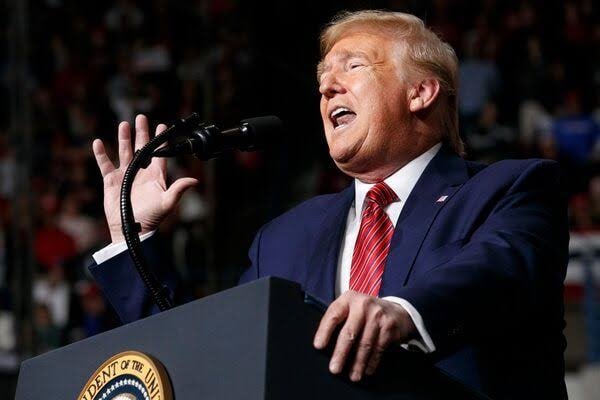
Donald Trump arrived at the Group of Seven summit in France on 17 June 2026 with a transactional pitch that fused two of the year's most volatile theatres: the war in Ukraine and the still-unresolved crisis around the Strait of Hormuz. According to a report carried by Euronews and attributed to Politico, the US president told fellow leaders that Washington was prepared to deliver "some kind of concessions" on Ukraine in exchange for allied help clearing mines that have, since the recent US–Iran flare-up, restricted commercial traffic through the waterway. The framing was unusual only in its candor — the underlying logic of linking security guarantees to maritime traffic has, in various forms, been the spine of American alliance politics for the better part of a century.
The transactional pitch arrived alongside a separate, more conventional G7 output: a joint statement, reported by the Sprinternews wire on 17 June 2026, committing the group to intensify sanctions pressure on Russia's oil and gas sector. Kyiv Post's official channel, reporting from the summit, framed Trump's offer as conditional: the US is "ready to boost support for Ukraine and increase pressure on Russia — but wants European allies to help secure the Strait of Hormuz in return." Leaders at the table did not reject the proposal outright, but neither did they sign on the spot. The conditionality is now the story.
What Trump is actually offering
The president's proposal is best read as a bundle rather than a single concession. On the Ukrainian side, the offer is opaque — "some kind of concessions" is a phrase designed to occupy negotiating space rather than to commit it. On the maritime side, the request is concrete. The Strait of Hormuz, through which roughly a fifth of the world's traded oil ordinarily transits, has been choked by mines since Iran's campaign against US and Israeli targets during the spring 2026 conflict. NPR's 17 June 2026 dispatch on the tentative US–Iran deal notes that despite Trump's much-publicised order for commercial shipping to "start your engines," traffic has not yet normalised; the waterway remains contested, and the mines have not been cleared.
European capitals, the Kyiv Post account suggests, are willing to entertain the maritime end of the bargain. The harder question is what "concessions" on Ukraine actually means. The Ukrainian side has, throughout the war, treated any talk of territorial concessions as a non-starter. Allied officials, by contrast, have periodically floated the idea of frozen-conflict arrangements or limited recognition of the line of contact. The risk for Kyiv is that a "concession" framed in Washington sounds like a battlefield decision made in Kyiv.
The G7's other headline: oil-sector sanctions
The summit's other major output is the joint statement on Russian energy. The G7's working theory, restated in nearly every communiqué since 2022, is that Moscow's war chest is determined by the price and volume of its hydrocarbon exports, and that calibrated pressure on that sector — price caps, shipping-service restrictions, secondary-sanctions regimes — is the most cost-effective lever available short of direct military involvement. The new commitment, per Sprinternews, intensifies an existing framework rather than inventing a fresh one. The political significance is real but procedural: it signals that the Trump administration, often depicted as sceptical of further economic warfare against Moscow, is willing to be photographed under a banner of escalation — provided the price is paid elsewhere.
That price is Hormuz. Read together, the two summit deliverables amount to a single negotiating posture: Ukraine is the headline, sanctions are the deliverable, and the Strait is the bill.
The Hormuz problem that won't go away
The Strait of Hormuz crisis is the legacy of a months-long conflict between the United States, Israel, and Iran that has, in its wake, left the waterway mined and its transit regime unsettled. NPR's reporting underscores the gap between the White House's political theatre and the operating reality on the water: Trump told ships to "start your engines," but shipping firms, insurers, and the companies that price war risk have not yet received the technical and security guarantees that would make that instruction operational. Lloyd's-market war-risk premiums, the unofficial thermometer of the trade, are not part of the public record in the source material — a gap that itself is a tell. Until those numbers move, traffic will not move either.
This is where the European calculus becomes sharp. The G7 economies are net energy importers. A prolonged Hormuz disruption is not a distant inconvenience; it is a domestic-political event with a measurable price at the pump and on the wholesale gas curve. Helping clear the Strait is, in that sense, less an act of Atlantic solidarity than a national-economics move. The Trump administration is, in effect, asking allies to underwrite their own supply security — and to accept that the bill comes due in the form of flexibility on Ukraine.
The structural frame: linkage as strategy
The move is a textbook instance of linkage as statecraft — using leverage in one domain to extract movement in another. The technique predates the current occupants of every G7 capital, and the fact that it is being deployed so openly suggests the Trump team calculates that the European appetite for both secure energy and a sustainable Ukraine policy is high enough to absorb the ask. Whether that calculation survives contact with the German, French, and Italian domestic audiences — none of whom have a strong electoral incentive to be photographed clearing mines for an American president — is the open variable.
The counter-reading is that the linkage is a negotiating posture designed to be walked back. By attaching a maximalist maritime ask to a vague Ukraine concession, the White House gives itself room to declare a partial win in either direction: any European movement on mine-clearing can be presented as a win for the US, and any softening of language on Ukraine can be presented as allied flexibility. From a European vantage, the symmetrical danger is the reverse — paying the maritime bill and discovering that the Ukrainian concession was less generous in delivery than in framing.
Stakes, and what the sources do not yet say
If the deal lands in something close to its current shape, the winners are clear: the Trump administration secures an allied contribution to a maritime mission it would otherwise have to underwrite largely alone, and the Ukrainian file gets a fresh round of US attention and G7 sanctions architecture. The losers, in the first instance, are those who argued for a clean separation between European security in the Black Sea and European energy security in the Gulf — the linkage makes the two files hostage to each other, and hostage-taking cuts both ways. Iran, which mined the Strait as a strategic instrument in the first place, retains a veto over the timing of normalisation, even if the mines themselves are physically cleared.
What the public record does not yet disclose, and what will determine whether the proposal becomes a deal, is the technical scope of the mine-clearing request, the financial terms under which European navies would operate, the legal authority under which the mission would be constituted, and the precise content of the "concession" on Ukraine that would be exchanged. Each of those is, in its own right, a multi-week negotiation. The summit communiqué is, for now, a posture — not a settlement. The wire services have, characteristically, reported the announcement more fully than the substance; the substance is still being written in the side rooms of a French château on a Tuesday in June.
Wire provenance
This editorial synthesis draws on the following public wire/social posts:
- https://t.me/euronews/
- https://t.me/Kyivpost_official
Follow the event.
These dated source records provide context. They do not retrospectively verify this archive article.
Separate what the nuclear watchdog reported from what it could not determine after the June 2025 strikes.
A dated voting record is evidence of one decision. Use the original UN record before turning it into an alignment label.
Visual explainer · historical vote of 2022-03-02 →