Trump's Iran Deal Diplomacy: Euphoria, Denial, and a Vatican-tinged Rift With Meloni
Three signals in a single Washington day: a self-congratulatory president, a denial of a $300 billion fund story, and a meeting with Giorgia Meloni arranged despite a recent clash over Pope Leo XIV.
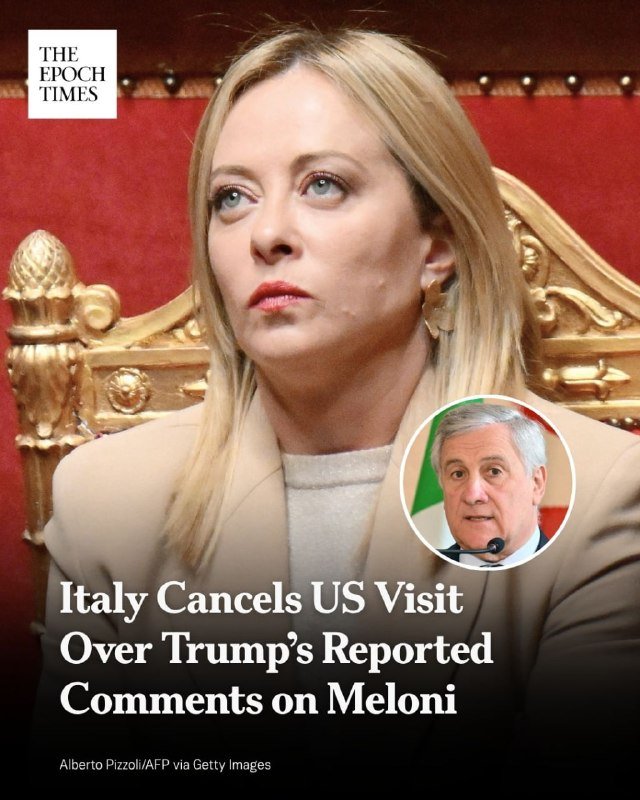
On the afternoon of 17 June 2026, the rhythm of Washington's Iran file was set not by a single headline but by three short notes stacked on top of each other. At 16:07 UTC, a Telegram channel aligned with conservative US commentary posted a clip of President Donald Trump telling reporters that "world leaders are thrilled that we made a deal, every one of them," and that not one nation had come to Washington asking the US to "keep dropping bombs" on Iran. At 13:24 UTC, a market-intelligence account on X reported Trump as saying, in the same news cycle, that reports of a $300 billion Iran fund were "false" and that the United States would not be investing in such a vehicle. By 08:40 UTC, the same kind of account had already flagged that Trump and Italian Prime Minister Giorgia Meloni had held their first known meeting since a public clash over Pope Leo XIV and the Iran operation. Read together, the three signals sketch a White House trying to keep three plates spinning at once: a deal narrative, a denial of a specific financial architecture attached to that deal, and a diplomatic relationship with a major European capital that the administration recently frayed.
The deal narrative, and the price of owning it
Trump's 16:07 UTC remarks are the most overtly political of the three. The claim that no government asked the US to continue bombing Iran is, on its face, a counter-narrative aimed at domestic critics who have framed the operation as an overreach. It is also a familiar posture: in negotiations with the Islamic Republic since 2018, US presidents of both parties have periodically recast sanctions, strikes, and diplomacy as a continuum rather than a contradiction. What is striking is the audience the comment implicitly targets — foreign capitals, not Tehran. Trump is not arguing with Iran's foreign minister; he is performing for the UN's P5+1 counterparts, Gulf monarchies, and European Union leaders whose silence he is now citing as consent.
The difficulty is that the clip does not specify which "deal" he means. The 13:24 UTC post on X, attributed to a market-intelligence account with active reporting on Iran-related prediction markets, says Trump denied reports of a $300 billion fund and denied any US investment in one. The two statements, taken together, suggest a deal exists in the president's telling, but that the financial scaffolding being attached to it in financial press and on prediction markets is not, in his account, real. This publication's read: the White House wants the political upside of a deal — cover from war fatigue, a bump for allies nervous about escalation — without the legal and reputational downside of being the named financier of Iran's reconstruction. The 13:24 UTC denial is not a correction; it is a boundary.
The Meloni problem
The third note is the easiest to under-read. At 08:40 UTC, the same market-intelligence account reported that Trump and Meloni had met for the first time since a public clash over Pope Leo XIV and the Iran operation. Italy matters here more than its weight class would suggest. Rome is the third-largest economy in the eurozone, a NATO frontline in the Mediterranean, and the European Union's most natural bridge to Washington on Iran. A working relationship between Trump and Meloni is, in plain terms, a precondition for the kind of coordinated sanctions architecture the deal will need to function. Their public disagreement, attached by the source items to the new pope's posture on the Iran operation, is therefore not a sidebar: it is a question about whether the diplomatic perimeter of the deal will hold.
The structural frame here is older than any single administration. The United States has, for four decades, run its Iran policy as a coalition project — OFAC designations, SWIFT exclusion, snapback at the IAEA — none of which work without European compliance. The Italian prime minister is not the most powerful figure in that system, but she is among the most exposed. A pope publicly at odds with an Iran operation, and a prime minister publicly at odds with that pope, is the kind of domestic alignment that, in past cycles, has slowed European foreign-minister sign-offs for months.
What we know, what we don't
The source items are thin on substance by design. Clash Report is a Telegram channel sympathetic to the administration's framing; the X account behind the 13:24 UTC and 08:40 UTC posts is a market-intelligence feed whose primary business is prediction-market flow on Iran-related events, not wire-style reporting. Neither carries the citation weight of a Reuters, AP, or Bloomberg byline. Monexus treats the three items as signals of the day's information environment, not as primary sources on the deal's terms. The text of the 13:24 UTC denial does not, for example, identify which "reports" the president was denying; whether the $300 billion figure originated in US Treasury drafting, Gulf-state briefings, or Tehran's own negotiating team is not addressed. The 08:40 UTC post does not specify whether the Trump–Meloni meeting produced a joint statement, a sanctions package, or a photo op. The sources disagree with each other only implicitly: the deal-narrative clip and the $300 billion denial are coherent in the sense that the president is keeping the two claims at arm's length, but the underlying deal architecture is not visible in any of the three items.
Stakes and trajectory
The near-term stakes are conventional. If the deal is real and the $300 billion story is not, the White House will need European governments to help contain the political fallout when the financial press catches up. If the deal is rhetorical and the $300 billion story is closer to the truth, the administration's coalition partners are about to be ambushed by a fund structure they were not consulted on. Either way, the Meloni relationship is the canary. A prime minister who has just absorbed a public fight with a new pope and the US president does not, by default, sign off on a sanctions snapback in the next sixty days. The bet this publication is watching is whether the 17 June meeting resets that clock or merely photographs it.
— Monexus framed the three items as a single information-state snapshot rather than three independent scoops, on the assumption that the X feed's prediction-market focus and the Telegram channel's editorial alignment together signal a White House messaging push as much as a policy event.
Wire provenance
This editorial synthesis draws on the following public wire/social posts:
- https://t.me/ClashReport
- https://x.com/polymarket/status/
- https://x.com/polymarket/status/