Trump Floats Attendance at Iran Deal Signing, Ties Future of Dollar Credibility to Frozen Funds
On 17 June 2026, the US president suggested he may join a signing ceremony with Tehran and warned that blocking Iran's frozen assets risks pushing investors away from the dollar.
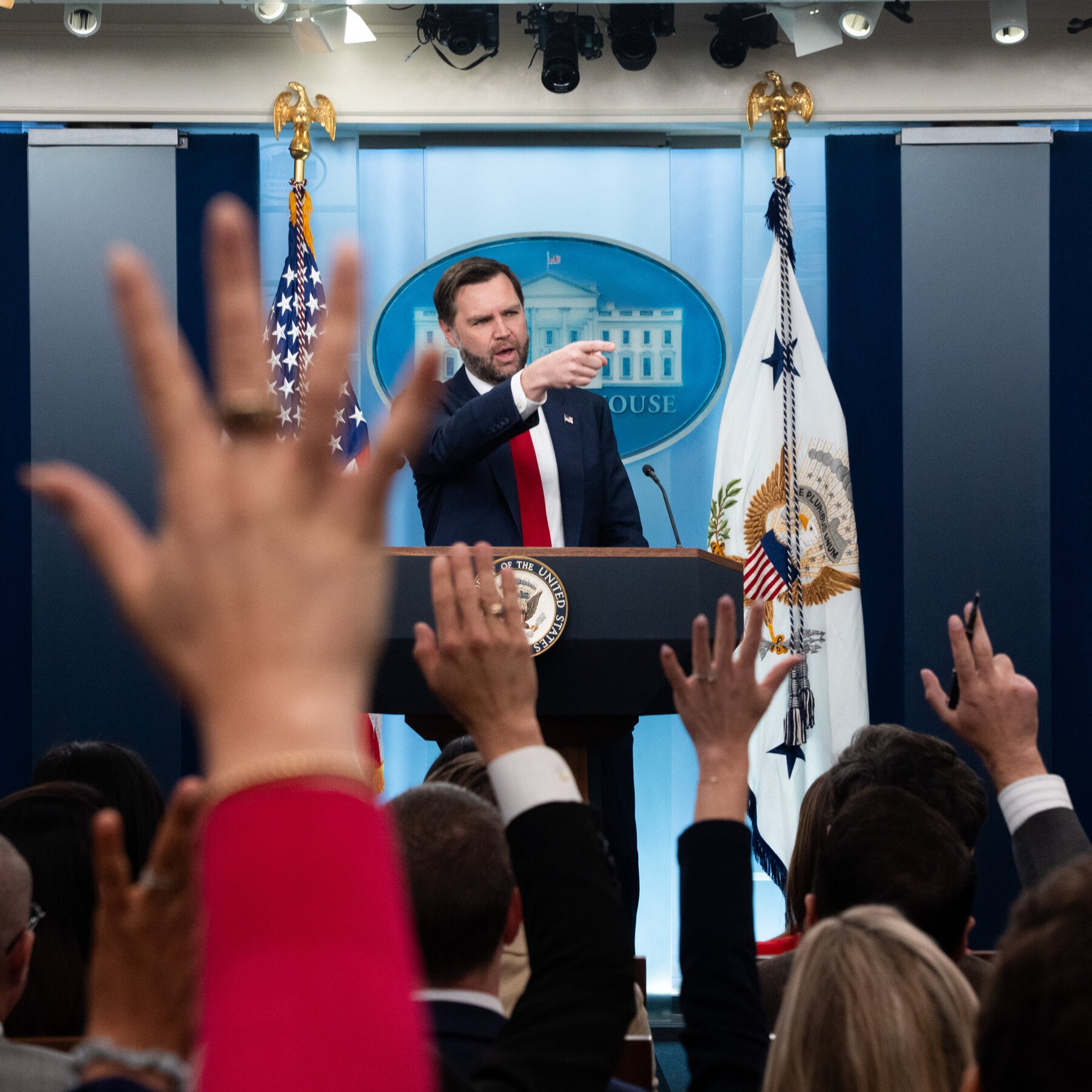
At 17:27 UTC on 17 June 2026, Donald Trump told reporters that he "maybe" will be present at a signing ceremony with Iran, the clearest signal yet that a US-Iran agreement has moved from a working text to a calendar item. The remarks, carried by Iran's Tasnim News Agency and relayed through the Fars News International channel, came less than two hours after the US president defended the deal on the ground that the alternative would be "economic catastrophe," according to a Reuters wire posted at 17:05 UTC. Within the same briefing window, the US president warned that continuing to hold Iranian funds frozen in American and allied accounts would push investors away from dollar-denominated assets, and told a questioner that the recent maritime blockade had done more damage to Iran than a billion dollars of aerial bombing combined.
What is being signed is, for now, only a memorandum of understanding. Trump told reporters at 16:37 UTC, via Fars News International, that the document is non-binding in parts: "if they don't adhere to the agreement, or some things that were not agreed upon at all ... it's a memorandum of understanding, but we have an understanding on some issues." That formulation is itself the news. It tells the market that sanctions relief, frozen-funds release, and any nuclear constraint are paired with a deliberately soft legal architecture that the US side can walk away from at will — and that the Iranian side has signed anyway, because the cost of staying outside the deal has become, in the White House's own framing, worse than any concession it would extract.
What Trump actually said
Strip the headlines away and four substantive claims stand out. First, on attendance: a reporter asked at 16:48 UTC, in a clip relayed by Clash Report, why the US president was not staying on for the signing of the Iran deal. Trump replied, "I might." Forty minutes later, Trump raised the stakes of that attendance question by tying the deal to the credibility of the dollar. "If we don't return Iran's money, nobody will invest in dollars," Trump said at 17:09 UTC, in remarks carried by Fars News International. "We have taken a lot of their money, we have taken their money from them. It is not our money, it is their money and we blocked it."
Second, on the bargaining logic: at 16:56 UTC, Trump framed the choice to Iran in terms of its population and its energy endowment. "Are you going to let the 91 million people starve to death?" he asked, before adding, per a 16:57 UTC relay on the same channel, "You have probably the third largest oil reserves in the world, what the hell do you need nuclear for?" Third, on the relative weight of economic and military pressure: at 16:52 UTC, Trump told reporters the blockade had been "more impactful than all of the bombing raids, where we dropped a billion dollars worth of bombs on Iran." That is a public, on-record admission from a US president that financial chokeholds are doing more strategic work than the kinetic campaign. Fourth, on the time horizon: at 17:22 UTC, Trump conceded that the United States would run out of usable oil reserves "at about 4 weeks" if supply were cut, which is the political floor under the entire negotiation — Tehran is not the only party that cannot afford a prolonged closure of the Strait of Hormuz.
Why a soft deal still matters
The Trump administration's stated reason for backing the agreement, per the Reuters wire of 17:05 UTC, is the prevention of an "economic catastrophe." That word — catastrophe, not recession, not slowdown — is the operative one. The deal being floated is a memorandum rather than a treaty precisely because a treaty would require Senate advice and consent, an awkward process for a president campaigning on the strength of the leverage. A memorandum lets the White House lock in the sanctions-and-funds architecture now and reopen the nuclear file on its own clock later.
For Iran, the calculus is harder to read. Tehran is reportedly accepting a document in which, by Trump's own characterisation, some of what was discussed is not actually agreed. The 91-million-person framing is the one the Iranian side is most likely to push back on in the domestic press: a foreign leader publicly arguing that Iran should feed its population by signing is the kind of line that travels fast in Farsi-language commentary. But the underlying concession — that Iran will accept partial relief in exchange for a partial freeze, with the nuclear question deferred — is consistent with the position Tehran has held since at least the JPOICA era: a managed re-entry to global oil markets in exchange for verifiable constraints, with maximal ambiguity on the breakout timeline.
Dollar politics, the Iranian version
Trump's dollar remark is the line that will travel furthest outside the Gulf. The claim that blocking Iran's own money would drive investors away from the dollar is, on its face, a stretch: Iran's frozen assets are a rounding error in the roughly $30 trillion universe of dollar-denominated securities. But the statement is not really about Iran. It is about a message the US president is sending to Saudi Arabia, to the UAE, to China, to Russia, and to any other government that holds meaningful reserves in US-cleared accounts: that the credibility of the American financial system now has a visible cost when it is used as a coercive tool, and that cost is being priced into future dollar-avoidance decisions. The argument from the Iranian side, voiced in the same Fars International coverage, is structurally similar: that the same logic which justifies releasing Iranian funds also justifies a longer-term diversification away from dollar clearing.
The counter-frame, familiar to anyone who has watched the sanctions debates of the last decade, is that dollar dominance is sustained by the depth of US capital markets and the rule of law around them, not by the goodwill of sanctioned governments; and that the occasional use of asset freezes for foreign-policy ends is precisely what gives those markets their stick. By that reading, Trump's concession to Tehran is a tactical move, not a structural one, and the dollar's gravitational pull survives intact. Both readings can be true at once. The unanswered question is whether the visible use of the dollar as a sanctions weapon — under both the previous administration and the current one — has now done enough cumulative damage to alter the trajectory of reserve diversification, or whether the system is still too deeply embedded to bend.
What remains uncertain
The sources are short on the things that would actually settle the question. They do not specify which sanctions are being lifted, on what timeline, or what verification regime will govern the nuclear question. They do not name the third-party mediator, though the timing and venue language is consistent with the Muscat channel that has hosted the back-channel for years. They do not say how much Iranian money is in fact frozen, where it sits, or what legal instrument will be used to return it. They do not say which version of the memorandum has been initialled, or whether the text is even stable. And they do not address the reported Israeli position on a deal that, by its own terms, defers rather than forecloses the nuclear file. Each of these gaps is material; together, they are the gap between a market-moving event and a market-moving event with a settled text.
What the sources do establish is that the United States and Iran have agreed to sign something in the near term, that the US president considers his own attendance at the signing plausible, and that he is publicly tying the credibility of dollar-based finance to the release of Iranian funds. The strategic content of that posture will be argued over for months. The political content — that the US side is now on the record saying out loud what most reserve managers have suspected — is settled as of 17:27 UTC on 17 June 2026.
This article was written by the Monexus staff desk. We have led with on-record US presidential remarks carried by Iranian state-affiliated channels, then checked those claims against the Reuters wire. Where the Iranian and American framings diverge, both have been given. Where the sources are silent, we have said so rather than fill the gap.
Wire provenance
This editorial synthesis draws on the following public wire/social posts:
- https://t.me/tasnimnews_en
- https://t.me/ClashReport
- https://t.me/farsna
- https://t.me/FarsNewsInt
- https://t.me/ClashReport
- https://t.me/ClashReport
- https://t.me/ClashReport
- https://t.me/ClashReport
- https://t.me/ClashReport
- https://t.me/FarsNewsInt
Follow the event.
These dated source records provide context. They do not retrospectively verify this archive article.
Separate what the nuclear watchdog reported from what it could not determine after the June 2025 strikes.