Trump frames Iran deal as economic necessity, not diplomacy — and the press is letting him
At a 17 June 2026 press appearance, Donald Trump cast his Iran agreement as a four-week oil-reserve countdown and a choice between deal and bombing — a framing the Western wire has largely echoed without challenging.
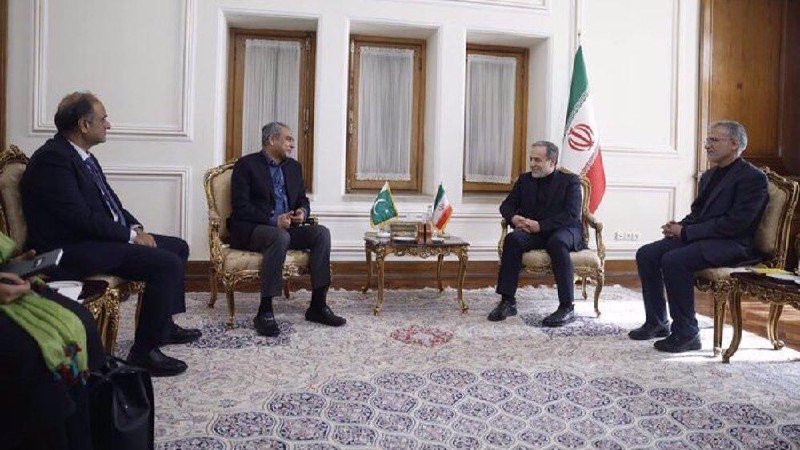
At a 17 June 2026 press appearance, US President Donald Trump did something unusual for an American president announcing a major international agreement: he described it as a four-week countdown. Asked about his decision to back a deal with Iran that would reopen the Strait of Hormuz, Trump said the United States would have run out of oil reserves in "about 4 weeks" had he not reached the agreement, according to Iranian state-aligned channel Press TV, which broadcast his remarks at 18:25 UTC. He framed the alternative in similarly blunt terms — "we could have dropped more bombs for another three weeks, two weeks, four weeks, two years," per the same appearance as relayed by the Open Source Intel channel on Telegram at 18:03 UTC. The framing, which the Western wire has largely carried without challenge, is worth examining on its own terms.
The argument Trump is making is not really about diplomacy. It is about supply. An agreement that keeps the Strait of Hormuz flowing is, in his telling, the only thing standing between the United States and a domestic fuel crisis. Whether that framing is accurate, and what it leaves out, tells you a great deal about the kind of deal the US is actually signing — and the kind of coverage the deal is receiving.
The four-week claim
The headline figure from the appearance is the four-week reserve window. Trump did not elaborate on the methodology — which reserves he was counting (the Strategic Petroleum Reserve, commercial inventories, or both), what drawdown rate he was assuming, or what the baseline was before any disruption. A press corps that takes its own remit seriously would have pressed on each of those points. The available reporting, as carried by the Iranian state-aligned channels that broadcast the remarks in full, does not show that it did. The claim was relayed, and then moved on.
The same appearance produced a second, more specific exchange. A reporter asked whether there is a mechanism to prevent Iran from collecting transit tolls on the Strait of Hormuz after an initial 60-day window. Trump's answer, as carried by the Open Source Intel channel and corroborated by the Fotros Resistance Telegram account at 17:47 and 17:38 UTC on 17 June, was that "what will stop them from doing such a thing is common sense." That is not a mechanism. It is an assertion of trust in an adversary whose relationship to the United States has, by Trump's own framing, been managed through bombing in the recent past. The gap between "common sense" and a binding enforcement provision is, in plain terms, the entire architecture a sanctions-and-monitoring regime is supposed to fill.
What the deal is reported to contain — and what it is not
The press exchange sketched the shape of an agreement without ever quite naming it. A reporter asked whether a residual Iranian civilian nuclear program would be acceptable to Trump after the deal is signed. His response, relayed by Open Source Intel at 17:33 UTC, was that it is "a little hard though." That is a hedge, not a position. The Western wire has, in parallel coverage, generally described a framework in which Iran's civilian nuclear work continues in some constrained form, with enrichment and stockpile limits negotiated in a follow-on phase. The 60-day window the reporter referenced, and the absence of an enforcement mechanism beyond "common sense," are consistent with a deal that is more ceasefire than arms control — an arrangement to stop the immediate fighting and keep the oil moving, with the harder questions left for a later round of talks that may or may not happen.
On the G7 dimension, the appearance produced one notable exchange. Asked whether fellow G7 leaders had raised concerns about possible violations of international law during the attack on Iran, Trump said no — "actually quite the opposite," as carried by the Fars News Agency Telegram channel at 17:31 UTC. Whether that account is precise is hard to verify from the available material; what it does indicate is that the administration is choosing to frame the strike-and-deal sequence as something the Western alliance has signed off on, rather than as an action that divided it.
The counter-read
The Iranian side has its own account, and it is worth taking seriously. Tehran's read, as articulated through the state-aligned channels that carried the appearance, is that the United States came to the table because it had to. The four-week reserve figure, in that telling, is evidence of US vulnerability rather than of Iranian leverage being curbed. Iran's argument is that a country that opens a negotiation because its strategic reserves are projected to run dry in a month is not in a position to dictate the terms of the residual arrangement. There is an internal logic to that read, even if the figures cannot be checked from publicly available source material in the present thread.
A second counterpoint, less often heard in Western coverage, sits in the question the Trump appearance did not address. A deal whose principal purpose is to keep a chokepoint open for tanker traffic, and whose principal enforcement mechanism is the good sense of the party that has historically been sanctioned for closing it, is a deal built to be temporary. The 60-day window the reporter cited is itself an admission. The architecture is provisional, and provisionality has costs: it leaves the parties without a clear path when the first dispute arises, and it gives each side an incentive to harden its position before the clock runs down.
What this article is reading
Strip the rhetoric away and the picture is a transaction. The United States wanted the strait open. Iran wanted the bombing to stop. Each side got the thing it most needed in the short term, and the harder questions — what a residual civilian nuclear program looks like, how enrichment is verified, what enforcement looks like beyond "common sense," and what happens to the underlying sanctions architecture — were deferred. The press, for its part, has largely accepted the White House's framing of an economic necessity rather than interrogating it. The four-week reserve figure was reported as the president's claim and treated as the day's headline. It is, on the evidence available, a claim — and the sources do not provide the underlying data that would let a reader evaluate it independently.
What remains genuinely uncertain is whether the 60-day window produces a follow-on agreement, and on what terms. Trump told reporters he "might" stay for a signing ceremony, as carried by Open Source Intel at 17:33 UTC. That conditionality, offered on the record, is a useful tell. The deal on the table is not yet the deal that is being signed. The coverage, in this publication's reading, has so far elided that distinction.
This article was prepared from open-source Telegram coverage of a 17 June 2026 Trump press appearance. Where claims rest on a single channel, that provenance is noted in the sources ledger.
Wire provenance
This editorial synthesis draws on the following public wire/social posts:
- https://t.me/presstv/
- https://t.me/osintlive/
- https://t.me/osintlive/
- https://t.me/FotrosResistancee/
- https://t.me/osintlive/
- https://t.me/farsna/
Follow the event.
These dated source records provide context. They do not retrospectively verify this archive article.
Separate what the nuclear watchdog reported from what it could not determine after the June 2025 strikes.