Trump's Iran deal: a 48-hour signing window, an open missile question, and a Gulf that isn't leaving
A memorandum of understanding is hours from being inked in Geneva, but the president is simultaneously threatening to resume bombing and conceding that Iran may keep its missiles. The arrangement is unusually elastic, and the terms remain unwritten.
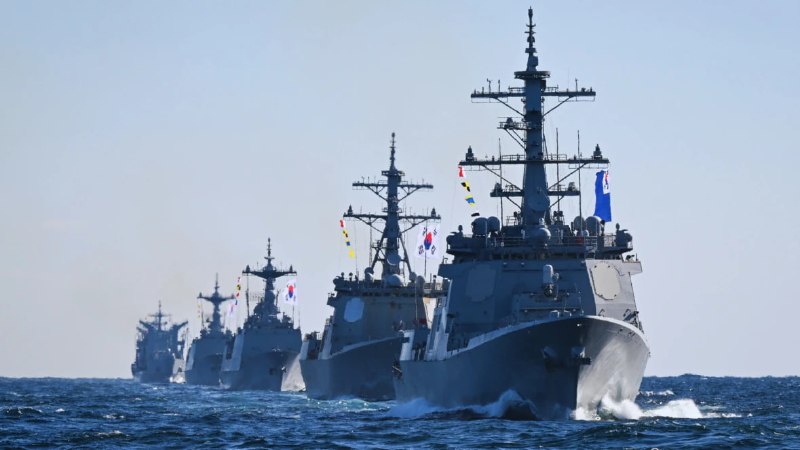
On the afternoon of 17 June 2026, with the Strait of Hormuz in the background of every cable news chyron, the president of the United States told reporters that a deal with Iran would be signed within forty-eight hours — and then, in the same news cycle, conceded that the agreement was not yet a deal at all. "The MOU is not final," Donald Trump said in remarks captured by the unusual_whales account on X at 14:57 UTC. "If I don't like it, we will go back to dropping bombs." Five hours later, in remarks relayed by the Liveuamap Telegram channel at 20:29 UTC, Trump narrowed the window: the agreement would be signed within the next two days, and the United States would "probably keep the military in the Gulf for a while." The two statements are not contradictory so much as they are a transparent description of the document on the table — an instrument elastic enough to be called a deal by one branch of the US government and a starting position by another.
This publication's read, after a day of statements, denials, and conditional futures, is that what is being signed in Geneva is closer to a framework than to a treaty. The headline components are familiar: an end to fighting, an end to maritime blockades, a sanctions track tied to Iranian behaviour, and a contested carve-out on ballistic missiles. What is unfamiliar is the rhetorical architecture — the simultaneous threat of resumption, the explicit recognition of regional missile asymmetry, and a disclosure, slipped into an afternoon press availability, that the United States is operating "space cameras" over Iranian nuclear sites. Each of those moves would, in any previous administration, have been the story. Here, they share the page.
The components as stated
The substantive building blocks, as reported across the 17 June cycle, are six. First, the timing: Trump told reporters the agreement would be signed within forty-eight hours, a window that places the ceremony on or before 19 June 2026. Second, the scope: Iran and the United States have agreed to end fighting and maritime blockades in the Gulf, according to a Middle East Eye liveblog entry posted at 20:17 UTC. Third, the sanctions architecture: Trump said sanctions on Iran would be removed "once they behave," a phrase captured by Polymarket's news account at 18:25 UTC. The conditional tense is doing the work of an entire compliance regime.
Fourth, the nuclear question: Trump declared that Iran "will never have a nuclear weapon," according to unusual_whales at 15:17 UTC, and paired that assertion with the disclosure that the United States is using "space cameras" to monitor Iranian nuclear sites continuously — a claim relayed by Polymarket at 16:30 UTC that, if accurate, suggests Washington has placed its verification regime in orbit rather than at the negotiating table. Fifth, the money: the president denied a reported $300 billion figure tied to Iran, calling the reports "false," in the same unusual_whales thread. Sixth, the military footprint: US forces will remain in the Gulf "for a while," per the Liveuamap and Middle East Eye posts at 20:29 and 19:27 UTC respectively. None of these six pieces is, on its own, definitive. Together they describe a framework whose price is denominated in retained capabilities on both sides.
The missile question, and why it is the deal
The most analytically interesting move of the day was Trump's public justification for not stripping Iran of its ballistic missiles. Speaking to reporters, the president said it would be "a little bit unfair" for Iran to have no ballistic missiles if other regional states do, an exchange captured by Polymarket at 19:52 UTC. The Middle East Eye liveblog at 19:50 UTC paraphrased the same line with sharper framing: Trump "suggests Iran will need to keep its ballistic missiles to match its neighbour's arsenals and says US will have to ret[ain] a military presence" in the Gulf as a balancing instrument.
This is a structural concession dressed up as a moral observation. The implicit comparator is Israel, whose arsenal of long-range, nuclear-capable delivery systems is widely acknowledged in the regional security literature though never officially confirmed. By collapsing the missile question into a complaint about symmetry rather than a non-proliferation ask, the Trump administration has effectively conceded that a comprehensive zero is not on the table — and has substituted a US troop presence in the Gulf as the balancing factor. Critics in Washington and in the Gulf states will read this as a hedge; Iranian negotiators will read it as a green light. Both readings are defensible.
What is not yet on paper
Three pieces of the puzzle remain unwritten as of 17 June 2026. The first is the verification regime around the "space cameras" disclosure. If US orbital assets are now the de facto monitoring architecture, the diplomatic status of that capability — is it acknowledged in any text? Is it tied to a hotline? Does Iran have any read on what is being collected, at what resolution, and against which sites? — is opaque. The second is the sanctions unwind mechanism. "Once they behave" is a press-conference formulation, not a clause. The history of US sanctions relief on Iran, from the 2015 Joint Comprehensive Plan of Action forward, suggests that the operational definition of "behaviour" will be contested from the first scrub of the first shipment.
The third is the maritime arrangement. The Middle East Eye post at 20:17 UTC refers to an end to "fighting and maritime blockades in the Gulf area." That phrasing leaves the geography ambiguous — does it cover only the Strait of Hormuz, or also the broader Gulf of Oman, the Red Sea / Bab el-Mandeb corridor, and the shipping lanes that, in 2024 and 2025, became targets of Houthi action? The Houthis are not a signatory, and the maritime threat picture inside the Gulf is not the same as the maritime threat picture outside it. A deal that resolves the inner Gulf and leaves the outer Gulf to insurgent calculus is not, in any operational sense, a settlement of the sealanes question.
Counter-narrative: the deal as a face-saving artefact
The dominant read in Western commentary today is that this is a Trump-brokered detente, with the president taking personal credit for the absence of immediate escalation. The dominant read in Iranian state-aligned commentary, by the patterns of 2024–2025, is likely to be the opposite: that Tehran extracted recognition of its missile deterrent and a sanctions off-ramp in exchange for a non-aggression pledge on terms it was already observing. Both narratives flatter their preferred actor.
A third reading, less flattering to everyone, is that what is being signed is a face-saving artefact. The MOU is explicitly described as not final. The president's threat to "go back to dropping bombs" is on the public record at 14:57 UTC. The $300 billion figure has been denied but not, as far as the day's reporting shows, replaced with a counter-figure. A document that is simultaneously a deal, a non-deal, and a threat-of-war is doing the work of a diplomatic pause. Pauses are useful. They are not peace.
Stakes: oil, the Strait, and the Iranian domestic balance
The immediate stake is the price of crude. The Strait of Hormuz carries a share of seaborne oil that, on most days, makes any disruption a global macroeconomic event. Even the prospect of a deal — let alone the prospect of a deal collapsing — moves the front-month Brent contract. The Middle East Eye report at 20:17 UTC of an end to "fighting and maritime blockades in the Gulf area" is, on that basis, the most market-sensitive line of the day, regardless of whether the deal itself holds for a week or a decade.
The medium-term stake is the Iranian domestic balance. Sanctions relief, even partial, recalibrates the political economy inside Iran: it strengthens the technocratic-pragmatic camp around the president and the foreign ministry, and it weakens the hardline security apparatus that has profited from sanctions-era control of the import system. The phrase "once they behave" is, in that sense, a US bid to influence an internal Iranian argument.
The longer-term stake is the regional balance the president himself named. If the deal rests on US forces in the Gulf compensating for an Iranian missile deterrent that is being tolerated rather than eliminated, then the US presence becomes a permanent feature of the regional architecture — not a temporary escort for a deal, but the spine of a tripwire arrangement. That is a different US role in the Gulf than the one Washington has talked about for two decades, and it is one that successive Gulf monarchies have been quietly requesting for almost as long.
What remains uncertain
The honest ledger, on the evidence available at 20:29 UTC on 17 June 2026, is short. We do not yet have the text of the MOU. We do not know which sanctions will be the first to come off, or which Iranian assets will be the first unfrozen. We do not know whether the "space cameras" remark was a slip, a signal, or a deliberate disclosure to a chosen audience. We do not know the Israeli position, the Saudi position, or the UAE position on a framework that explicitly recognises an Iranian missile deterrent. And we do not know, because Trump himself has said so, that this deal is final. The next forty-eight hours will write the first draft of the answer. Until then, the only firm thing on the table is the threat to go back to dropping bombs if it is not.
This publication framed the Geneva framework as conditional from the first statement, treating Trump's simultaneous signing-announcement and resumption-threat as a single artefact rather than two stories. The wire cycle, by contrast, has largely treated the 48-hour window as the headline and the threat as a kicker.
Wire provenance
This editorial synthesis draws on the following public wire/social posts:
- https://t.me/liveuamap/80601174
- https://www.middleeasteye.net/live/live-us-and-iran-confirm-peace-accord-signing-set-friday-geneva
- https://www.middleeasteye.net/live/live-us-and-iran-confirm-peace-accord-signing-set-friday-geneva
- https://www.middleeasteye.net/live/live-us-and-iran-confirm-peace-accord-signing-set-friday-geneva
- https://x.com/polymarket/status/2067278244097732608
- https://x.com/polymarket/status/2067278244097732608
- https://x.com/polymarket/status/2067278244097732608
Follow the event.
These dated source records provide context. They do not retrospectively verify this archive article.
Separate what the nuclear watchdog reported from what it could not determine after the June 2025 strikes.
- https://t.me/liveuamap/80601174
- https://www.middleeasteye.net/live/live-us-and-iran-confirm-peace-accord-signing-set-friday-geneva
- https://www.middleeasteye.net/live/live-us-and-iran-confirm-peace-accord-signing-set-friday-geneva
- https://www.middleeasteye.net/live/live-us-and-iran-confirm-peace-accord-signing-set-friday-geneva
- https://x.com/polymarket/status/2067278244097732608
- https://x.com/polymarket/status/2067278244097732608
- https://x.com/polymarket/status/2067278244097732608