The deal the world wanted: Trump's Iran settlement and the cost of asking no follow-up questions
A Geneva memorandum of understanding was initialed on 19 June 2026 with no published text, no congressional submission, and an open objection from a Trump mega-donor, yet the press is treating the handshake as the deal the world wanted.
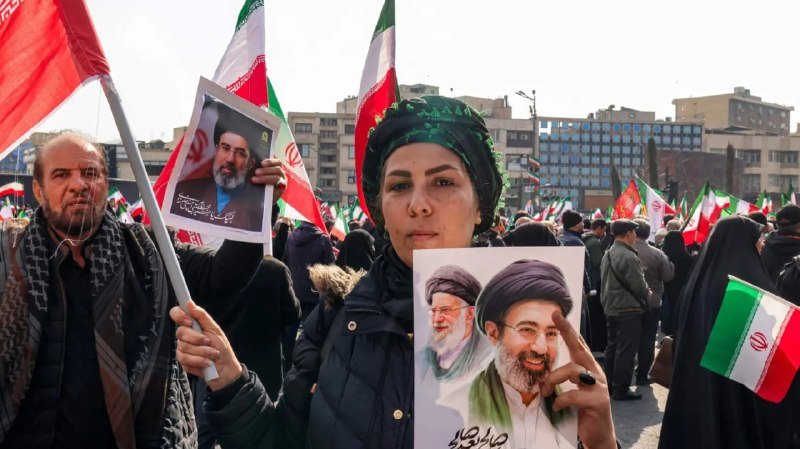
At 5:00 p.m. local time in Geneva on Friday 19 June 2026, US and Iranian delegations initialed a memorandum of understanding that President Donald Trump immediately cast as the diplomatic prize of his second term. In an Axios interview carried the same evening, Trump told reporters the Iran episode had taught him there are "no limits to his power," and that the memorandum proved a sitting US president could end a war, freeze a nuclear file, and reset oil markets in a single week (Middle East Eye, 19 June 2026). White House envoy Steve Witkoff was already wheels-up for Switzerland, with Jared Kushner on the ground, for what the administration is billing as the first formal nuclear-track follow-up round (ClashReport and WarMonitors, 19 June 2026).
The headline is the deal the world wanted. The constraint is what nobody asked. The Tehran text reads more like an exchange of atmospherics than a binding nuclear instrument, yet it is being sold, by both signatories, as a binding peace accord. A 2015 US statute requiring congressional review of any Iran nuclear agreement resurfaced within hours of the signing: Al Jazeera's Washington bureau flagged on Friday evening whether the Trump administration intends to submit the memorandum to Capitol Hill at all (Al Jazeera, 19 June 2026). That question, of whether the United States has just bound itself to a deal that the legislative branch has not seen, is the one missing from every televised reaction shot.
The price of applause
Trump's framing of the accord rests on three propositions, each of which travels further than the text supports. He has argued, in comments carried by Iran's official Mehr News Agency on 19 June 2026, that only his intervention averted a global oil crisis, that prolongation would have produced recession, and that Iran was forced to settle because the Strait of Hormuz was no longer safe for shipping. Each is plausible in the abstract. None is independently verifiable from the memorandum itself, which has not been published in full and which Al Jazeera's analysis treats as a political commitment pending legal scaffolding.
The exchange rate is doing the real work. Trump in the Axios interview described a memorandum that proved American presidential reach; Iran's deputy foreign minister, quoted by Al Jazeera the same evening, said Tehran was "ready to move forward" on its terms. Those two characterizations are not the same document. When the Iranian readout and the American readout cannot be reconciled on a single page, the document is not an agreement. It is a handshake with sanctions relief attached.
The objection nobody wants to hear
The most striking domestic objection to the deal came not from Democrats but from an Israeli newspaper owned by Miriam Adelson, the Las Vegas Sands magnate and Trump mega-donor, whose Israel Hayom ran a front-page editorial accusing the president of having "gravely harmed" Israel by signing (sprinterpress, citing Israel Hayom, 19 June 2026). Within hours, the Spectator Index carried a Washington Post report that US intelligence had formally warned the Trump administration that "Israel is likely to undermine" the Iran peace track, an assessment that puts a US-allied government on the same side of a piece of paper as the adversary the paper is meant to contain (telegram:osintlive, 19 June 2026). The Vice President, in remarks reported by Middle East Eye on Friday, declared that Donald Trump was "the only head of state in the entire world who is sympathetic to the nation of Israel at this moment in time," a sentence that lands strangely when paired with the intelligence warning and the donor-owned editorial in the same news cycle.
Norway announced on the same Friday that it would move to cut trade with illegal Israeli settlements, framing the move, in language carried by Middle East Eye, as something that "must end." Three governments, three positions, one Geneva signing ceremony: that is the operating environment of an agreement that has not yet been read by the US Congress.
What the memo is, and what it isn't
The text being called a memorandum of understanding is, in legal form, the weakest instrument short of a press release. A memorandum is not a treaty. It does not trigger the Senate advice-and-consent process. It does not, on its face, bind either party to a verified dismantlement timeline, an inspection protocol, or a snapback mechanism. The 2015 law Al Jazeera flagged on Friday was written precisely because the executive branch had, twice in the prior decade, used memoranda and side letters to do what legislation required the Senate to ratify. To answer the question of whether the Trump memo must be sent to Capitol Hill is to answer whether this White House considers itself bound by the Iran Nuclear Review Act at all. The administration has not, as of Friday evening, said yes.
The clock Geneva built
The memorandum's own deadline architecture is doing more diplomatic work than its substance. Middle East Eye reported on Friday that Trump has framed the deal as one Iran must reach within sixty days; the original Swiss meeting, set for Friday, was delayed by fighting between Israel and Hezbollah, and rescheduled into a multi-round format that now stretches into the late summer (ClashReport, 19 June 2026). A sixty-day clock that starts on the day of signing, against a track that was postponed before the ink dried, is a clock designed to be reset. Iran will, in time, treat the first deadline as soft. The administration will treat the second as hard. That gap is the architecture.
The deal the world wanted
Every administration claims the peace it signs is the peace the world demanded. The Geneva memorandum of 19 June 2026 will be judged by the questions nobody asked at the podium: whether Congress is shown the text; whether the IAEA is given an inspection mandate with dates attached; whether the Israeli objection, formally registered by a donor-owned newspaper and informally registered by the US intelligence community, alters a single line. The relief is real. The verification is not. The next ninety days will tell which of those two facts the press chooses to print.
Follow the event.
These dated source records provide context. They do not retrospectively verify this archive article.
Separate what the nuclear watchdog reported from what it could not determine after the June 2025 strikes.