Trump floats a 'no missiles' Iran deal with a wink and a shrug — and the world has to take it seriously
On 17 June 2026, with cameras rolling, the US president turned a working day of diplomacy into a string of one-liners about a deal he insists is days from being signed.
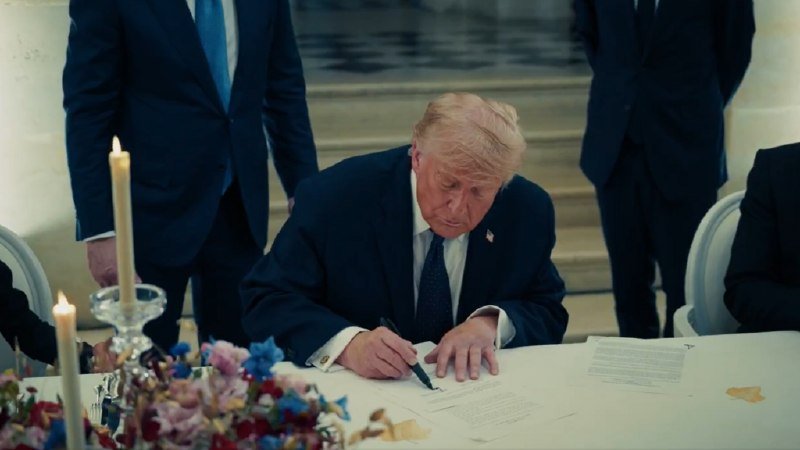
Donald Trump spent Wednesday afternoon in front of the cameras at the White House turning the most serious diplomatic exercise of his second term — a new agreement with the Islamic Republic of Iran — into a stand-up routine. By 17:09 UTC, the exchange on whether he would stay in town for a signing ceremony had been clipped and recirculated inside the hour. By 17:16 UTC, he was previewing a punchline about his vice president. By the end of the press gaggle, the contours of a putative deal were on the record in the form of jokes.
That is, by any diplomatic standard, an unusual way to handle the closing stretch of a negotiation with a country that the United States has spent four decades trying to contain, and that spent the last two years testing missile, drone, and proxy capabilities. It is also, at this moment, the only way the closing stretch is being handled.
What the president actually said
The substantive content was thin but not empty. Asked about the status of the agreement reached on Sunday, Trump told reporters shortly before 16:40 UTC that the deal "will be signed shortly" — a phrase that Iranian state media's English service, PressTV, put on its news ticker in real time, even as Tehran's official position on the text has been markedly more cautious than the White House's.
Minutes later, the same exchange produced a more awkward line. Trump claimed that the United Arab Emirates had been "dropping bombs on Iran last week," a remark the Iranian side dutifully logged and amplified. No such UAE strike has been reported by any other outlet in the cluster of dispatches Monexus read on Wednesday. The Emiratis, who in early June hosted a round of shuttle diplomacy and have been among the Gulf states lobbying for de-escalation, did not respond in the snippets reviewed by Monexus.
The most consequential exchange was the missile one. At 17:06 UTC, the Middle East Spectator's pool feed carried a question and an answer in a single breath: "Other countries have missiles. So why can't Iran have missiles?" It is a phrase that, in any other administration, would be a negotiating position. From this president, delivered into a hot mic, it is also a red line. If that formulation survives into the text, it constitutes the United States formally abandoning more than two decades of missile-related non-proliferation pressure on Tehran — a quiet revolution in the sanctions architecture that the JCPOA era made canonical, and that the post-2018 maximum-pressure campaign was supposed to entrench.
The humanitarian frame — and the threat behind it
At 17:01 UTC and again at 17:02 UTC, Trump told the briefing room to consider the alternative to a deal. "Are you going to let the 91 million people starve to death?" he asked, before intelslava's feed pointedly noted that the same president had threatened to "wipe Iran off the map within hours on April 7." That juxtaposition is now the operative frame inside Iranian policy circles: a deal held together by the implicit threat of overwhelming force, and by the explicit warning that the alternative is a humanitarian catastrophe in a country of roughly 91 million.
The arithmetic of that pressure is what makes Wednesday's casualness worth taking seriously. Iran's currency, the rial, has lost ground in repeated shocks over the last two years; the country's access to hard-currency oil receipts remains constrained; and the population sits downstream of decisions taken in Riyadh, Beijing, and Moscow, as well as in Washington. A US president telling reporters he is weighing starvation against a missile concession is not indulging in hyperbole. He is naming a coercion architecture that US policy has spent a decade constructing, in plain English, on the White House driveway.
Why the jokes matter
The Vance line — "if the new Iran Deal doesn't work out he will blame JD Vance" — is the kind of aside that a wire reporter would normally cut. Monexus keeps it in because it is structurally revealing. The president of the United States is signalling, in front of cameras, that the political risk of the deal is already being pre-distributed inside his own administration. The implicit message to Tehran, and to markets, and to allies in the Gulf and in Europe, is that this agreement will be defended in public as long as it is working, and disowned with a shrug if it is not. That is a perfectly normal White House instinct. It is not normally performed as a punchline about the vice president on a Wednesday in June.
It also signals, by indirection, that the deal is not yet signed. The press pool noted at 17:09 UTC that when asked whether he would stay in Washington for the signing ceremony, Trump replied only: "I might." Signing ceremonies, in the choreography of US foreign policy, are scheduled. They are not improvised around a presidential travel schedule. Until a date is on the calendar, the agreement reached on Sunday is, at most, a framework, and at least a set of talking points the two sides are still trying to harden into text.
The two readings
There are two ways to read Wednesday's performance. The charitable one is that the president is doing what a transactional dealmaker does at the end of a long negotiation: lowering the temperature, signalling confidence, and reducing the political cost of any last-minute concession by saturating the news cycle with personality. By that reading, the missile line is a peace offering, the Vance line is brand management, and the "signed shortly" line is the actual news.
The uncharitable reading is that there is no deal in the conventional sense — only a set of unilateral US gestures and a set of Iranian reciprocations that have not yet been codified — and that the looseness of the language is the looseness of the negotiation itself. The fact that Iranian state media is reporting Trump's claims verbatim, rather than describing a parallel Iranian position, is consistent with that reading. Tehran, for the moment, is letting Washington set the narrative. That is rarely a sign of a confident counterparty.
The honest answer is that the sources do not specify. Monexus read no text of a draft agreement on Wednesday, no IAEA verification schedule, and no joint communiqué. What the sources do show is a US president performing the closing innings of a deal in a register — joking, threatening, shrugging — that leaves every interlocutor guessing, and that puts the burden of any subsequent failure squarely on the other side of the table.
Stakes
If the deal holds, Iran gets sanctions relief and a measure of normalised trade; the United States gets a non-proliferation arrangement that, on the evidence of Wednesday's microphone, is more permissive on missiles than any administration in living memory has conceded. The Gulf states, which have spent two years hedging between Washington and Tehran, get a quieter neighbourhood and a partial rolling-back of the 2018 architecture. Israel gets a deal that explicitly tolerates an Iranian missile category it has spent a decade lobbying to eliminate. Europe gets a diplomatic talking point it can take to its own electorates. China and Russia, both of which have deepened economic ties with Tehran through the sanctions years, get a partial validation of the bet that the United States would, in the end, have to negotiate.
If the deal does not hold, the coercion architecture that Trump described on Wednesday — sanctions, isolation, and the implicit threat of force — is the default, and the 91 million people he named become the most exposed population in the diplomatic calculus. That is the trade being offered, in one Wednesday of press conference jokes, to a country the United States has not signed a comprehensive agreement with in more than a decade.
This publication treats the Wednesday White House pool as the primary source for Trump's own words, and reads Iranian state media's selection of which lines to amplify as a soft indicator of Tehran's framing priorities rather than as an independent factual record. The hard text of the deal, when it appears, will need to be read on its own terms.
Wire provenance
This editorial synthesis draws on the following public wire/social posts:
- https://t.me/Middle_East_Spectator
- https://t.me/presstv
- https://t.me/presstv
- https://t.me/intelslava
- https://t.me/ClashReport
- https://t.me/rnintel
Follow the event.
These dated source records provide context. They do not retrospectively verify this archive article.
Separate what the nuclear watchdog reported from what it could not determine after the June 2025 strikes.