Trump Says Iran Deal Will Be Signed "Shortly" as Washington, Beijing and Paris Race to Frame a Settlement
The president told reporters an agreement with Tehran will be signed within days, even as he reserved the option to resume bombing and acknowledged an open dispute with Netanyahu over Lebanon.
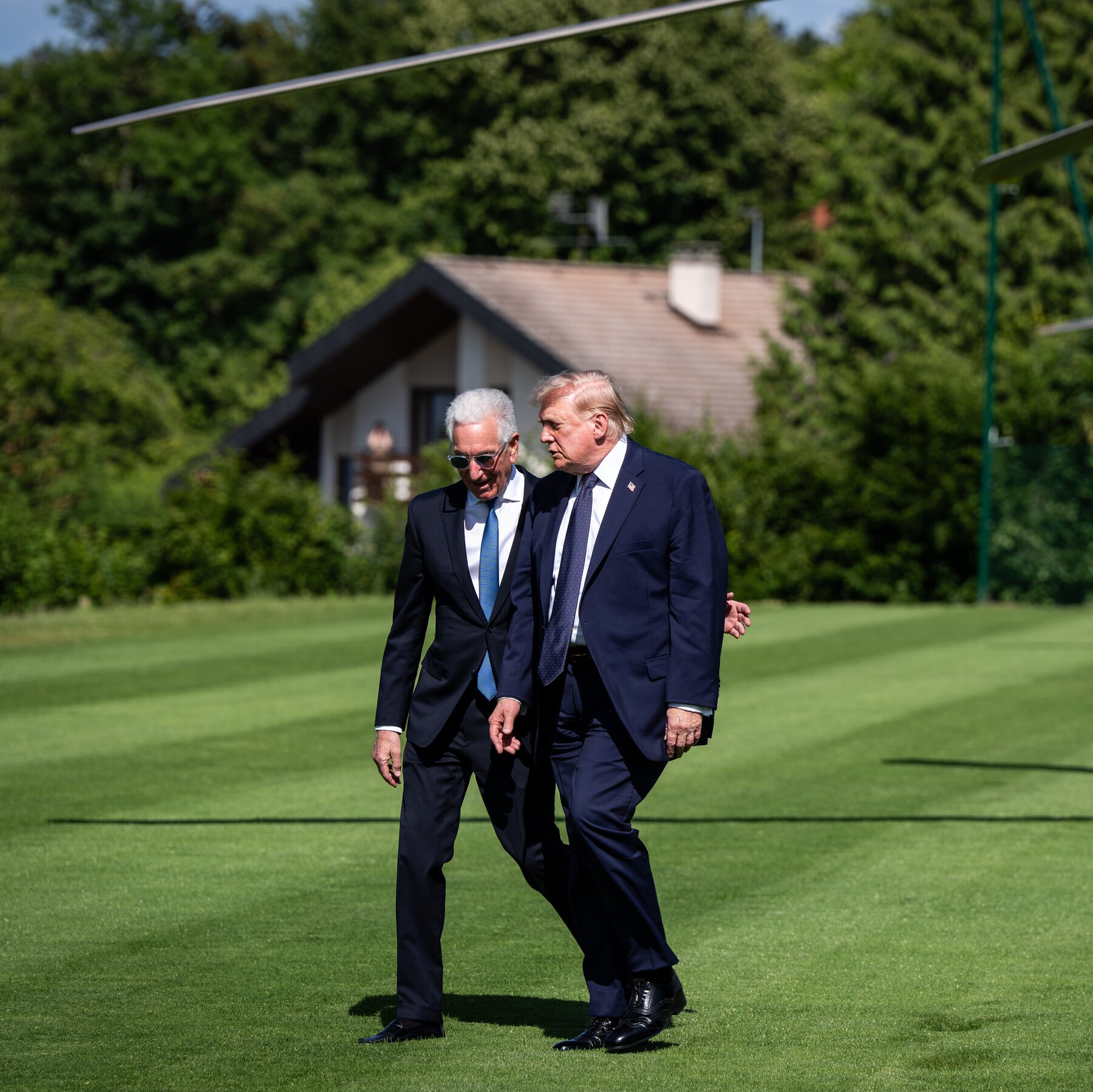
President Donald Trump told reporters on Tuesday afternoon that a deal with Iran would be signed "shortly, tomorrow, maybe the next day," in remarks relayed by multiple channels monitoring the US wire. The comments, issued at roughly 16:28 UTC, came as Washington, Beijing and Paris publicly converged on the diplomatic script: a memorandum of understanding is in the final stretch, with Iran's signature the remaining variable. Within minutes, however, the president was hedging. "I don't want to bomb Iran again, but might have to," he said in a post captured by Open Source Intel at 16:32 UTC, an unusually direct pairing of a public deadline and a public threat from the same podium.
The pattern of the day matters more than the deal itself. The Trump administration is signalling that the document is imminent, that it will be unenforced if Tehran breaches it, and that the United States retains the option of military action if the signature slips. It is a diplomatic architecture built for plausible deniability on both sides — and it is being negotiated in public, tweet by tweet.
A memorandum, not a treaty
Trump described the document as "a memorandum of understanding" and added that Washington has "an understanding of certain" provisions not formally written into the text, language that suggests the binding core is narrower than the political claims being made for it. That formulation — partial, unwritten, and contingent on behaviour the White House reserves the right to judge — is consistent with the kind of transactional agreement the administration has preferred on other contentious files. The substance, ranging from enrichment limits to sanctions sequencing, has not been disclosed in the captured exchanges. What is visible is the framework: a deal whose public face is bigger than its legal footprint, with a signature ceremony positioned to extract the most political value before the inevitable disputes over compliance begin.
Beijing and Paris step in
The diplomatic choreography around the announcement is itself a story. China's foreign ministry, posting through Open Source Intel at 16:01 UTC, told Tehran that "all parties" must adhere to a deal to end the war, a formulation notable for its even-handedness. Beijing did not name Washington, did not name Tehran, and did not endorse either party's version of events. The effect is to position China as a stakeholder whose silence would cost the deal and whose voice — restrained as it is — is being courted. France moved in a different register. President Emmanuel Macron, captured at 15:31 UTC, called Trump's deal "a good deal" before immediately bounding the claim: "It doesn't solve everything straight away, of course not. But if we kept fighting, what would that mean?" The European read is procedural — better than the alternative, narrower than the rhetoric — and is being delivered in time to influence the signing window.
The Lebanon problem, named out loud
The least-reported line of the day, and arguably the most consequential, came at 16:32 UTC: Trump acknowledged a dispute with Prime Minister Benjamin Netanyahu over Lebanon. The remark is unusual in two ways. It is rare for a sitting US president to publicly name a policy disagreement with an Israeli prime minister in the middle of a third-country negotiation. And it places Lebanon inside the Iran file, where it has long been presumed to belong but rarely acknowledged in formal US framing. If the dispute is over the scope of any Israeli action against Hezbollah-linked targets in southern Lebanon, or over the timing of such action relative to an Iranian signature, the deal's durability is more fragile than the signing ceremony will suggest. The Lebanon variable is the kind of issue that survives a memorandum of understanding intact and reappears the moment enforcement is contested.
What the day actually shows
Three things are now visible. First, the White House wants a signing event, and it wants it fast — the language of "shortly, tomorrow, maybe the next day" is a schedule, not a forecast. Second, Washington is deliberately leaving the document underdetermined, betting that the political value of a ceremony outweighs the cost of an unenforced text. Third, the diplomatic coalition around the deal is wider than it has been at any point in the present cycle, with China supplying the procedural cover and France supplying the procedural endorsement, even as Israel remains a documented point of friction. The Iranian response, the public text of the memorandum, and the question of what Washington does if the signature slips by a week rather than a day are the variables that will determine whether the events of 17 June 2026 register as the opening of a settlement or as another prelude to one.
Desk note: Monexus is treating Tuesday's reporting cycle as a procedural update, not a confirmed agreement. The signature has not been observed; the text has not been published; Iran's response to the deadline is not in the captured record. Where outlets have framed Trump's remarks as a deal, we are reading them as a statement of intent to sign — the difference matters.
Wire provenance
This editorial synthesis draws on the following public wire/social posts:
- https://t.me/Middle_East_Spectator
- https://t.me/osintlive
- https://t.me/osintlive
- https://t.me/insiderpaper
- https://t.me/osintlive
- https://t.me/osintlive
Follow the event.
These dated source records provide context. They do not retrospectively verify this archive article.
Separate what the nuclear watchdog reported from what it could not determine after the June 2025 strikes.