The dollar is not negotiable: reading Trump's Iran remarks as monetary doctrine
President Trump on Tuesday framed the return of frozen Iranian funds as a precondition for dollar credibility. The argument is not really about Tehran — it is about who gets to issue the world's reserve currency next.
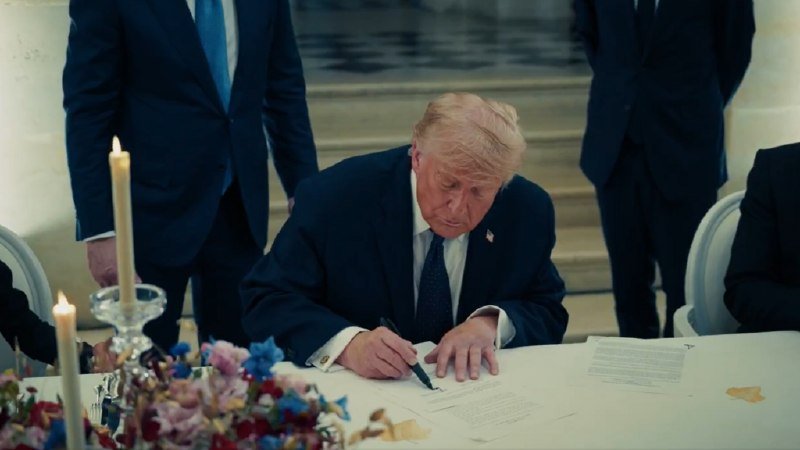
On the afternoon of 17 June 2026, US President Donald Trump defended a reported deal with Iran by making an argument that had very little to do with non-proliferation, and almost everything to do with the plumbing of global finance. "If we didn't return Iran's money, nobody would ever invest in the dollar again," he said, in remarks circulated by the Open Source Intel channel on Telegram. Reuters, in a same-day report dated 17 June 2026, framed the comments as a defence of an emerging arrangement that has, in roughly six weeks, shifted the United States from open bombardment to negotiation [1]. Read in isolation, the line sounds like another transactional flourish. Read against the wider set of remarks the president made on Tuesday, it begins to look like something more deliberate: an attempt to anchor the post-strike settlement in the institutional logic of dollar dominance rather than in any abstract appeal to arms control.
What Trump actually said
The Tuesday remarks, captured across multiple channels including Open Source Intel and Clash Report, formed a coherent, if unusual, briefing. Trump told the public that the United States had caused "roughly $1.5 trillion to $2 trillion" in damage to Iran, and that the country would need "major investment to rebuild, whether it comes from neighbors or elsewhere" [2]. He framed the naval blockade as having been "more impactful than all of the bombing raids, where we dropped a billion dollars worth of bombs on Iran" [3]. He gave Tehran's "new leaders" credit for being "far less radicalized" [4], and argued that Iran, with the world's third-largest oil reserves, had no business pursuing a nuclear capability: "what the hell do you need nuclear for?" [5]. He told the audience he did not want to bomb Iran again, but might have to. He set a 60-day implementation clock on a memorandum of understanding, and warned that a failure to implement would mean a return to bombing. He said a copy of the MOU had been sent to Israel. He said he was trying to get Hamas disarmed. He said the US and Israel had a dispute over Lebanon. And he told the public, in the line that has gone furthest, that returning Iran's money was a condition of dollar credibility [6][7].
The remarks are not a press conference transcript; they are fragments from a longer appearance, distributed through Telegram channels that aggregate social-media and on-camera statements. Read together, the picture is of a US administration that is no longer arguing about whether to coerce Iran, but about how to monetise the coercion that has already occurred.
The dollar argument, taken seriously
Trump's dollar remark is, on its face, a strange one. Iran's frozen central-bank reserves, variously estimated in the low tens of billions of dollars, are not remotely large enough to move the price of US Treasuries or the willingness of a Saudi or Japanese investor to keep buying them. He knows this. The point of the remark is not arithmetic; it is signalling. By publicly tying the return of Iranian funds to the credibility of the dollar as a store of value, the administration is doing two things at once. It is telling Iran that the United States can be a reliable counterparty — that confiscated money does eventually come back, with interest, in the form of investment and access. And it is telling every other sanctions-exposed country watching the deal — Venezuela, Russia, Cuba, North Korea, half of West Africa — that the cost of being on the wrong side of US financial infrastructure is not, in fact, permanent exile. You can come back. The door is open. The door is also the only door.
This is, in plain terms, a doctrine of managed re-entry into dollar-based settlement, and it is the kind of argument that US officials from Kennedy-era Treasury secretaries onward have usually made in private. The novelty here is the venue. Trump is making the argument on camera, in the cadence of a sales pitch, and he is directing it as much at foreign audiences as at the American one. The administration's read of the moment appears to be that the next decade of US financial power depends less on punishing defectors and more on reminding them of what they would lose by defecting.
What the counter-narrative is missing
The dominant counter-narrative, audible from regional analysts and from Iran's negotiating partners, is that the deal is a face-saving exit for an administration that escalated beyond its objectives and is now climbing down. There is something to that. The $1.5 trillion-to-$2 trillion damage figure, supplied by the president himself, is the kind of number that reads as an invoice for a war that did not deliver regime change or a verifiable end to enrichment. The 60-day implementation window is the kind of deadline that previous administrations have imposed and then quietly extended. The claim that "new leaders" in Tehran are less radical is unverifiable from the public record, and depends on the premise that the post-Khamenei succession has produced a more pliable elite — a contestable read. A critic can reasonably argue that what is being presented as a doctrine of managed re-entry is, in practice, a halt in active combat announced as a victory.
But the counter-narrative does not actually contradict the dollar argument. It reinforces it. If the US is climbing down, the reason it can climb down without catastrophic loss of credibility is precisely that the dollar-based financial system is still the only game in town for Iranian reconstruction, and everybody knows it. The damage figure functions as a price tag for the next round of Iranian engagement with the US-led order. The blockade effectiveness line functions as a deterrent for the next country that considers going nuclear. The dollar remark functions as an offer. Read together, they form a coherent policy even if no individual element is fully credible.
Structural frame: the next sanctions regime
What we are watching, in plain language, is a transition from the 2010s model of sanctions — built on maximum pressure, secondary sanctions, and the threat of permanent exclusion — to a 2026 model built on conditional re-entry. The first model assumed that the pain of exclusion would, over time, force political change inside targeted states. It did not, in Iran or in most other cases. The new model assumes that the prospect of re-entry, priced correctly, is more useful than the promise of permanent exclusion. Iran is the test case. If the MOU holds, the template generalises: a country can be bombed into a negotiation, financed back into stability, and re-absorbed into the dollar system on terms set in Washington. If it does not hold — if Iran stalls past the 60-day mark, or if the MOU is interpreted as surrender by either Iranian hardliners or the Israeli government that has been sent a copy — the template breaks, and the question becomes whether the US is willing to resume a bombing campaign whose costs it has now publicised in dollar terms.
The structural fact underneath both the new model and the old one is that the dollar remains the only currency in which large-scale Iranian reconstruction is denominable. Beijing and Moscow can offer diplomatic cover and some bilateral trade; they cannot offer a market for Iranian oil priced in anything other than dollars, on terms that any Iranian government would accept as durable. The administration's bet is that this asymmetry is durable enough to monetise.
Stakes, and what remains uncertain
If the MOU holds, the winners are: the Iranian government, which gets reconstruction funding and a partial end to the blockade; the US administration, which gets a face-saving off-ramp and a doctrinal template; and the oil market, which gets Iranian supply back online in an orderly way. The losers are: the Israeli government, which has publicly disputed the Lebanon component and which receives the MOU as a copy rather than as a co-author; sanctions-hawk constituencies in Washington; and any country that was counting on the Iranian precedent to harden, rather than soften, the international sanctions regime.
What remains genuinely uncertain is whether the Iranian side will treat the dollar argument as an inducement or as a humiliation. Trump's public framing — that Iran's money is being returned to preserve the credibility of the dollar — concedes a great deal about US motivations. It tells the Iranian street, and the Iranian negotiating team, that the United States needs this deal to work almost as much as Iran does. That is leverage, but it is leverage of a brittle kind. A sanctions regime that is openly conditional on the cooperation of its targets is a sanctions regime that other targets can test.
Desk note: the wire covered the 17 June remarks as a defence of a specific deal. This publication reads them as the first explicit articulation, by a sitting US president, of a conditional-re-entry doctrine for the dollar-based sanctions architecture — a doctrine whose next test will be the 60-day MOU clock.
Wire provenance
This editorial synthesis draws on the following public wire/social posts:
- http://reut.rs/4xET13G
- https://t.me/s/OpenSourceIntel
- https://t.me/s/OpenSourceIntel
- https://t.me/s/ClashReport
- https://t.me/s/ClashReport
- https://t.me/s/OpenSourceIntel
- https://t.me/s/OpenSourceIntel