Trump's Iran calculus: missiles, oil and the diplomatic room he says he built
At a Group of 7 press appearance, the US president argued that an Iran deal had kept the Strait of Hormuz open and four weeks of oil reserves in reserve — and that Tehran was entitled to 'one missile' alongside Saudi Arabia.
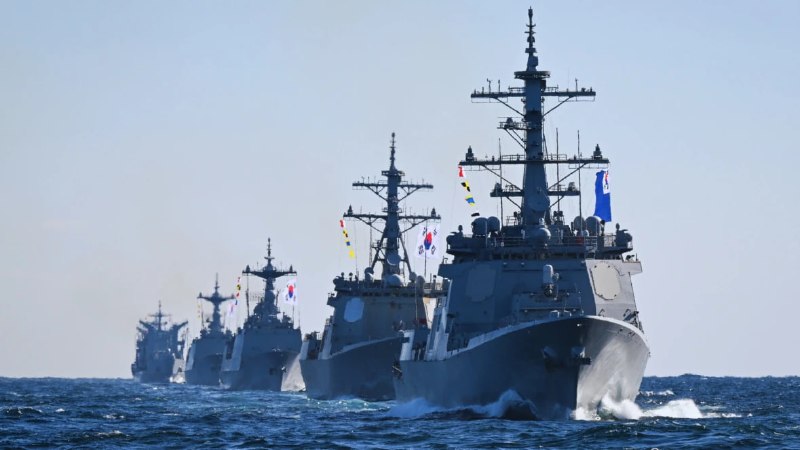
At a press appearance on the margins of a Group of 7 leaders' session on 17 June 2026, US President Donald Trump set out, in his own words, what he described as the bargain he had reached with Iran — and the price of walking away from it. Asked whether G7 partners had raised concerns about the legality of strikes on Iranian territory, he answered, according to a clip circulated by the Fars news agency, that they had not: "No. No, actually quite the opposite." He then used a separate exchange, captured by the Middle East Spectator channel, to defend Iran's right to retain ballistic capability: "There are people around me who say they shouldn't even have one missile. I asked: what exactly do you suggest? That Saudi Arabia can have missiles and Iran cannot? It just doesn't…" The sentence trailed off on the clip, but the argument was unmistakable.
The subtext, delivered in two separate remarks the same afternoon, was that Washington is now defending a regional equilibrium in which a sanctioned Iran keeps at least a token missile force, a co-equal Saudi Arabia does the same, and the world's most important oil chokepoint stays open. Whether that bargain is real, and whether it can survive the diplomatic pressures gathering around it, is the question now preoccupying analysts in Washington, the Gulf and Tehran.
What Trump said, and the order in which he said it
The two clips come from the same set of remarks, but they were circulated by two different channels with two different emphases. Iranian state-aligned Press TV foregrounded the energy argument. In a 17 June 2026 post on Telegram, citing the president's exchange with reporters, Press TV quoted Trump as saying the United States "would run out of (oil) reserves in about 4 weeks" had he not reached an agreement with Iran to open the Strait of Hormuz. The framing — that the Strait, and not any single Gulf producer, is the real pressure point — is the one Tehran prefers, because it positions the Islamic Republic as a gatekeeper rather than a pariah.
The Middle East Spectator channel, by contrast, highlighted the missiles question. Trump's formulation was not a policy paper; it was a rhetorical device. But it did something more important: it implicitly conceded parity between Iran's missile programme and Saudi Arabia's — a parity that runs against the more common Washington framing, in which Iran's missiles are treated as a uniquely destabilising capability and Saudi (and Israeli) ones as part of a benign regional order. The Saudi framing of missile equivalence has been a long-running irritant in US debates; the Iranian framing of energy interdependence has been a long-running asset. Trump, in two back-to-back answers, reached for both.
The energy argument, in numbers and in politics
The "four weeks of reserves" line is striking because it is the kind of number that tends to come from the Department of Energy's Strategic Petroleum Reserve dashboards rather than a presidential ad-lib. The United States holds roughly 350 to 400 million barrels in the SPR — a stockpile that, at current net export and refinery throughput levels, is calibrated for short, sharp disruptions, not for an extended closure of the Strait of Hormuz, through which a significant share of seaborne oil passes daily. The IEA and the US Energy Information Administration have, in successive annual outlooks, treated the Strait as the single most important maritime energy chokepoint on the planet. A closure of even a few weeks would draw down SPR volumes and force a price response; a closure of months would force rationing.
This is the structural reason the Trump administration's reported deal with Iran matters. A deal that keeps the Strait open is, in market terms, a global macroeconomic stabiliser. It is also, in political terms, a recognition that the United States cannot by itself guarantee the free passage of Gulf oil — the Fifth Fleet notwithstanding — without either an Iranian accommodation or an active shooting war. Press TV's emphasis on the four-week figure is therefore not just propaganda; it is also a description of how exposed the United States would be in the absence of an arrangement. The counter-read is that Trump, by publicly citing the four-week number, is also inviting Tehran to test the bargain: any future Iranian disruption of the Strait can now be measured against the president's own benchmark.
Missiles, Saudi Arabia and the unwritten equivalence
The missile remark is the more provocative of the two. For two decades, US non-proliferation policy has treated Iran's missile and rocket programmes as categorically different in kind from those of US partners in the Gulf. Saudi Arabia's ballistic missile inventory — built substantially with Chinese assistance, and reportedly including DF-21-class systems — has rarely featured in public US critiques at the same volume as Iran's. Israel's own missile forces, including cruise and ballistic systems capable of striking Iran, are treated, in Washington's framing, as defensive.
Trump's "one missile" formulation does not resolve this asymmetry; it concedes it. The argument, taken at face value, is that a regional order in which Iran is permanently denuded of missiles while Saudi Arabia retains and expands them is not an order, it is a hierarchy — and hierarchies imposed from the outside do not last in the Gulf. The structural reading is that Washington is moving, in slow motion, towards an explicit recognition of missile parity as the price of any wider regional settlement. The counter-read is that this is not a doctrinal shift; it is a transactional bargaining move designed to peel Iran away from deeper nuclear and proxy concessions, and that the missile equivalence will evaporate the moment a crisis returns.
The G7 silence, and what it does and does not mean
The Fars-captured exchange is also worth dwelling on for what it does not contain. A reporter asked whether G7 leaders had expressed concern about "the possible violation of international laws during the attack on Iran." Trump's answer — "No. No, actually quite the opposite" — is presented in the clip without a fuller quotation. It is consistent with two readings. The first is that the G7 partners, in private, gave the US president cover for the strikes on Iran that preceded the reported deal. The second is that the question was put in a way that did not solicit a substantive legal answer, and Trump provided the politically useful one. The sources do not specify which leaders were in the room, which legal frameworks were discussed, or whether any G7 communiqué touched on the strikes; the clip is a press exchange, not a transcript of a leaders' session.
The counter-narrative, more visible in European and parts of Asian press, is that several G7 governments have, in the days and weeks before 17 June, registered unease about the legal architecture of the Iran operation in their own public statements and in multilateral forums. Whether that unease is reflected in the leaders' table, or only in foreign ministry readouts, is a question this publication cannot resolve from the open sources available at the time of writing. The honest position is that the silence the clip captures may be a real silence, or it may be a presidential answer designed to manufacture one.
Stakes, over what time horizon
If the bargain holds, three things are simultaneously true. First, oil markets get a meaningful risk premium removed: traders can price a Strait of Hormuz that functions as a transit corridor rather than a flashpoint, with the attendant effect on diesel, jet fuel and refining margins. Second, Iran gets a partial normalisation of its missile and shipping industries — the kinds of revenue lines that the most biting US and EU sanctions have targeted for two decades. Third, Saudi Arabia is left holding a strategic bill: a regional order in which Iranian missile parity is openly acknowledged is, for Riyadh, an order in which the kingdom's most expensive defence procurements are partially devalued.
If the bargain breaks, the four-week number becomes the script for a crisis. An Iranian decision to test the Strait, a US decision to enforce it militarily, or a Saudi decision to pursue an independent deterrent track would each, in different ways, replay the original problem the deal was meant to manage. The next ninety days, in this reading, are the window in which the architecture gets stress-tested. The longer horizon — five to ten years — is when either the missile parity is normalised into regional doctrine, or the asymmetry is re-imposed and the bargaining starts again from a worse starting position.
What remains genuinely uncertain, and the source material does not resolve, is the legal status of the strikes referenced in the G7 exchange, the precise contents of the US-Iran understanding, and the degree to which Saudi Arabia was consulted on, or merely informed of, the missile framing. These are the questions that the next round of reporting, in the wire services and the Gulf press, will have to settle.
Wire provenance
This editorial synthesis draws on the following public wire/social posts:
- https://t.me/middleeastspectator
- https://t.me/presstv
- https://t.me/farsna
- https://www.eia.gov/
Follow the event.
These dated source records provide context. They do not retrospectively verify this archive article.
Separate what the nuclear watchdog reported from what it could not determine after the June 2025 strikes.