Trump's Iran MOU: a 60-day countdown with bombs on the table
President Trump says a memorandum with Tehran will be signed within days, with a 60-day reversion clause. Markets bought it. The substance remains undisclosed.
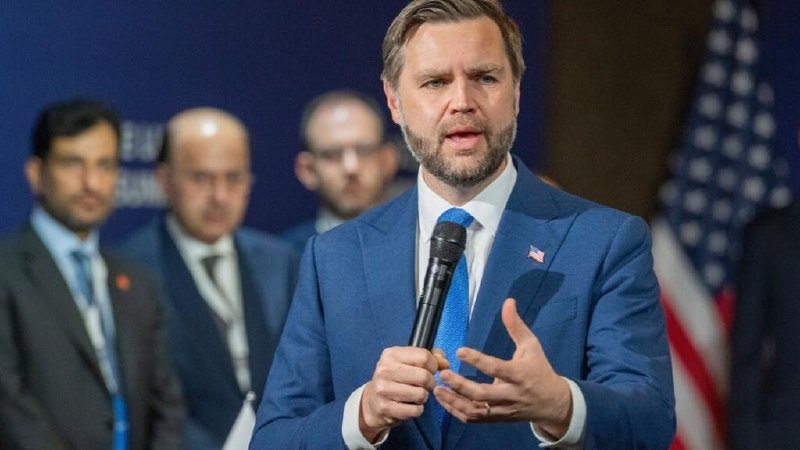
At 16:22 UTC on 17 June 2026, US President Donald Trump told reporters the framework of a deal with Iran — reached, he said, the previous Sunday — would be signed "tomorrow, maybe the next day." Within an hour, the same forum had produced a more candid gloss: the arrangement is "a memorandum of understanding. If it doesn't get done in 60 days, it's all right, we go back to bombing. You know, I don't want to do that, because it's so good, so good. But, uh, we might." The remarks, captured by Telegram channel Clash Report, frame a diplomatic process whose procedural scaffolding is unusually explicit for a US–Iran track: a two-month window, a credible reversion to military action, and a written instrument thinner than a treaty.
The thesis this article is testing is straightforward. The White House is marketing a non-binding arrangement as a strategic win while preserving, in the president's own words, the option to resume strikes. That posture rewards Tehran for engaging, de-escalates equity markets in the short run, and leaves the nuclear question — uranium enrichment, weaponisation timelines, IAEA access — to be settled in text that has not been disclosed.
A Sunday deal whose text is not public
Trump's account of the agreement is unusually effusive for the genre of US–Iran diplomacy. "On Sunday, we reached an agreement with Iran that achieves everything we set out to accomplish — everything and much more," he said, per Clash Report. The follow-up adds the mechanism. The deal is structured as a memorandum of understanding with a 60-day expiry clause. If the MOU does not yield a final settlement within that window, "we go back to bombing." Trump separately noted that "the new leaders of Iran are smart, very smart. They are far less radicalized. I think they really love their country. They are good" — a notable tonal shift from the maximalist rhetoric of 2025.
What the public has not seen is the text. Trump told reporters the agreement would be signed "tomorrow, maybe the next day," a sliding window that, as of 17 June 2026 16:22 UTC, has not yet been met. He separately stressed that the MOU "is not final. If I don't like it, we will go back to dropping bombs," per a post by unusual_whales on X at 15:17 UTC the same day.
The market read, and what it tells us
Trump repeatedly tied the announcement to financial conditions. "I didn't want to see an economic catastrophe; if you kept this going, it could have happened," he said. "Every time we talked about peace, the stock market went up. The stock market is more brilliant" than at the prior inflection. He elaborated: "The stock market is quite brilliant. And every time we said something amazing, like 'we're going to settle,' it would go up. And every time, every time we said something negative, like, well, it would go down."
That framing — diplomacy as a market input — is itself part of the story. A 60-day window with a reversion to military action is, in options-pricing terms, a structured product. The premium (the relief rally) is real and visible. The floor (the strike that follows non-conversion) is a tail risk that the same market is repricing downward. Whether the underlying asset — Iran's nuclear programme — actually reprices in the same direction is a separate question that the disclosed record cannot answer.
The denial, and the gap it leaves
The White House moved quickly to deny a separate component of the reporting. "The reports of $300 billion for Iran is false," Trump said, again per unusual_whales. That figure had circulated in the run-up to the announcement; its refutation narrows the plausible content of the MOU. A deal that is not $300 billion, is not a treaty, is not final, and does not preclude renewed bombing is, in substance, a procedural commitment to keep talking for two more months. Whether that procedural commitment contains nuclear-specific deliverables — enrichment caps, stockpile drawdowns, IAEA monitoring access — is not in the public record as of 17 June 2026.
The structural read is that the US is using the MOU format to claim a win without committing to the legal and political cost of a binding agreement. Iran, in turn, gains time, sanctions relief conditional on further steps, and the international legitimacy of a written framework. The 60-day clock, however, is a feature rather than a bug: it disciplines both sides, but the cost of failure — explicit in the president's language — falls disproportionately on the Iranian side, since the US retains the military option and the document does not.
What we verified / what we could not
Verified from the Telegram and X source trail: Trump's characterisation of the arrangement as a memorandum of understanding, the 60-day reversion clause, the Sunday-announcement timeline, the denial of a $300 billion figure, the market-positive framing, and the description of Iran's leadership as "far less radicalized" and motivated by a desire "to return to normal life." Verified timing: remarks occurred between 15:17 and 16:22 UTC on 17 June 2026.
Not verified: the actual text of the MOU. Not verified: the identity of Iran's negotiating counterpart and whether the new Iranian leadership referenced by Trump has a formal mandate to sign. Not verified: the duration, location, or modality of any uranium-related commitments. Not verified: the dollar value, if any, of sanctions relief. The sources do not specify the size of any Iranian nuclear stockpile, the level of enrichment, the location of any facilities, or the status of IAEA inspectors. They do not state whether the agreement includes a prisoner-release component, a regional-de-escalation component, or any reference to proxy forces. The 60-day horizon is presidential, not statutory; the sources do not indicate Congressional notification or sign-off.
Stakes, in plain terms
If the MOU converts into a final settlement within two months, the immediate beneficiaries are Iran's currency and balance of payments, the regional equities that have been trading on a strike premium, and the political position of the Iranian leadership that has bet on engagement. The longer-horizon beneficiary is the non-proliferation regime, which gains a verifiable pause. If the MOU fails, the cost is asymmetric. Iran returns to a higher sanctions baseline with a publicised ceiling on US patience, and the US administration retains, and has publicly preserved, the strike option it suspended to make the deal.
The pattern is familiar: a procedural instrument that converts a confrontation into a deadline, and a deadline that converts a deadline into a market event. The two months that begin on signing day will test whether the underlying disagreement — enrichment, weaponisation, regional posture — can be compressed into a document the relevant domestic audiences on both sides can defend. The president's own framing suggests he is prepared for the test to fail.
This article is built on a single Telegram and X source thread from 17 June 2026. Monexus reports what the principals said, flags the gaps in the public record, and declines to fill them with speculation.
Wire provenance
This editorial synthesis draws on the following public wire/social posts:
- https://t.me/s/ClashReport
- https://t.me/s/ClashReport
- https://t.me/s/ClashReport
- https://t.me/s/ClashReport
- https://t.me/s/ClashReport
- https://t.me/s/ClashReport
Follow the event.
These dated source records provide context. They do not retrospectively verify this archive article.
Separate what the nuclear watchdog reported from what it could not determine after the June 2025 strikes.