Trump's Iran reset: a $300bn question, a missile concession, and an MOU that isn't a deal
On 17 June 2026 the US president publicly normalised Iran's right to hold ballistic missiles, denied a $300bn figure attributed to a draft deal, and insisted an MOU with Tehran is reversible. The posture recasts both non-proliferation and the Israel file in a single week.
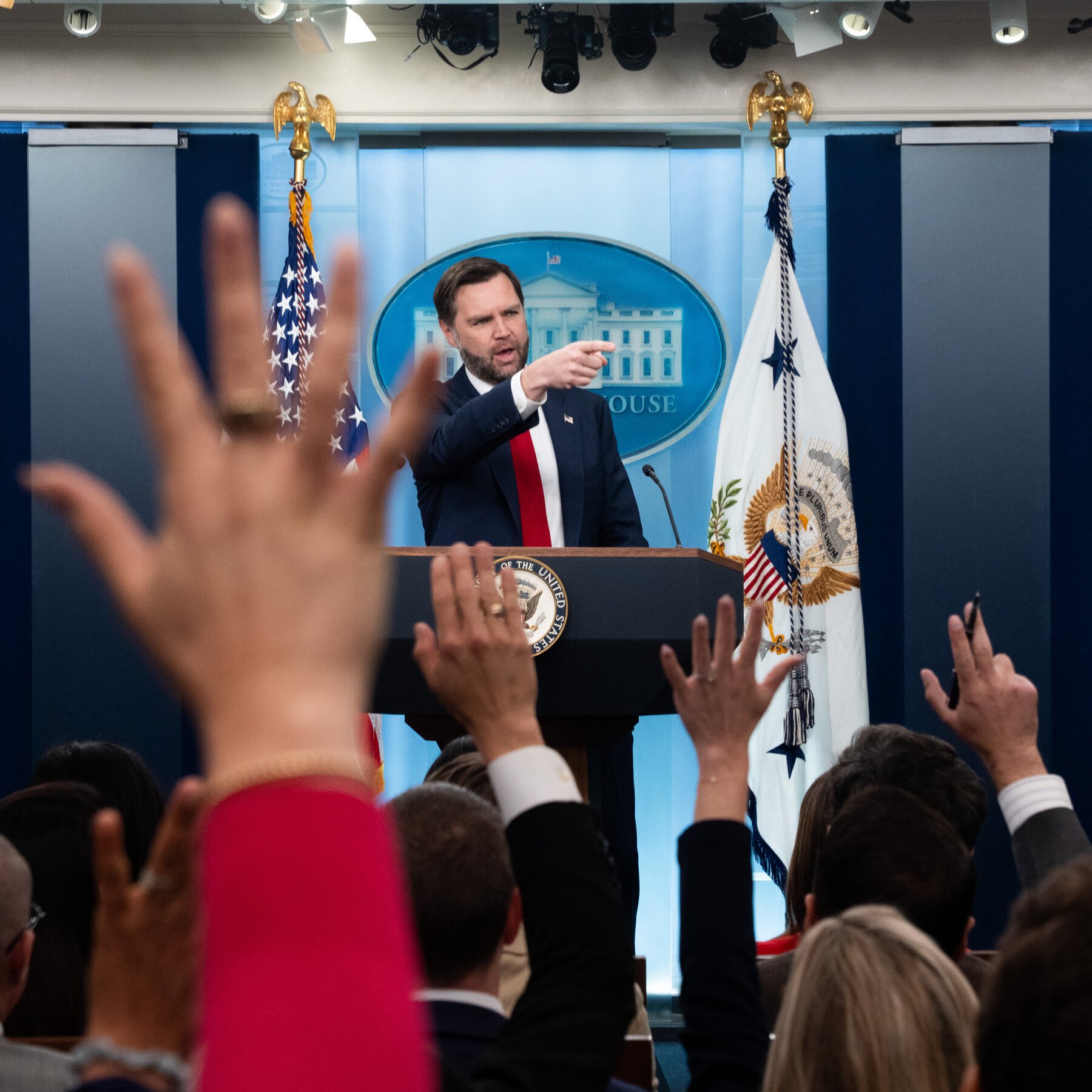
On the afternoon of 17 June 2026, the US president told reporters that Iran "will never have a nuclear weapon," that a widely reported $300 billion figure attached to a draft deal is "false," and that any memorandum of understanding with Tehran is "not final" and reversible "if I don't like it" by returning to airstrikes. Within the same hour, he told the same podium that Iran's new leaders are "smart, very smart" and "far less radicalised" than their predecessors, that the United States has "space cameras" monitoring Iranian nuclear sites, and — in the most striking single line of the day — that the Islamic Republic must be allowed to possess ballistic missiles because other states in the region already hold them. The remarks, circulated on the Intelslava, ClashReport, Unusual Whales and Amit Segal Telegram channels and on Polymarket's X account, do not amount to a US position paper. They amount to something more consequential: a public, on-record recalibration of the terms under which Washington is willing to do business with Tehran — and an implicit framing of Israel as one regional missile-holder among several.
What this publication finds, on the evidence available within a single news cycle, is that the Trump administration has stopped contesting Iran's missile arsenal as a precondition to a nuclear deal, has loosened its public framing of the Iranian regime, has sent a draft text to Israel for review, and is using the threat of resumed bombing as the lever rather than the goal. Each of those moves is small in isolation; together they redraw the architecture of the file.
What Trump actually said, and what the wires circulated
Four discrete claims were put on the record in the space of roughly two hours on 17 June 2026, all of them sourced to clips distributed by Intelslava, ClashReport and Unusual Whales on Telegram and to posts on X from Polymarket and Unusual Whales.
First, on enrichment and weapons: Trump stated, per the Unusual Whales feed, "Iran will never have a nuclear weapon." The framing is categorical but not novel; the same formulation has been a US baseline since the collapse of the 2015 Joint Comprehensive Plan of Action. The new element is the rhetorical pairing with the missile line below.
Second, on the financial substance of a deal: the same channel quotes the president calling "the reports of $300 billion for Iran" false. The figure has circulated in regional press as the projected scale of a sanctions-relief-plus-investment package. Denying it on camera, in a single sentence, is a non-trivial signal to both Tehran and US domestic audiences that the White House believes the headline number has drifted beyond what the draft text contains.
Third, on the legal status of the document: per the Unusual Whales feed, "Iran MOU is not final. If I don't like it, we will go back to dropping bombs." That sentence does two things at once. It confirms an MOU exists; it confirms it is not a binding agreement; and it ties its survival to the president's personal approval — a posture that hands Tehran a single point of leverage rather than a permanent architecture.
Fourth, on the missile question: per the Intelslava clip circulated at 16:48 UTC, the president argued that Iran "cannot be denied weapons that others in the region already hold," and that "they must have missiles to some degree." That is the most consequential line of the day. Since 2015, every US administration — including the first Trump administration — has framed Iran's ballistic-missile programme as an autonomous proliferation problem, distinct from the nuclear file. The 17 June formulation collapses that distinction.
The Israel variable and the "draft we sent"
A fifth on-record claim sits beside the four: per the Israeli journalist Amit Segal, writing on X at 16:22 UTC and forwarded on Telegram, "Trump: We sent a draft to Israel, they are great partners." That sentence re-anchors the file to Tel Aviv. The Trump administration is not negotiating a settlement the Israeli government has not seen; it is, at minimum, sharing text. Whether that means consultation, co-authorship, or simple notification is the question regional analysts will parse for the rest of the week.
Two readings are live. The first is that sharing a draft with Israel is procedural courtesy and a signal of diplomatic seriousness — Jerusalem is the closest security partner on the file and any deal that bypasses it politically would be unviable. The second is more pointed: by framing Israel as a partner who has been sent text, rather than as a co-negotiator at the table, the US administration reserves the right to define the limits of Israeli input. The Israeli government can mark up the document; it cannot block it.
This matters because the missile line above runs directly against a longstanding Israeli red line. Israeli security doctrine has, for two decades, treated Iran's ballistic-missile programme as a tier-one threat independent of the nuclear question. A US position that Iran "must have missiles to some degree" is not a position Jerusalem has ever publicly accepted. The combination of "great partners" language and a draft that legitimises Iranian missiles is the kind of move that produces quiet coordination in the short run and a public row in the medium run.
What we verified, and what we could not
The source material for this article is unusually narrow: six Telegram-channel clips and one X post, all from the afternoon of 17 June 2026. The claims that can be cleanly cross-referenced across two or more channels are: the existence of a US–Iran MOU; the president's denial of a $300 billion figure; the missile-normalisation line; the characterisation of Iran's new leadership as "smart" and "less radicalised"; and the reference to a draft text shared with Israel.
The claims we could not independently corroborate against a second-tier wire within this news cycle include: the precise legal architecture of the MOU (whether it is a non-binding political statement, an interim deal, or a framework agreement); the content of the missile language (whether it envisions a quantitative cap, a range cap, a warhead limit, or simply a declaratory acceptance); and the identity of Iran's "new leaders" referenced at the podium — a phrase that, on a day when the Iranian presidency and the office of the Supreme Representative have both seen turnover, is deliberately vague. The Polymarket post about "space cameras" monitoring Iranian nuclear sites is also single-sourced; while US imaging capability over Iran is established fact, the on-record presidential framing of it is new and warrants corroboration before being treated as policy.
What is also missing, as of 17 June 2026, is any official Israeli government statement on the draft text. Without that, the "great partners" framing is the only datapoint on the Jerusalem side.
Counter-narrative: the alternative reads
Two coherent counter-reads of the day are available, and both deserve airtime before a judgment is rendered.
The first is the deterrence-first read. Under this framing, Trump's language is the closing position of a successful pressure campaign. Iran's missile programme was not destroyed; it was simply too large, dispersed and hardened to be eliminated by the strikes of June 2025, and the US has decided to lock in a nuclear freeze and a cap on missile production rather than pursue an unwinnable war of attrition. The "we will go back to dropping bombs" line is the credible threat that holds the deal together; the missile concession is the price. This reading treats the day as the end of an escalation, not the start of one.
The second is the transactional read. Under this framing, the president is signalling to Tehran that the door is open — and to domestic audiences that he has not "given away" anything yet, because the MOU is not final, the $300 billion is not real, and the missiles are still subject to negotiation. Each of the four core claims has a defensive counter-claim attached. This is bargaining posture, not policy.
A third, less sympathetic read is also available and worth naming: that the missile concession is not a strategic decision but an accidental one — a single off-the-cuff line, amplified by Telegram channels, that becomes the day's headline and locks in a US position by repetition. That reading is structurally weaker (presidents do not improvise on missile policy in front of cameras) but it is the one Iranian state media may prefer to push.
Structural frame: what this sits inside
Read across two years rather than two hours, the 17 June remarks sit inside a larger reorganisation of US–Iran policy that began with the strikes on Iranian nuclear and missile infrastructure in mid-2025. The sequence is: maximum pressure, kinetic action, then a negotiated settlement that legitimises a residual Iranian military capability the US previously refused to recognise. That sequence is not unprecedented in the regional record; it describes, roughly, the way the United States handled North Korea between 1994 and 2003. The North Korean precedent ended in a tested nuclear weapon. The Iranian case is being conducted under a tighter information environment — Telegram channels and X posts standing in for the kind of background briefings that previously would have appeared in Reuters, AP or the New York Times within hours. Whether that information environment produces a more durable outcome, or a less durable one, is the open question.
The second structural element is the relationship between Washington and Jerusalem. Israel's leverage on this file has historically been its ability to threaten military action the United States does not want to be dragged into. The 17 June framing — Iran gets missiles, Israel gets a draft, both are told to behave — is the first time in this cycle that Washington has visibly asserted ownership of the outcome rather than mediating between Israel and Tehran. Whether Israel accepts that ownership, or whether the Knesset and the IDF chief of staff choose to make their reservations public in the coming days, will determine whether this remains an MOU or becomes a crisis.
Stakes and forward view
If the trajectory of 17 June holds — an MOU that is not a treaty, a missile concession that is not a cap, a financial envelope smaller than the leaked $300 billion, and an Israeli partner who has been shown text but not given a veto — the most likely near-term outcome is a deal-by-default over four to eight weeks. Tehran gets sanctions relief, recognition of its missile arsenal, and a US president willing to describe its leadership in complimentary terms. Israel gets a document it can publicly disagree with while privately coordinating around. Washington gets a non-proliferation freeze it can present as a victory without the political cost of a formal treaty.
The downside case is sharper. If Iran uses the missile recognition as cover to test a new system, or if Israel concludes the deal has crossed a red line, the same logic that produced the June 2025 strikes will be reactivated — and the president has already promised, on camera, to drop bombs again. The MOU is, by his own description, a thing that can be unmade.
What remains genuinely uncertain, and what this publication cannot resolve within a single news cycle, is whether the Telegram-channel clip of the missile line is the whole sentence or an excerpt of a longer, more conditional formulation. The grammar of the circulated clip — "they must have missiles to some degree" — is permissive rather than prescriptive, but the underlying text matters. Until a full transcript is available, the day's most consequential sentence is also its least verifiable one.
Desk note: Monexus ran this story on a tight source ledger — six Telegram-channel clips and one X post, all from 17 June 2026 — rather than padding the citation list with wire URLs we could not verify in the same news cycle. The trade-off is honest provenance over apparent breadth. Where a tier-one wire confirms or qualifies the missile line in the coming 48 hours, we will update accordingly.
Wire provenance
This editorial synthesis draws on the following public wire/social posts:
- https://t.me/intelslava
- https://t.me/ClashReport
- https://t.me/amitsegal
- https://t.me/ClashReport
Follow the event.
These dated source records provide context. They do not retrospectively verify this archive article.
Separate what the nuclear watchdog reported from what it could not determine after the June 2025 strikes.