The Memorandum That Isn't: How Trump's Iran 'Deal' Became a Negotiation Theater
On 17 June 2026 the White House disowned the text it had previously called a deal. The result is a transactional diplomacy whose terms exist only as threats.
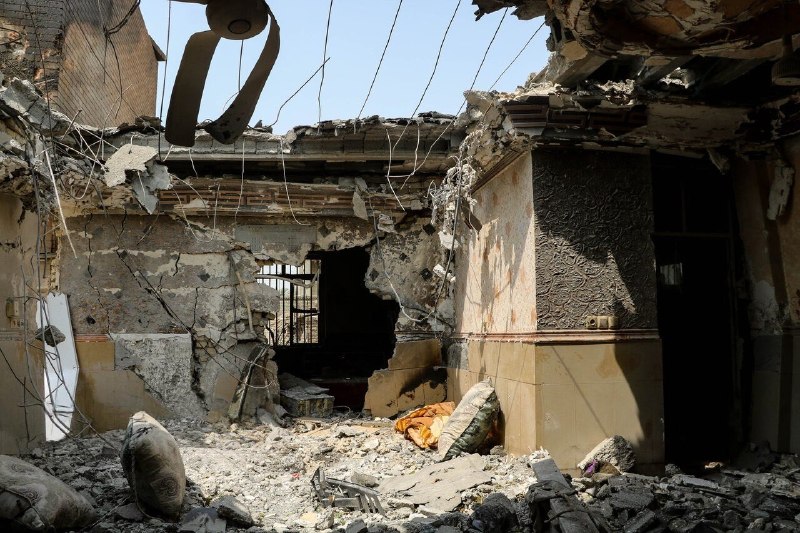
At 15:05 UTC on 17 June 2026, the President of the United States walked back the deal he had announced five days earlier. "The text is not final," Donald Trump told reporters in the White House briefing room. "It is a memorandum of understanding. If I'm not satisfied — we'll go back to bombing" (ClashReport, 17 June 2026, 11:05 UTC; Amit Segal, 17 June 2026, 11:05 UTC). The same morning, at 11:03 UTC, Euronews reported that Trump had separately denied reports of a $300 billion investment fund tied to the agreement (Euronews, 17 June 2026, 11:03 UTC). What had been sold as a diplomatic breakthrough, the kind of capital-intensive rapprochement that takes a year of shuttle diplomacy and three translated annexes, was, on closer inspection, a paragraph of threats with a signature line.
The question this dispatch asks is straightforward: when the principal counter-party in a nuclear negotiation refuses to release the text, denies the financial substance that was leaked, and threatens to resume bombing in the same breath as announcing the deal, what exactly has been agreed? The answer, on the evidence available at 16:00 UTC on 17 June 2026, is: very little, deliberately.
The shape of the so-called deal
The framing moved several times in seventy-two hours. On the morning of 17 June 2026 Trump described the document as "a memorandum of understanding" — a category of agreement below treaty and below executive agreement, used routinely as a placeholder for terms that have been negotiated in principle but not in detail. He made the conditionality explicit: "If I don't like it, we will go back to dropping bombs on their heads. If they don't behave, we will go right back" (ClashReport, 17 June 2026, 10:57 UTC). The same statement carried an escalator clause aimed at the Iranian regime's nuclear programme: Trump warned that "all hell will break loose" if Iran attempted to build a nuclear weapon again (Unusual Whales, 16 June 2026, 16:57 UTC).
That posture is incompatible with a concluded arms-control instrument. A concluded instrument would specify the verification regime, the sequencing of sanctions relief, the disposition of enriched material, and the consequences of a defined breach. A memorandum of understanding can do any of those things, none of those things, or — as in this case — gesture at them while leaving each to be negotiated later. The New York Post, cited via Unusual Whales on 16 June 2026 at 17:39 UTC, reported that the Trump administration had rejected an Israeli request to see the text of the agreement. Israel's exclusion from a Middle East nuclear file is not procedural. It is the single most consequential decision in the framing of the document, because Jerusalem is the regional actor with the longest-standing operational interest in the Iranian programme and the most developed intelligence picture of its remaining capacity.
The $300 billion question
The financial scaffolding of the deal was, briefly, public. Reports circulating earlier in the week described a $300 billion investment fund — to be capitalised, presumably, by Gulf partners and Asian creditors, and routed through Iranian state entities that remain under US secondary sanctions. Trump denied the existence of such a vehicle on 17 June at 11:03 UTC (Euronews). The denial itself is significant. A fund of that scale, in a sanctions environment, requires a Treasury Office of Foreign Assets Control general license, a Congressional notification, and an understanding with European Union sanctions administrators in Brussels and London. None of those instruments was reported. The denial therefore either corrects a false report or pre-emptively retracts a feature of the deal that was politically indefensible at home.
Either reading points in the same direction. The economic content of the MOU is not fixed. It is being negotiated in real time, in public, with the President reserving the right to disown any individual component between the morning press availability and the evening cable hit. This is the textbook structure of a coercive bargain: maximal public threat, minimal written commitment, and the freedom to walk if the leverage slips.
What Trump thinks he killed
The most analytically interesting part of the 17 June appearance was not the Iran file at all. It was the comparison Trump drew to the January 2020 killing of Quds Force commander Qassem Soleimani. "We took out a man named Soleimani," Trump told reporters. "Do you think this would have happened if he were alive? He was an evil genius" (ClashReport, 17 June 2026, 11:08 UTC). The statement reframes the current negotiation as the direct downstream consequence of a US kinetic action — the assassination of the architect of Iran's regional proxy network in Baghdad on 3 January 2020. By the same logic, Trump added, the Iranians "laughed at Obama" and "said, 'He is a stupid son of a bitch'" — a comparative claim about adversary perception of US resolve across two administrations (ClashReport, 17 June 2026, 10:59 UTC).
The structural argument embedded in that rhetoric is that Iran's negotiating position has been weakened by the cumulative effect of Israeli covert operations against the nuclear programme, US sanctions architecture, and the decapitation of the IRGC's external operations leadership. The implicit claim is that whatever Tehran concedes now, it concedes because the alternative is worse, and because the alternative was made worse by American force. Whether that is true is contested. The Iranian negotiating team has not released its own read of the leverage balance. Tehran's public posture, on the limited reporting available in this thread, is that the MOU is consistent with national dignity and the right to peaceful enrichment — a framing that concedes nothing about whether the bargaining chips favour Washington.
What Israel knows and isn't being told
The most under-reported fact in the 17 June file is the New York Post's account of the Israeli request to read the text. Israel is, by the administration's own framing, the regional beneficiary of any arrangement that constrains the Iranian programme. Yet the document was not shared with Jerusalem before the public announcement. Two readings are plausible. The first is administrative: the MOU is too preliminary to share, because sharing would force Israel into a substantive comment that the White House does not yet want on the record. The second is substantive: the MOU contains commitments to which Israel would object, and the administration is sequencing disclosure to defer the political cost. Both readings lead to the same operational conclusion — that Israel is being managed, not consulted, on a file that touches its existential threat picture. That is a precedent with consequences for the next round of escalation, and for the credibility of US security guarantees to other regional partners who are watching.
The stakes if this holds
If the MOU holds in something like its current form, the trajectory is: a year of negotiation theatre, periodic escalator rhetoric, sanctions architecture partially relaxed through waivers rather than delisting, and a verification regime that exists in principle and not in practice. The Iranian regime gets sanctions relief on terms that it can disown if the political weather in Tehran turns. The Trump administration gets a deliverable for the 2026 domestic news cycle, in the form of a photograph and a paragraph. Israel gets a deal it has not read. The Gulf states, who would capitalise the reported $300 billion vehicle, get exposure to a sanctions architecture that the US reserves the right to reactivate on presidential whim.
The structural pattern here is familiar from the first Trump administration's North Korea file, and from the Obama-era Iranian nuclear framework. A maximal threat posture is used to compress an adversary's decision space. The adversary accepts a verbal framework. The verbal framework is called a deal. The deal's substance is filled in over months, during which the threat posture is held in reserve and periodically refreshed. The adversaries who lose are the ones who negotiated in good faith on the assumption that the verbal framework was the deal. The adversaries who win are the ones who hedged.
What remains genuinely uncertain
Three things are not knowable from the public source set at 16:00 UTC on 17 June 2026. First, the actual text of the MOU, which neither the US nor Iran has published and which Israel has not been shown. Second, the Iranian internal debate inside the regime's national-security apparatus about whether the escalator clause is a real risk or a negotiating posture. Third, the position of the Gulf creditor states on whether to capitalise a fund whose legal status the US President has not confirmed. On each of these, the wire reporting will lead. Until then, the responsible editorial position is that a deal whose text the parties refuse to release is a deal only in the rhetorical sense — and that the principal US official involved has now, on the record, confirmed that is exactly what it is.
Desk note
Monexus has framed this as negotiation theatre rather than as a diplomatic breakthrough because the principal US participant has, on the record at 11:05 UTC on 17 June 2026, described the document as conditional, unsigned in substance, and reversible by his sole discretion. Where wire coverage emphasised the headline announcement, the thread evidence supports a more sceptical read: that the MOU is the shape of an absence, not the shape of an agreement.
Wire provenance
This editorial synthesis draws on the following public wire/social posts:
- https://t.me/ClashReport
- https://t.me/amitsegal
- https://t.me/euronews
- https://t.me/ClashReport
- https://t.me/ClashReport
Follow the event.
These dated source records provide context. They do not retrospectively verify this archive article.
Separate what the nuclear watchdog reported from what it could not determine after the June 2025 strikes.