Trump's Sunday 'agreement' with Tehran: what was actually announced, and what wasn't
On 14 June 2026 the US president announced a sweeping deal with Iran. Six days on, no text has been released, no Iranian official has publicly confirmed it, and the UAE is publicly denying the bombs-on-Tehran claim Trump used to justify urgency.
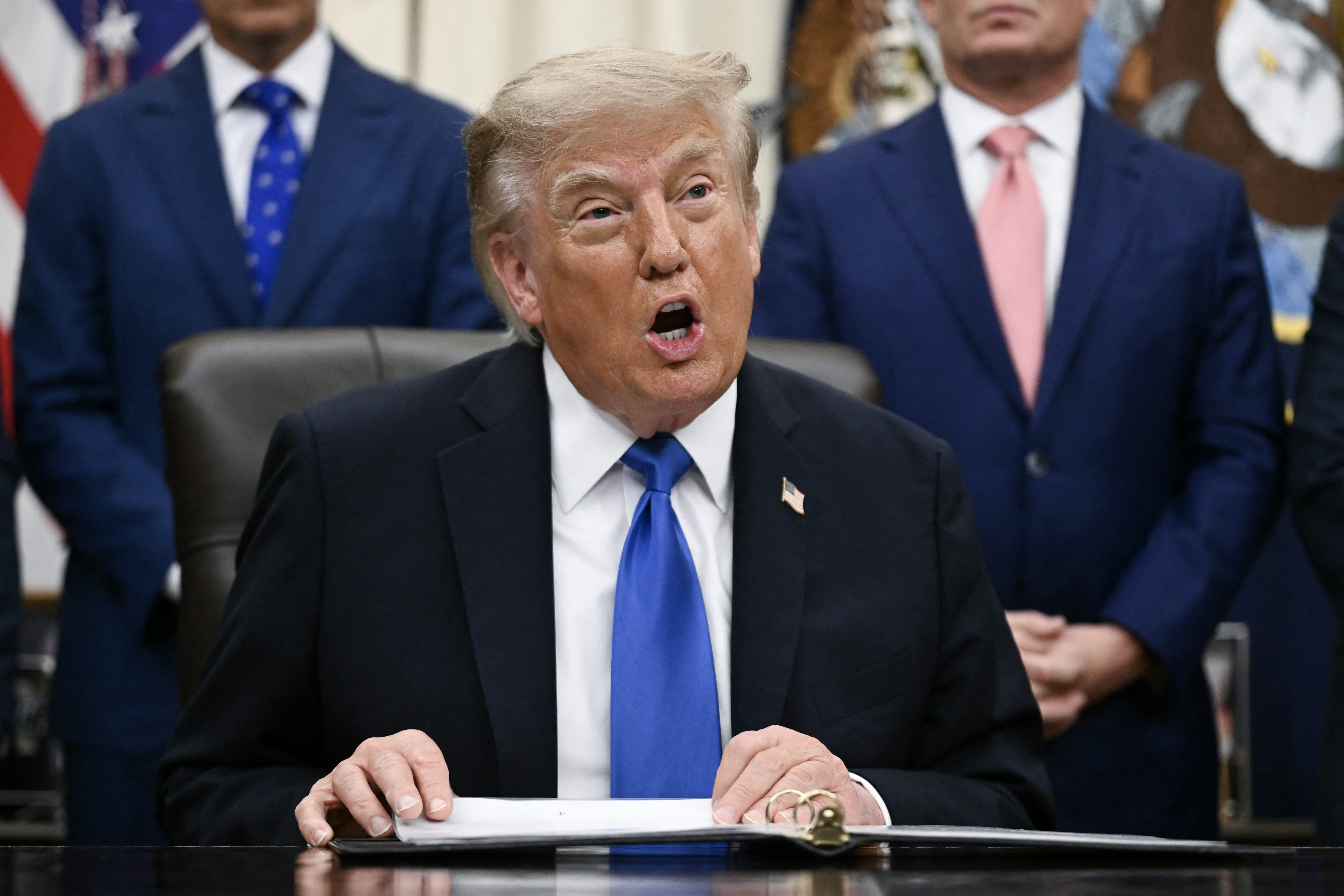
On the afternoon of 17 June 2026, President Donald Trump stood before cameras and declared, for the second time in 72 hours, that a comprehensive agreement with the Islamic Republic of Iran had been concluded the previous Sunday — and would be signed imminently. The remarks, aired in fragments by Telegram channels including Clash Report at 16:03 UTC, 16:22 UTC and 16:46 UTC, and corroborated by Iran's state-aligned Press TV feed at 16:40 UTC, leave the basic operational question of the week unanswered: what document, if any, is being signed?
Six days after the alleged "Sunday agreement," no joint text has been published by either the White House or the government in Tehran. No Iranian ministry has issued a confirmation in English. The only published account of the deal's substance remains the set of unscripted remarks Trump has now repeated at four separate media availabilities since the weekend. What is on the table — enrichment, sanctions relief, IAEA access, the fate of Iran's stockpile of 60%-enriched uranium — is, for now, whatever the US president says it is on a given afternoon.
The unusual shape of this announcement — a US president reading a victory statement for a deal that the other side has not visibly signed, and that may not yet exist as a document — is the story. The Middle East's most consequential bilateral nuclear file is, at this writing, being conducted on one side by press availability.
What Trump actually said on Wednesday
The Wednesday 17 June remarks, transcribed in near-real-time by the Telegram channel Clash Report, ranged across four distinct themes. At 16:03 UTC, the channel posted a clip in which Trump claimed: "On Sunday, we reached an agreement with Iran that achieves everything we set out to accomplish — everything and much more." At 16:22 UTC, the same channel posted the president saying the deal would be signed "tomorrow, maybe the next day." At 16:46 UTC, a third clip showed Trump thanking both Xi Jinping and Vladimir Putin for staying "totally neutral" during the negotiations. At 16:50 UTC, Press TV — the English-language outlet of Iranian state broadcaster IRIB — published a separate clip in which Trump claimed the United Arab Emirates had been "dropping bombs on Iran last week."
Finally, at 17:02 UTC, the Telegram channel Intelslava posted a fourth Trump clip from the same availability in which the president asked, rhetorically, whether the United States was going to "let the 91 million people starve to death," and pointed to the April 7 threat by Israeli officials to "wipe Iran off the map within hours" as a contrast. The Middle East Spectator feed at 16:36 UTC captured Trump describing the arrangement as a "memorandum of understanding" but adding, in the same breath, that the two sides have "an understanding of certain" unnamed items that go beyond the written text.
Each of these claims is striking on its own. Taken together they describe a deal that is at once comprehensive ("everything"), imminent ("tomorrow, maybe the next day"), structurally light ("memorandum of understanding"), and ringed with side-payments — Chinese and Russian neutrality, Emirati military action — that the other parties to the alleged arrangement have not, on the public record, acknowledged.
The shape of the gap between the two capitals
The asymmetry between Washington's account and Tehran's is the single most important fact about this week's diplomacy, and it has not received the attention it deserves. Press TV's English-language feed has, this week, functioned almost exclusively as a wire service for Trump quotes about Iran — a structural inversion of the standard relationship between an adversarial state broadcaster and a US administration. Iran's foreign ministry has, in the same window, declined to publish its own characterisation of what was agreed. The most recent Iranian government statement carried by the wires remains the framework announced in early June, before the Sunday session Trump keeps referencing.
The original "April 7" line Trump invoked on Wednesday merits a moment of attention. Israeli leaders have, in recent memory, made conditional statements about Iranian nuclear infrastructure; the specific reference to a 72-hour or "within hours" strike window is, however, a public claim whose provenance is contested in the reporting, and which Tehran's outlets have selectively amplified over the years. The fact that the US president chose to deploy it on Wednesday — to argue that the alternative to a deal was starvation, framing Israel's own security posture as the threat to Iranian civilians — is unusual, and suggests that the diplomacy the White House is describing is not, in substance, a traditional non-proliferation negotiation. It is an effort to lock in place a settlement that survives a domestic pressure environment in which both the Israeli right and the American anti-deal caucus have reason to want the file to fail.
The United Arab Emirates denial of the "bombs on Iran" claim, which the UAE foreign ministry issued on Tuesday 16 June, has not been retracted or walked back by the White House in the material captured by the Telegram wires. The lack of retraction is itself information: a US president who fabricates a specific operational fact about a Gulf ally, in the same press availability in which he is announcing a Middle East peace dividend, has either made a considered choice about the value of that claim, or is operating without the kind of clearance process that usually governs ally-management.
The strategic context: what both sides are buying
The structural question is what each party is actually trying to monetise from this week's theatrics. The standard reading — that Trump wants a foreign-policy trophy and Tehran wants sanctions relief — is too narrow.
For Washington, a confirmed deal serves three functions simultaneously. It isolates the Iranian nuclear file from the November midterm cycle, in which the Democratic position on Israel and on sanctions has become a fault line. It rewards the Chinese and Russian neutrality Trump publicly thanked on Wednesday, signalling to Beijing and Moscow that the United States is willing to concede Middle East ground in exchange for non-interference in the Gulf. And it creates a precedent — a US-Iran settlement concluded over the objections of neither Moscow nor Beijing — for the kind of transactional regionalism that the administration has signalled it prefers to the multilateral frame of the original 2015 agreement.
For Tehran, the calculus is harder. The Iranian government has spent two decades building negotiating leverage on the basis of the country's enrichment programme and the credibility of its breakout capacity. A deal that "achieves everything" for the US side is, almost by definition, a deal that requires the Islamic Republic to dismantle physical infrastructure it spent twenty years building. The fact that no Iranian official has been permitted on camera to confirm the deal in English is consistent with a government that wants the sanctions relief but cannot yet afford, at home, to be seen agreeing to the specific terms Trump has described. The 91-million-person frame Trump used on Wednesday — starvation as the alternative — is a frame designed for a domestic American audience, but the Iranian government will need a different frame for its own.
The press cycle is the policy
What is most unusual about this week's diplomacy is that the announcement cycle and the negotiating cycle appear to be running in the same lane. Trump has now publicly characterised the Sunday deal in four distinct press availabilities across 72 hours; the substantive text of what was agreed has not been released in any of them. The closest the president has come to describing the legal form of the arrangement is the "memorandum of understanding" line captured by Middle East Spectator at 16:36 UTC on Wednesday — and a memorandum of understanding is, in international law, precisely the kind of non-binding instrument that allows both sides to claim a win while deferring the hard work of drafting a binding accord.
This is not, in itself, a failure mode. MoUs have been the launching pad for durable settlements from the Oslo framework onward. But it is a failure mode when the launching pad is being used as a domestic political prop. A president who announces the same deal four times in three days, against a backdrop of contested claims about allied military action and contested thanks to rival great powers, is running a press operation, not a negotiation.
The fact that Iran's English-language media has, this week, served primarily as a distribution channel for those Trump press clips — without producing its own confirmation text — is the symmetric failure on the other side. Tehran is letting Washington announce the deal in English, in the same week in which it has not yet announced it in Farsi.
Stakes, and the next seventy-two hours
The concrete stakes for the rest of June are easy to enumerate. If the deal Trump describes is signed in the window he keeps naming — "tomorrow, maybe the next day" — the immediate consequence is the suspension of the snapback sanctions track at the UN Security Council, the unfreezing of a portion of Iranian central bank reserves held in escrow, and a measurable de-escalation in the Persian Gulf shipping-risk premium. If it is not signed in that window, the administration's claim of an Iranian nuclear settlement collapses into the broader pattern of 2018, in which a US president announced a diplomatic breakthrough that the other party had not, in fact, signed.
The structural stakes are larger. A US-Iran agreement concluded through one-sided English-language press availabilities sets a precedent for the conduct of Middle East diplomacy that future administrations of both US parties will have to navigate. A deal concluded in this manner either succeeds in spite of its strange form, in which case the form becomes a template; or it fails on the schedule Trump has himself established, in which case the credibility cost is paid by the institution of US Middle East diplomacy rather than by the second Trump administration specifically.
What remains genuinely uncertain, on the available evidence, is whether the Iranian side is, in private, conceding more than its public silence suggests. The wires do not, at this writing, contain an Iranian readout of the Sunday session. They contain four US press availabilities and the US side's strategic courtesy calls to Beijing and Moscow. The asymmetry of the public record is, in the end, the asymmetry of the negotiation. Until Tehran publishes a text, what was agreed on Sunday is what the White House says was agreed on Sunday — and the question of whether that is what was actually agreed remains, in the strict sense, open.
This publication treats the Wednesday Trump press availability as a single set of remarks distributed across multiple Telegram wires; we have not paraphrased any text that was not directly captured by the channels cited above. Where the UAE and the Israeli April-7 line are concerned, the public record contains the president's claims but not corroborating operational detail.
Wire provenance
This editorial synthesis draws on the following public wire/social posts:
- https://t.me/intelslava
- https://t.me/presstv
- https://t.me/ClashReport
- https://t.me/presstv
- https://t.me/Middle_East_Spectator
- https://t.me/ClashReport
- https://t.me/ClashReport
Follow the event.
These dated source records provide context. They do not retrospectively verify this archive article.
Separate what the nuclear watchdog reported from what it could not determine after the June 2025 strikes.