Trump rebalances on two fronts: Iran deal rhetoric and Ukraine coordination with Zelenskyy and Macron
A single news cycle put two wars back on the US president's desk: a defence of his Iran nuclear track and a reported coordination call with Kyiv and Paris that could produce 'major developments.'
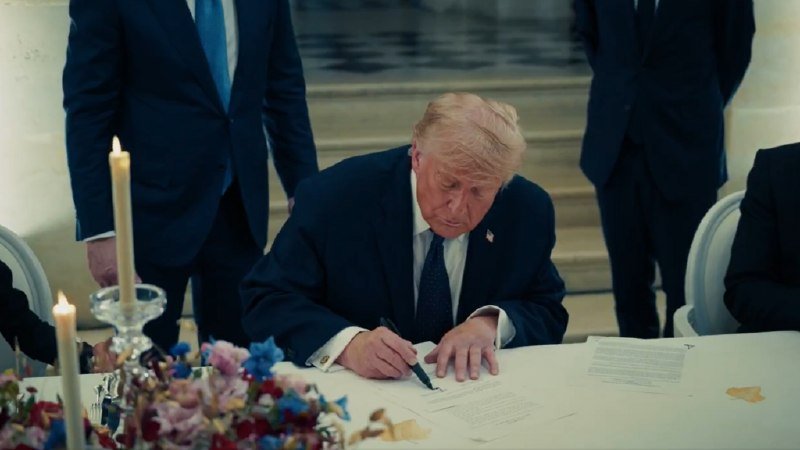
A 24-hour news cycle on 17 June 2026 put two of the Trump administration's most volatile files back on the front page at the same moment. In one thread, the US president was defending a freshly framed deal with Iran in terms of economic survival; in another, Ukraine's Volodymyr Zelenskyy said he had just held a "coordination call" with Donald Trump and Emmanuel Macron that, in his telling, could "lead to major developments." The juxtaposition matters: it is the first time in weeks that Washington has visibly re-engaged both theatres in a single day, and it tells us something about how the administration is sequencing its foreign-policy capital as the calendar tightens.
Two open conflicts, two diplomatic tracks, and a single White House trying to keep them both moving forward without either collapsing into the other. The pattern — re-engage Iran, re-energise Ukraine, lean on European partners for the second while keeping Gulf-state pressure on the first — is becoming recognisable. Whether the architecture holds is the question the next ten days will answer.
What Zelenskyy said, and what he did not
Reporting carried by Kyiv Post on the evening of 17 June (Telegram post at 20:44 UTC) summarised a Zelenskyy statement that he had spoken with Trump and Macron in what he called an "important coordination call that could lead to major developments." The leaders discussed support for Ukraine, "strengthening cooperation," and what Kyiv Post's channel described, in truncated form, as diplomatic efforts. The phrase "major developments" is unusually forward-leaning for a Ukrainian presidential readout and signals either that the call produced something concrete, or that Kyiv wants the market — financial, military, and diplomatic — to price in the possibility that it will.
The same day, TSN, the Ukrainian commercial broadcaster, ran a piece (posted to its Telegram channel at 20:14 UTC) under the headline: "Trump suddenly changed his rhetoric regarding Ukraine: what he said." TSN did not publish the full text in the channel excerpt Monexus reviewed, and the substance of the shift — whether a softening on sanctions enforcement, a hardening on military aid, or a fresh conditionality attached to European deliveries — is not in the source material we can verify. What can be said is that the framing of "sudden change" is itself a signal: TSN is treating any visible movement on the US side as newsworthy, which suggests the baseline expectation in Kyiv has been drift, not motion.
France's role is the underrated element. Macron's inclusion in a US–Ukraine call, rather than a separate European coordination line, marks a continued consolidation of the Paris-Washington-Kyiv triangle that has defined European security diplomacy since the early months of Russia's full-scale invasion. The sources do not specify what France committed to or demanded in the call; the read-through is that Paris is positioning itself as the indispensable European interlocutor, not as a junior partner to Berlin.
The Iran track: deal as economic triage
In the second file, Middle East Eye carried two posts on 17 June (at 20:08 UTC and 19:50 UTC) reporting that Trump had publicly justified a nuclear-track understanding with Iran as a means to prevent "economic catastrophe." The framing is striking. It is not the diplomatic language of non-proliferation; it is the language of a president telling a domestic audience, and a jittery Gulf audience, that the alternative to a deal is materially worse than the deal itself. The reporting adds that Trump suggested Iran will need to keep some ballistic-missile capability to match regional arsenals — a position that would have been politically toxic in Washington a year ago and is now being previewed openly. The US president is also said to have indicated that the United States will need to remain involved in monitoring the arrangement, though the specifics of that monitoring mechanism were not in the excerpts reviewed.
The structural subtext here is that the administration has moved from selling the deal as a maximalist denuclearisation success to selling it as the least-bad option on a menu of bad options. That is a meaningful downgrade in triumphalism and an upgrade in plausibility. It also pre-empts the most predictable line of attack from congressional critics: that any deal that leaves Iran with missiles is, by definition, not the deal that was promised. By pre-empting that critique with an economic argument, the administration reframes the choice as one between imperfect deterrence and uncontrolled escalation.
How the two tracks fit together
Read in isolation, the Iran and Ukraine files look like two separate news items running on adjacent wires. Read together, they sketch an administration that is trying to close one diplomatic book (or at least its first chapter) so it can keep another one open. A US that has just stabilised its Gulf posture is a US with fewer reasons to demand maximalist outcomes in Europe; a US that has just spent political capital on a Ukraine package is a US with diminished bandwidth to manage a second non-proliferation collapse. The trade-off is implicit, and it is the kind of trade-off that becomes explicit only when one side of the ledger slips.
There is also a sequencing argument. Iran negotiations reward patience and punish leaks; Ukraine negotiations reward visible momentum and punish silence. By publicly defending the Iran deal in economic terms, the administration gives itself permission to talk about Ukraine in security terms. The two rhetorical registers do not collide, and they let the president occupy two different news cycles on the same day without contradicting himself.
Stakes, and what we still do not know
For Kyiv, the immediate stake is whether "major developments" translates into a concrete air-defence package, a long-range-strike authorisation, or an EU-facing political commitment that France can carry into Brussels. For Tehran, the stake is whether a deal that preserves a missile envelope can survive domestic politics in Iran and a sceptical Congress in Washington. For European capitals, the stake is whether the Paris-Washington-Kyiv axis produces something operational, or whether the call was a mood-management exercise ahead of a tougher negotiation.
What the sources reviewed here do not establish is the content of Trump's reported shift on Ukraine, the terms of any Iran monitoring arrangement, or whether the Zelenskyy-Trump-Macron call produced a communiqué beyond the presidential readout. The Kyiv Post and TSN channels provided the framing of the call; Middle East Eye provided the framing of the Iran justification. The connecting tissue — whether any US official spoke on the record about either — is not in the wire material Monexus reviewed at the time of writing. A reader treating today's news as a coherent strategic signal should hold that gap in mind: there are two good stories here, and one shared White House calendar, but no public document yet binding them together.
Monexus framed this as a single-day diplomatic moment rather than as two unrelated stories, because the wire material suggests one administration sequencing two files rather than two crises running in parallel. The Iran piece leans on Middle East Eye's economic-catastrophe framing; the Ukraine piece leans on Kyiv Post's "major developments" language, with TSN's "sudden change" headline read as commentary on expectations rather than as a verified policy shift.
Wire provenance
This editorial synthesis draws on the following public wire/social posts:
- https://t.me/Kyivpost_official
- https://t.me/TSN_ua
- https://www.middleeasteye.net/news/trump-defends-iran-deal-way-prevent-economic-catastrophe
- https://x.com/middleeasteye/status/2067334033122467841
- https://t.me/Kyivpost_official/2
Follow the event.
These dated source records provide context. They do not retrospectively verify this archive article.
Separate what the nuclear watchdog reported from what it could not determine after the June 2025 strikes.
A dated voting record is evidence of one decision. Use the original UN record before turning it into an alignment label.
Visual explainer · historical vote of 2022-03-02 →