Trump Turns Up the Heat on Netanyahu, and on Tehran
A single week of presidential messaging — public rebukes of the Israeli prime minister and an explicit threat to resume bombing Iran — suggests Washington is recalibrating, not retreating.
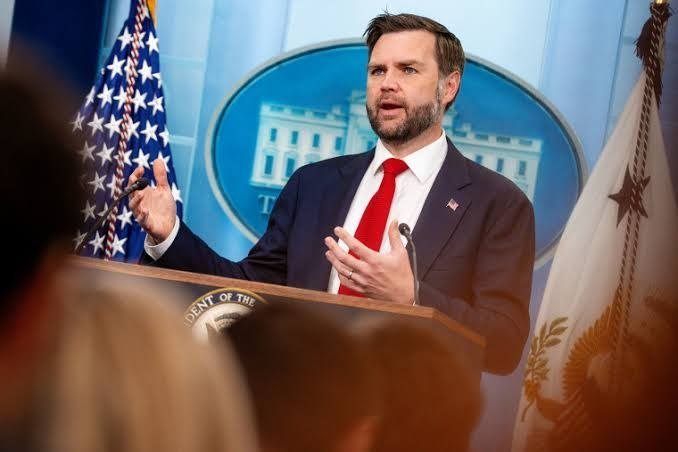
On 16 June 2026, the sitting US president told reporters that the Israeli prime minister must be "more responsible" in his handling of Lebanon, and that Israel must now treat the country "with respect." By the following morning, in a separate exchange carried by Ukrainian and Australian broadcasters, the same president had publicly warned Iran that the United States would "go back to bombing" if Tehran's behaviour did not change. Two messages, one news cycle, two very different audiences — and, taken together, the clearest signal in months that Washington intends to dictate the tempo of escalation in the Middle East rather than follow it.
The sequence matters less for its language than for its direction. For most of the past year, public friction between the White House and the Israeli premier has been episodic, with each flare-up followed by reassurance and a reset. What 16–17 June 2026 shows is a flatter, more transactional register: criticism delivered as instruction, not as complaint. The same posture, applied to Iran, reads as deterrence with a deadline attached.
A public dressing-down, delivered in plain sight
The trigger was Lebanon. According to a Polymarket-curated newswire circulated on 16 June 2026, the US president said the Israeli prime minister had to be "more responsible" with regard to Lebanon; the framing was reiterated the same day by US political-trader commentary accounts and was picked up by Australia's Special Broadcasting Service the following morning. SBS News reported on 17 June 2026 that the comment was the latest in a series of public jabs at the Israeli premier, and that it pointed to a "growing rift" between the two leaders rather than a passing disagreement.
Public rebukes of that kind are unusual. US presidents have, historically, absorbed Israeli policy decisions in private and reserved public criticism for moments of acute political pressure at home. The fact that the message was delivered on camera, with Lebanon explicitly named, suggests Washington is no longer willing to absorb the political cost of an open-ended southern-front campaign while it tries to manage the file with Iran.
The Iran thread, tightened in public
The second strand is harder. Ukrainian television network TSN reported on 17 June 2026 that the US president had stated, in effect, "we will go back to bombing" Iran — a sentence whose force depends on what the audience believes has stopped. There is no public ceasefire, no signed arrangement, and no transparent framework in the source material. The line therefore functions less as policy description than as a standing threat: the bombing will resume if the behaviour does not change.
That formulation — conditional, public, undated — is the diplomatic equivalent of an open hand on the table. It leaves Washington maximum room to escalate or to claim credit for restraint, and it forces Tehran to read presidential mood rather than diplomatic text.
What the framing hides
Two readings compete. The first, and the one the White House seems to want carried, is that the United States is disciplining a junior partner and a regional adversary in tandem, restoring the kind of coercive diplomacy that defined earlier decades of US Middle East policy. The second is that the public pressure reflects the opposite — a White House that has lost private leverage and is now forced to argue in front of the cameras because it cannot argue behind closed doors.
The evidence is consistent with both. Public criticism of a prime minister with a secure domestic coalition tends to harden, not soften, that coalition's resistance. Public threats to resume bombing a country whose leadership is itself bargaining from a position of relative weakness tend to entrench that leadership's own hardliners. If the goal is to extract movement, the choice of forum is unusual; if the goal is to reposition Washington for a domestic audience ahead of mid-term campaigning, it is not.
The structural picture, without the labels
What is being performed, in plain terms, is a reassertion of the manager's role. The United States has long insisted on final say over the scale, timing and termination of major military action in the region — not as a legal matter, but as a logistical one. Bombers, intelligence, targeting packages and the diplomatic shielding that follows any strike are largely American. When that architecture is invoked publicly, as it was on 16–17 June 2026, the implicit message to every capital in the region is that escalation is a service, not a unilateral act. The president, in this telling, is reminding the region who is signing the chits.
The risk is that the reminder is taken at face value. A White House that threatens to resume bombing in the same week it publicly rebukes a close ally is not signalling steady management; it is signalling volatility. Markets in the region, which have spent eighteen months learning to discount presidential statements, will continue to do so. Adversaries will read the volatility as opportunity, allies as warning.
Stakes, and what remains uncertain
In the short term, the Israeli government is unlikely to publicly reverse course on Lebanon; the political cost inside the coalition would be higher than the cost of accepting the rebuke. Iran's leadership will continue to probe the boundary between threat and action, calculating as it has done for decades. The country that has the most to lose from a misread is Lebanon itself, whose reconstruction timetable, currency stability and refugee returns all sit downstream of decisions being made in Washington and Tel Aviv.
What the public record does not yet establish is whether the rebukes and the threats are connected — that is, whether Washington is conditioning Israeli restraint on Iranian restraint, and trading both for a regional arrangement that has not yet been put on paper. The two messages, on the same day, from the same podium, to two different governments, make that hypothesis more plausible than not. Until a text appears, however, the policy is a posture, and postures are easier to walk back than they are to honour.
Monexus framed this as a dual-track signal — pressure on a partner and pressure on an adversary — rather than as a stand-alone dispute between the White House and the Israeli prime minister. Most wire coverage on 16–17 June led on the personal rift; we read the same day as a coordinated reminder of who sets the tempo.
Wire provenance
This editorial synthesis draws on the following public wire/social posts:
- https://www.sbs.com.au/news/article/trump-targets-netanyahu-amid-signs-of-growing-rift/uyfydpqrx
- https://t.me/TSN_ua
- https://x.com/polymarket/status/
- https://x.com/unusual_whales/status/
Follow the event.
These dated source records provide context. They do not retrospectively verify this archive article.
Separate what the nuclear watchdog reported from what it could not determine after the June 2025 strikes.