Trump tells Israel to soften its Lebanon campaign, in unusually direct public rebuke of Netanyahu
In remarks carried on 17 June 2026, the US president publicly urged his Israeli counterpart to be 'a little softer' on Lebanon — an unusually frank airing of a private disagreement between the two leaders.
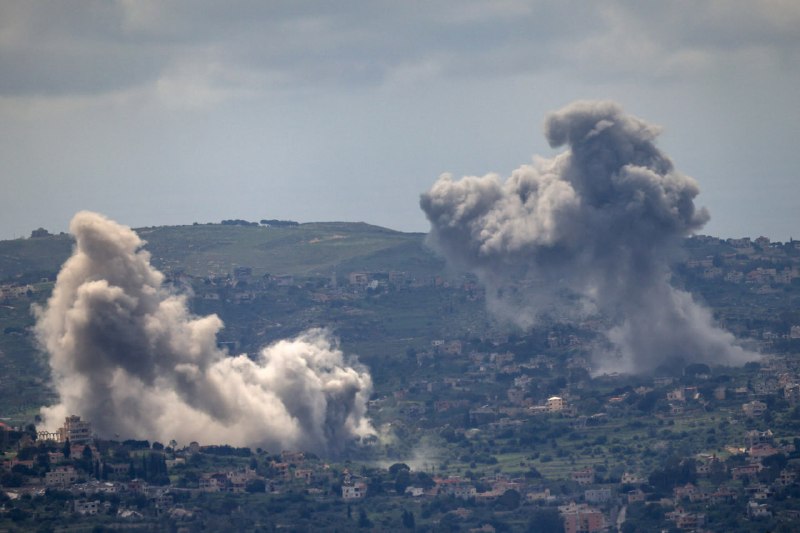
In a series of remarks carried on 17 June 2026, US President Donald Trump publicly urged Israeli Prime Minister Benjamin Netanyahu to dial back Israel's campaign in Lebanon, telling him to use "a little softer touch" and avoid "tak[ing] down a bu[ilding]" — an unusually frank, on-camera airing of a disagreement that, until now, Washington and Jerusalem had been at pains to keep out of the headlines.
Four separate Telegram channels that tape the president's public appearances posted the exchange within minutes of each other on Wednesday afternoon UTC. The Israeli correspondent Amit Segal posted the clip at 16:15 UTC, with Trump saying: "Bibi is a great man, he gets excited from time to time. We have a good partnership but we have a conflict over Lebanon. I told him to be gentler with Lebanon and not take down a bu[ilding]." Two minutes later the open-source channel Clash Report posted a near-identical transcript, and by 16:31 UTC the channels Englishabuali and abualiexpress had both circulated longer excerpts in which Trump added, "In all fairness to Bibi Netanyahu who happens to be a very good man, gets a little excited sometimes, but he happens to be a very good man, we had an amazing partnership."
The nut of the story is a small sentence, but its diplomatic content is large. A sitting US president has, in a single clip, simultaneously affirmed the bilateral relationship, characterised Israel's leader as prone to overreach, and named a specific theatre of Israeli military activity where he wants restraint. Each of those three moves has a different audience, and each one is being read in real time by officials in Jerusalem, Beirut, Tehran, and Doha.
The Lebanon file the president is talking about
Israel's military operations in southern Lebanon have run, in one form or another, since the start of the war in Gaza in October 2023, when Hezbollah opened a northern front in solidarity with Hamas. The immediate trigger for Trump's remarks is the most recent Israeli escalation in Lebanon — the air campaign against what the IDF calls Hezbollah command infrastructure in the Dahieh, the Shia-majority southern suburbs of Beirut, and the steady drumbeat of strikes further south along the Litani.
Lebanon's caretaker government in Beirut has, throughout, treated Israeli strikes on its territory as a violation of the 1949 Armistice framework and of subsequent UN Security Council resolutions. The Lebanese state has not been able to do much about those strikes operationally; the army is not deployed along the southern border in significant numbers, and the area of operations is, for practical purposes, controlled by UNIFIL and by the parties to the conflict. The Lebanese political class, divided between a Hezbollah-led resistance bloc and a Sunni-led centrist bloc headed by caretaker Prime Minister Najib Mikati, has, however, been consistent on the legal question: every strike on Lebanese soil is, in Beirut's framing, an act of war requiring an unconditional ceasefire.
Into that file, Trump has now inserted himself directly. The line that has travelled furthest in the Telegram traffic — "I told him to be gentler with Lebanon and not take down a bu[ilding]" — is a reference, broadly read, to a specific high-profile strike: a building taken down in a southern suburb or a southern village that produced a large number of civilian casualties and was, in the president's telling, not something the White House had signed off on. The wording matters. "Take down a building" is the language a developer uses about a demolition; it carries an implicit judgment that the operation was unnecessary as well as destructive.
The counter-narrative, in Jerusalem, is the standard one. The IDF has consistently described its targets in Lebanon as Hezbollah military infrastructure, embedded command centres, weapons storage, and rocket-launch sites. Officials in Israel have, in background briefings to Israeli outlets, pushed back on the civilian-casualty count circulated by Lebanese state agencies and by Hezbollah's own media arm, al-Manar. The framing in those briefings is that Hezbollah deliberately places its military assets in civilian areas and that the responsibility for any civilian harm lies with the militia, not with the air force.
The structural reality, as wire reporting has established since late 2023, is that both framings capture a piece of the truth. Independent satellite-imagery work published by UK-based and Beirut-based outlets has documented strikes on multi-storey residential blocks in the southern suburbs whose ground floors did contain Hezbollah-linked offices; it has also documented strikes on open agricultural land in the south whose military justification is harder to reconstruct from open sources. The distribution of civilian harm in either case is the responsibility of the party that placed the target there, under the established international-law principle of distinction — but the responsibility for the choice of target and the proportionality of the strike remains Israel's.
What the four Telegrams actually show
The four channels that picked up the clip are not random. Englishabuali and abualiexpress are Arabic-language channels that translate Trump's public remarks into Arabic for an Arab audience; Clash Report is an English-language open-source channel that aggregates conflict-related footage; Amit Segal is a senior Israeli political correspondent for Channel 12, whose channel on Telegram is a primary feed for Israeli political reporting. The fact that Segal posted the clip at 16:15 UTC, two minutes before the open-source channels, and that the Arabic-language channels posted the longer version at 16:24 and 16:31 UTC, is consistent with the original being Trump's own on-camera remarks, taped by an Israeli press pool, picked up by Segal, and then propagated.
The wording across the four posts is consistent. Trump's core line — that Netanyahu is a good man who gets "a little excited," that the two have a "small disagreement" or "little dispute" over Lebanon, and that he has told the Israeli prime minister to use a "softer touch" or be "gentler" — is reproduced almost verbatim in each. The slight variation between "a little softer touch" (Clash Report), "gentler with Lebanon" (Segal), and "softer touch" (Englishabuali) reflects the imprecision of the spoken word, not a substantive disagreement between the postings.
What is notable is what is not in the clip. There is no specific date for the strike Trump is referring to, no casualty figure, no named village or suburb, no dollar amount of damage, and no reference to any specific US-Israel disagreement that preceded the public statement. The clip is pure atmospherics — the register of a president speaking off the cuff, rather than the register of a National Security Council readout.
The diplomatic reading
Two readings of the clip are circulating, and they are not mutually exclusive.
The first is that Trump is performing a familiar role: the deal-maker publicly leaning on an ally to soften a position, in the expectation that the public pressure itself will produce a result. In this reading, the clip is a calibrated message to Netanyahu, transmitted through the press, in which the president gives himself room to escalate the public criticism if the Israeli campaign does not change. It is the same playbook the first Trump administration used in 2018-19 on the Saudi-led war in Yemen, and again on Israeli settlements in the West Bank — a public thumbscrew, calibrated to leave the bilateral relationship intact while extracting a specific policy change.
The second is that the president is sending a parallel message to a third party — most plausibly to Iran, with which the United States has been engaged in a halting nuclear-file negotiation across 2025 and 2026. A public line from Trump that Israel is overreaching in Lebanon, in this reading, is a signal to Tehran that the United States is willing to put daylight between itself and Jerusalem in order to keep the negotiation channel open. That second reading is consistent with the longer Englishabuali clip, in which the framing of Netanyahu as a friend who "gets a little excited" mirrors the framing Trump has previously used of other allies whose actions he wishes to distance himself from without breaking the relationship.
A third reading — that Trump is speaking to a domestic audience ahead of US midterm-cycle politics, in which Israel-policy is a contested issue within both parties — is harder to sustain on the available evidence. The clip is short, the language is general, and the appearance was not framed as a policy address. But it is the reading Israeli media will be most attentive to in the days ahead, because a US president publicly expressing disagreement with an Israeli prime minister's judgment has, since October 2023, been a politically loaded thing to do inside the United States.
What is contested, and what is not
The clip does not, on its own, establish a US policy change. There is no indication in the four postings that Washington has changed its arms-supply posture, its diplomatic representation in Beirut, or its voting pattern at the United Nations. The line is a statement of personal sentiment, expressed in the first person ("I told him"), about a specific building strike or a specific pattern of strikes — not a presidential statement of policy.
What is contested is the scope. The longer Arabic-language excerpts frame the disagreement as one about a specific high-casualty strike; Segal's Hebrew-channel excerpt frames it as a disagreement about the overall tempo of the Israeli campaign. The two are not the same. A US-Israel disagreement about one strike can be settled by Israel quietly avoiding that kind of target in the next operation; a disagreement about tempo is a longer, structural conversation about the relationship between the IDF's targeting cycle and the Lebanese civilian-protection obligations Israel has accepted under the November 2024 ceasefire framework.
The four postings are also silent on whether Netanyahu has responded. Israeli government practice, since the start of the Gaza war, has been to absorb public US criticism in private and rebut it in background, not on camera; the prime minister's office does not generally comment in real time on presidential remarks that are not formal policy statements. That pattern, if it holds in the next 24 to 48 hours, will itself be a signal: silence will be read in Beirut and Doha as acquiescence to the pressure, while a formal Israeli rebuttal will be read in Washington as defiance.
The stakes
For Lebanon, the stakes are concrete. The country is in the seventh year of a sovereign-debt crisis, governed by a caretaker cabinet that cannot pass a budget, hosting roughly 1.5 million displaced persons on top of its pre-crisis population, and absorbing a stream of Israeli strikes whose cumulative damage to civilian infrastructure is, in the assessment of UN agencies, well into the tens of billions of dollars. A US president publicly telling Israel to "be gentler" is, in that context, not a small thing. Whether it produces a measurable change in the targeting cycle is the next question.
For Israel, the stakes are also concrete and run in the opposite direction. The Israeli security establishment has, since the November 2024 ceasefire, argued that residual Hezbollah infrastructure in southern Lebanon remains a threat that cannot be left in place. A US pressure line that constrains Israeli targeting — even a soft one, even one expressed in the register of personal sentiment rather than formal policy — narrows the IDF's margin of operation and complicates the work of the Northern Command.
For the United States, the clip is a reminder that the president retains the ability to put daylight between himself and a foreign leader in real time, in language that travels, in thirty seconds, through the global press ecosystem. That capability is not new. What is new is the willingness to use it on Israel, in public, on the Lebanon file, at a moment when the Iran track is in a sensitive phase.
The honest version of the bottom line is this: a thirty-second clip is not a policy, and a US president publicly expressing personal disagreement with an Israeli prime minister is not, on the record we have, a doctrine. But four independent channels, all posting within sixteen minutes of each other on a Wednesday afternoon in June 2026, have now made the disagreement a fact of the diplomatic environment — and a fact, once it is in the environment, is harder to walk back than a policy that never leaves the building.
This article drew on four Telegram channels posting the same primary clip within sixteen minutes on 17 June 2026; the publication has treated the clip as a verbatim record of the president's public remarks and has not attempted to reconstruct context not present in those posts. The diplomatic reading is the publication's own; the underlying transcript is not.
Wire provenance
This editorial synthesis draws on the following public wire/social posts:
- https://t.me/englishabuali
- https://t.me/abualiexpress
- https://t.me/ClashReport
- https://t.me/amitsegal