Trump rebukes Israeli tactics in Lebanon, exposing a widening US-Israel fault line
A public split between the US president and Israel's campaign in Lebanon, framed against Hezbollah's warning that Iran will not sign a nuclear deal while Israel remains on Lebanese soil.
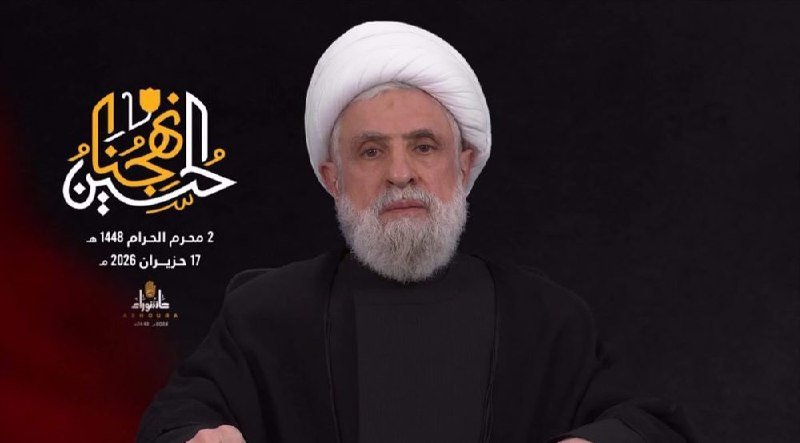
On the morning of 17 June 2026, the public relationship between Washington and Jerusalem fractured in an unusual place: the routine of Israeli airstrikes in southern Lebanon. President Donald Trump publicly criticised Israel's campaign against Hezbollah, telling reporters it was not necessary to bomb entire apartment buildings to hunt individual militants and that the conflict had dragged on too long with excessive civilian casualties, according to a Reuters dispatch posted at 02:15 UTC and a parallel Epoch Times summary posted at 01:03 UTC. Hours later, Al Jazeera's breaking-news feed at 00:00 UTC carried an Israeli strike that killed four people in Lebanon on the same day the criticism aired. The juxtaposition — American president upbraiding an Israeli prime minister in real time as Lebanese bodies are still being counted — is the kind of split that US Middle East policy normally works hard to keep private.
The rebuke matters less for its specific tactical content than for what it reveals about the diplomatic geometry now forming between Washington, Jerusalem, Beirut, and Tehran. Trump's intervention arrived the same day Hezbollah publicly signalled — through a Telegram statement aggregated at 02:05 UTC — that it believes Iran will not sign a final nuclear agreement with the United States unless Israel withdraws from Lebanon. That coupling, an unusual US criticism of Israeli method coupled with an Iranian-aligned faction's stated precondition for a nuclear deal, suggests the dispute is being read aloud inside the negotiating room as well as in front of the cameras.
What Trump actually said, and what he did not
The president's complaint was procedural as much as substantive. He did not call for a ceasefire, did not condition US arms deliveries, and did not name Prime Minister Benjamin Netanyahu directly in the Reuters report. His argument was that the current Israeli method — striking residential buildings in pursuit of individual Hezbollah operatives — produces a civilian-casualty ratio that is operationally wasteful and politically counterproductive. The Epoch Times account frames the same remarks as a critique of a war that has "lasted too long." The tone is consistent across both wires: displeasure at method, not at mission.
That distinction is doing a lot of work. Israeli security planners have spent two decades justifying the use of overwhelming air power in dense southern Lebanese environments as a means of degrading Hezbollah's rocket and tunnel networks, on the argument that the group's deliberate embedding inside civilian areas narrows the menu of legal and proportionate options. By accepting that Hezbollah is embedded but rejecting the apartment-block strike as the answer, Trump is implicitly narrowing Israel's own declared toolkit without offering an alternative. Israeli officials have not, in the wires available on 17 June, publicly accepted or rejected the framing.
The Hezbollah precondition, read from Beirut
The Lebanese-Hezbollah statement, carried on the Telegram channel "ourwarstoday" at 02:05 UTC, ties the future of Iran's nuclear diplomacy to Israel's physical footprint on Lebanese territory. The framing is direct: a final deal between Tehran and Washington is conditional, in Hezbollah's reading, on Israeli withdrawal from Lebanon. The statement is partisan — Hezbollah has every incentive to harden its negotiating position — but its existence inside the same 24-hour news cycle as a sitting US president publicly second-guessing Israeli tactics gives the precondition an audience it would not otherwise have.
What the statement is not, is new. Hezbollah has long framed its militia as the southern shield of a wider Iran-led axis. The novelty is the timing. By publishing the precondition while Trump's criticism is still the lead, the channel forces a read-through: an American president critical of Israeli method, an Iranian client claiming that the method is what blocks a nuclear settlement. Whether Tehran endorses the framing is not stated in the available wires, but the structural implication is plain — the American public break with Israel is being treated, in real time, as diplomatic leverage by the other side.
The structural frame: a transactional alliance under stress
The US-Israel relationship has long rested on a bargain that is rarely spoken aloud in full. Washington provides military, diplomatic, and intelligence support. Israel, in return, pursues its own security doctrine — pre-emptive action against Hezbollah, strikes on Iranian assets in Syria, periodic campaigns in Gaza — with substantial, though not unlimited, US tolerance. The deal survives because both sides treat its terms as stable.
Trump's intervention suggests the terms are not stable. The president is not arguing that Israel should stop fighting Hezbollah. He is arguing that Israel should fight more carefully, on terms set partly in Washington. That is a different kind of friction — a dispute inside the alliance rather than a challenge to it. The Epoch Times wire places Trump's remarks in the context of a war that has run past American political comfort; the Reuters wire places them inside an immediate tactical dispute about a specific strike. Both readings converge on the same diagnosis: the White House is signalling that it intends to be more visible inside Israeli operational choices, at least on this front.
The stakes, plainly stated
The immediate stakes are operational. If Israel recalibrates its targeting in southern Lebanon to satisfy an American demand for lower-casualty methods, the tempo of strikes is likely to slow. Hezbollah, which absorbs Israeli pressure as both a cost and a recruiting instrument, gains time to reposition rocket and drone assets. Lebanon's civilian population, the constituency Trump's remarks name explicitly, would see lower immediate casualty counts but a slower path to de-escalation.
The medium-term stakes are diplomatic. If Hezbollah's reading is even roughly accurate — that Iran's willingness to close a final nuclear deal is contingent on Israeli withdrawal — then the Lebanon campaign has been quietly elevated from a bilateral counter-terror fight into a regional diplomatic variable. That is a heavier load than either Washington or Jerusalem has publicly acknowledged in the wires available on 17 June. It also creates a leverage problem for the United States: it cannot simultaneously press Israel to withdraw and ask Iran to sign, without one side treating the other as the obstacle.
The longer-term stakes are inside the American political system. A US president publicly upbraiding an Israeli prime minister's tactics, without naming him, during an active campaign is not a position either party has occupied in recent memory. The move will be read as pressure by some, as fatigue by others, and as a transactional pivot by a third group. None of those readings are likely to remain private for long.
What the sources do not yet settle
Three things remain unclear as of 17 June 2026 at 02:15 UTC. First, the specific strike or strikes that prompted Trump's remarks are not named in the available wires; the connection between the four deaths Al Jazeera reported in Lebanon at 00:00 UTC and the apartment-building language in the Reuters report is inferential, not stated. Second, the Iranian government's own position on Hezbollah's precondition is not on the wire; the statement originates with the Lebanese party, and Tehran's silence can be read either as quiet endorsement or as deliberate distance. Third, no Israeli readout responding to Trump has been published in the wires surveyed here; the Netanyahu government's reaction will determine whether the rebuke becomes a one-day story or the opening of a longer intra-alliance argument.
What the reporting does settle is that the public surface of the US-Israel relationship has changed in the last twenty-four hours. Whether that surface change hardens into policy, or fades as both governments return to private channels, will be the story of the coming week.
— Desk note: Monexus framed this as an intra-alliance dispute over Israeli tactical method, with Hezbollah's Iran-deal precondition treated as counter-claim material rather than stand-alone fact. The wire had no Israeli response by 02:15 UTC; that gap is named in the article rather than filled with inference.
Wire provenance
This editorial synthesis draws on the following public wire/social posts:
- https://t.me/ourwarstoday
- https://t.me/epochtimes
Follow the event.
These dated source records provide context. They do not retrospectively verify this archive article.
Separate what the nuclear watchdog reported from what it could not determine after the June 2025 strikes.