Trump's Strait of Hormuz Promise Collides With a Missing Plan
The president says the waterway will be "completely open" by Friday. Tehran says it was told the same. The plan to reopen one of the world's most important shipping lanes remains undislosed.
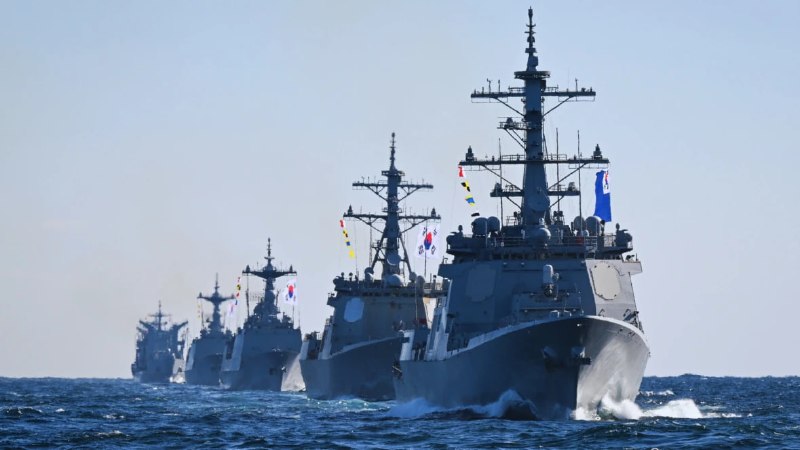
President Donald Trump said on Tuesday afternoon — aboard Air Force One, in remarks broadcast across financial markets — that the Strait of Hormuz would be "completely open" by Friday, and that ships had already begun moving through the waterway that carries roughly a fifth of the world's seaborne oil. Hours later, Iranian state-aligned coverage carried its own version of the same claim. The two announcements agreed on the outcome and disagreed on the credit. They agreed on nothing else. No government has published the text of the understanding that allegedly produced the result, no shipping association has confirmed a formal safe-passage arrangement, and the sanctions and nuclear talks the announcement is supposed to enable are, on the American side, still being described in the conditional tense.
The picture, in other words, is a deal whose outcome has been declared before its mechanism has been shown. That sequence — headline first, paperwork later — is not unusual in this White House. What is unusual is the scale of what is being asserted. The Strait of Hormuz is not a frontier post; it is the choke point through which most Gulf-exported crude and a substantial share of global liquefied natural gas transits every day. A "complete" reopening is not a marginal adjustment to freight rates. It is a restoration of an assumption on which oil benchmarks, sovereign budgets and alliance logistics have run for decades.
What was actually said
Trump's framing, as carried by accounts of his Air Force One remarks, was both triumphant and coercive. Without the understanding he claimed to have brokered, he said, the United States "could have dropped more bombs for another 2–3–4 weeks or 2 years" — and "you would never have the Strait of Hormuz open." The remark, reported across market-moving accounts, presented the diplomatic track and the military track as a single coin, with the White House holding the flip side. He added, separately, that ships were "starting to go out" and that the strait would be "completely open" by Friday. Polymarket registered the announcement as a discrete news event in real time, and trading desks treated it as such: oil futures dipped on the headline.
The Iranian-side read of the same exchange, as relayed through English-language accounts of Iranian official messaging, was not framed as a concession. Tasnim, the news agency tied to Iran's Islamic Revolutionary Guard Corps, carried Trump's quote with the prefix "The president of the terrorist state of America." The editorial frame matters. Iranian state media is not denying that an understanding exists; it is contesting who owes whom. The substantive content — that the strait reopens, that hostilities are described as ending — is the same content both sides are pushing to the public. What is being contested is authorship.
What the framework is supposed to do
According to the public summaries circulating on Tuesday, the memorandum of understanding has three moving parts: an end to active hostilities, the reopening of the strait, and a sixty-day clock on broader negotiations covering Iran's nuclear program and the architecture of US and international sanctions. Each of those is a category of work, not a deliverable. "End active hostilities" requires a definition of which forces are covered, which platforms count as offensive, and whether third-party actors — Houthi strikes in the Red Sea, militia attacks on US bases in Iraq, Iranian-aligned operations further afield — are inside or outside the perimeter. "Reopen the strait" requires either the physical withdrawal of the Iranian naval and Revolutionary Guard presence that has menaced commercial shipping, or a credible Iranian assurance that commercial traffic will be unmolested, or both. A sixty-day clock on nuclear and sanctions talks is, on its own, a procedural device: it does not commit any party to a substantive outcome.
The most recent reporting on Tuesday afternoon explicitly noted that "official details of the plan to reopen the strait have not been released." That gap is the central fact of the moment. Markets have repriced on the announcement; shipowners have not been issued new routing guidance, and insurance underwriters have not issued new war-risk bulletins for the corridor. Until one or both of those moves, the headline is doing work the underlying document is not.
Why the announcement came now
The White House has been under pressure to show that its maximum-pressure posture on Iran has produced an outcome. The military track — the strikes Trump referenced obliquely on Tuesday — has been real and ongoing; the diplomatic track, by contrast, has been thinner. The Strait of Hormuz has been functionally constrained in recent weeks, with commercial traffic rerouted or delayed, and the political cost of that disruption has shown up in fuel-importing economies from Tokyo to Berlin. An announcement of imminent reopening serves multiple domestic audiences simultaneously: it validates the coercive logic of the pressure campaign, it reassures allies dependent on Gulf energy, and it gives the president a deliverable to point to before the diplomatic clock even starts.
Iranian officials have their own incentives to be seen conceding, in a managed way, what was already being lost. A strait under sustained harassment costs Tehran revenue from its own oil exports and invites escalation it does not control. A face-saving framework — brokered, imposed, or somewhere in between — returns a strategic asset without requiring a public climbdown on the nuclear file.
What would prove the announcement is more than a headline
Three things would move this story from declaration to deliverable. The first is publication — or credible leak — of the actual text, or at least an agreed summary, of the memorandum. The second is a verifiable change in the physical behaviour of Iranian fast-attack craft and shore-based anti-ship missile batteries facing the strait, and a corresponding change in the routing and insurance treatment of commercial vessels. The third is movement on the sixty-day clock: the convening of a sanctions-and-nuclear working group, an agreed agenda, and at least one announced confidence-building measure such as an IAEA inspector access protocol or a limited sanctions waiver on Iranian oil exports.
None of those three has occurred. What has occurred is the announcement, the market reaction, and a parallel set of statements from Washington and Tehran describing the same event from opposite ends of the rhetorical spectrum. That is enough to move oil benchmarks for a session. It is not enough to restructure the strategic geometry of the Gulf.
The structural frame
What is being tested here is not whether the United States can extract a concession from Iran — that has been done, in various forms, since the Algiers Accords of 1981. What is being tested is whether a coercive American posture, sustained across an administration, can produce a managed de-escalation that the Iranian state accepts as durable enough to honour. The historical record is unkind to that proposition. Arrangements reached under the explicit threat of expanded bombing have a tendency to revert when the threat is judged to have receded — or when a successor administration decides the framework's bargain was a bad one. The 2015 Joint Comprehensive Plan of Action was a counter-example in one direction; the maximum-pressure collapse that followed it was a counter-example in the other. The framework reportedly concluded this week sits somewhere between coercion and consent, and the question of which side predominates will be answered in the unglamorous weeks of implementation, not in the day's headlines.
There is also a question of who, exactly, is the contracting party. The strait is bordered by Iran and Oman; the United States is not a coastal state. Any arrangement that commits Iranian forces to a posture change is, by definition, an exercise in trust between adversaries with no shared arbiter and a long recent history of bad faith on both sides. The sixty-day nuclear-and-sanctions track is, in effect, a probationary period during which the strait is supposed to stay open precisely because the underlying political settlement has not been reached.
Stakes
If the strait genuinely reopens to commercial traffic on the timeline announced, the beneficiaries are immediate: oil-importing economies, global shipowners, and any government whose inflation arithmetic depends on energy staying roughly where it is. The Iranian state benefits from a partial restoration of its export revenue and a deferral of the military track. The Trump administration gets a deliverable to point to. If the reopening is partial, theatrical, or reverses inside weeks, the costs fall on the same importing economies — only this time without the credibility cushion of surprise, since the announcement will already be in the record.
The deeper stake is the precedent. A framework that is announced before it is documented, and treated as binding on the strength of a presidential press availability, sets a price for the next negotiation that is paid in trust rather than in enforceable commitment. Markets can price that. Governments that rely on Gulf energy cannot.
What remains uncertain
The sources available at publication do not include the text of any memorandum, do not identify which Iranian counterpart signed or initialed whatever was agreed, and do not name a sanctions or nuclear working group that has been convened. The sixty-day clock is reported as a feature of the framework, not as a meeting on a calendar. The White House has not, in the material reviewed for this article, named a single operational metric by which the reopening can be judged. Until one or more of those gaps is closed, the most accurate description of the situation is the one already on the record: the strait will be "completely open" by Friday, and the plan to make it so has not been released.
*Desk note: Monexus ran the wire version of this story — strait reopening, market reaction, sixty-day clock — against the public Iranian-side framing in parallel, rather than treating Tehran's read as a footnote. The week's reporting will hinge on whether the announced mechanism surfaces in any document a shipowner can act on.
Wire provenance
This editorial synthesis draws on the following public wire/social posts:
- https://t.me/tasnimnews_en
- https://t.me/ClashReport
Follow the event.
These dated source records provide context. They do not retrospectively verify this archive article.
Separate what the nuclear watchdog reported from what it could not determine after the June 2025 strikes.