"More impactful than all the bombing": Inside the blockade-forged US-Iran deal Trump says is days from signing
A memorandum of understanding, not yet signed, is already reshaping oil markets and the Middle East's political alignment. The terms the White House will not disclose may matter less than the coercion that produced them.
At 16:28 UTC on 17 June 2026, President Donald Trump told reporters that the agreement with Iran would be signed "shortly, tomorrow, maybe the next day," then corrected himself twenty-five minutes later to suggest Thursday or Friday, and by 16:56 UTC was framing the deal in explicitly coercive terms: "Are you going to let the 91 million people starve to death?" In the space of a single afternoon the White House moved a long-anticipated US-Iran settlement from the category of imminent to imminent-with-an-asterisk, while oil futures briefly spiked five per cent on the same newswire cycle and a Hezbollah chief declared "great victory" from Beirut. What is being signed in Washington is described as a memorandum of understanding, not a treaty, and the United States is publicly denying one of the more spectacular terms attributed to the deal — a reported $300 billion Iranian fund backed by American investment. The contradictions are the story. The agreement, such as it is, is being announced before its terms are legible, which is itself a kind of disclosure about how it was reached.
The settled fact of the day is narrow but consequential: the United States and the Islamic Republic of Iran have negotiated a document Trump says will be signed within forty-eight hours, that Trump also characterises as less than binding, and that has already moved global energy markets. Everything beyond that — the text, the verification regime, the sanctions architecture, the fate of Iran's nuclear infrastructure, and what the US received in return for the lifting of the naval blockade that Trump described, in the same briefing, as "more impactful than all of the bombing raids, where we dropped a billion dollars worth of bombs on Iran" — is still being assembled in public view, one contradictory statement at a time.
The afternoon in three statements
The reporting window from 16:00 to 17:00 UTC on 17 June produced what is functionally a White House doctrine in miniature. The first beat, captured at 16:10 UTC via the wire carried by Insider Paper, was Hezbollah's: the Iran-armed movement's leadership declared Iran's outcome a "great victory," a public framing that the US side would not, in the same news cycle, contradict — because to do so would be to deny that something had been won. The second beat, at 16:28 UTC, was Trump confirming the deal would be signed "shortly, tomorrow, maybe the next day." The third, at 16:53 UTC, narrowed the window to Thursday or Friday. By 16:56 UTC Trump had shifted register from dealmaker to humanitarian provocateur, asking the assembled press whether the world was prepared to "let the 91 million people starve to death." The sequencing matters. Each statement reframed the prior one. A victory for Iran became, in the same afternoon, a mercy for an Iranian population the United States had spent months blockading.
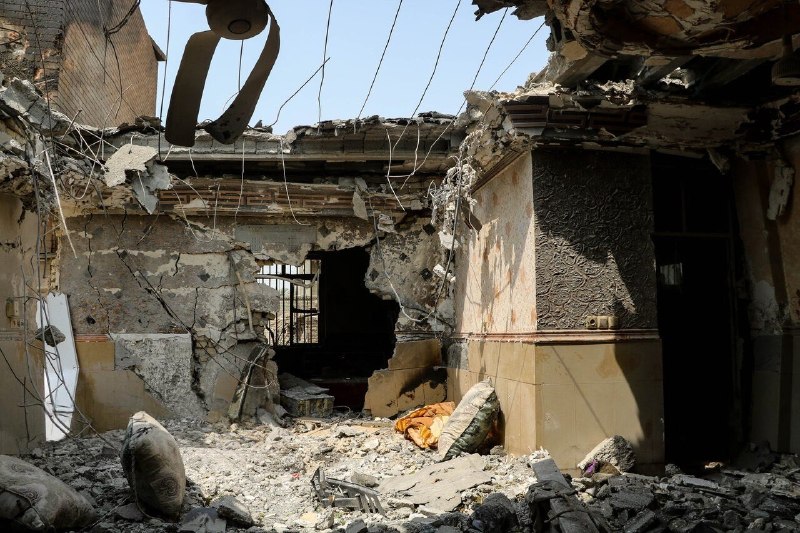
The blockade claim is the load-bearing assertion. "By the way," Trump said at 16:52 UTC, "the blockade was more impactful than all of the bombing raids, where we dropped a billion dollars worth of bombs on Iran." Read literally, that is a presidential admission that economic strangulation did the work military action could not — a confession, of sorts, that the kinetic campaign was the second instrument, not the first. It is also a tell about what concessions Washington believes it has extracted. A deal signed under conditions in which the US is publicly explaining that it could tighten the screws further is a deal in which the Iranian side is being asked to accept something close to discretionary US leverage over its population's access to food, fuel, and medicine. The "91 million people" line, when read against the blockade line, is not a humanitarian appeal. It is an invoice.
The memorandum problem
At 16:30 UTC Trump provided the closest thing to a definitional statement the day produced: "If they don't honor the agreement, or some things aren't even mentioned in the agreement — it's a memorandum of understanding, but we have an understanding of certain things without writ[ten terms]…" The structure of the deal is, in other words, intentionally partial. A memorandum of understanding is not a treaty; under US domestic law it is not even necessarily a binding executive agreement, and under international law it is, at most, an expression of political intent. Trump is telling the audience, in plain language, that the document's legal force is secondary to its political force. What is enforceable is the threat that the blockade resumes; what is verifiable is whatever the parties later agree was understood; what is auditable is, at this stage, almost nothing.
That structural choice has consequences for the deal's durability. A treaty, even a weak one, creates a legal record that future administrations must explicitly repudiate. A memorandum of understanding creates a set of talking points that any future Iranian or American government can contradict without notice. The Iranian side has reportedly accepted this arrangement; the same is true of the US side, in the sense that the White House is broadcasting that it has. The political scientist Stephen Walt has argued in adjacent contexts that informal coercion produces compliance only so long as the coercing party can credibly threaten to resume; once that credibility erodes, the agreement dissolves. Trump's afternoon was, in effect, a press conference dedicated to preserving the credibility of the threat. A blockade that is not visible cannot be reactivated as a bargaining chip; a blockade that is constantly described as "more impactful than bombing" is a blockade whose off-switch is the central question of the agreement's lifespan.
The financial shape of what is not in the deal
At 13:24 UTC, hours before the White House press availability, Polymarket's news desk reported Trump as denying a specific and consequential set of claims: that a $300 billion Iran fund existed, and that the United States was investing in it. The figure had circulated in regional reporting as a potential sweetener — a reconstruction pool, a sanctioned-channel vehicle, a sign that the deal carried an economic component beyond the unfreezing of Iranian assets already held abroad. Trump's denial is not a denial that money is changing hands, and it is not a denial of any specific mechanism. It is a denial of one term, attached to one number, on one day. That is the operational unit of disclosure in this news cycle: a term denied, the rest of the structure unconfirmed.
What that means for oil markets is what the markets themselves are saying. At 15:50 UTC, the same news cycle, oil futures briefly spiked five per cent on the deal's apparent imminence — a move consistent with traders pricing in a partial restoration of Iranian export volumes, a partial reopening of the Strait of Hormuz to sanctioned traffic, or both. A five per cent move on a single afternoon, in an asset class of this scale, is a verdict from the trading floor that something has changed in the supply expectation. Whether that something is durable depends on whether the memorandum, once signed, contains the supply-side commitments that traders are inferring from Trump's language about starvation and blockade. The markets are running ahead of the text. The text, once it appears, will either ratify the move or take it back.
The Hezbollah variable
The 16:10 UTC report that Hezbollah's leadership had declared Iran's outcome a "great victory" should be read as a third-party verification of one specific claim: that something was conceded. Hezbollah is not a neutral observer; it is an Iranian-armed and Iran-aligned political-military organisation whose standing in Lebanon is partly a function of the perception that it delivers strategic outcomes for the wider Shia axis. Its leader framing the Iran-US understanding as a victory tells the Lebanese, Iranian, and broader regional audiences that the deal is to be read as a defeat for the United States and Israel, and a vindication of armed resistance as a negotiating strategy. The fact that the Trump administration did not visibly contest the framing — the same White House that spent the afternoon insisting on its leverage is allowing an Iranian proxy to claim the opposite — is itself a signal. The US is willing to let the deal be read as a win for Iran if that is the price of Iran letting the deal be read as a win for the US.
That bargain has a half-life. Inside Lebanon, the framing strengthens Hezbollah against domestic critics who have argued that the organisation's regional entanglements produce costs without corresponding benefits. Inside Iran, the framing strengthens the negotiating team against hardliners who argued that any agreement with Washington would be a surrender. Inside the United States, the framing is being managed by Trump's own rhetoric, which insists that the blockade did the work and that Iran capitulated. All three audiences cannot be permanently reconciled. The agreement's interpretive load is being distributed, and the moment at which one of the three audiences begins to suspect it has been allocated the smallest share is the moment the deal begins to fray.
The stakes, in plain terms
The most concrete outcome of the next seventy-two hours will not be the signing ceremony. It will be the first contested interpretation of the memorandum's text, or of the text's absence. If the document is published, every clause will be litigated in real time — sanctions inspectors will look for verification language, oil traders will look for export quotas, Israeli intelligence will look for enrichment restrictions, Iranian reformers will look for asset-release schedules, and the Hezbollah-aligned press will look for a phrase that ratifies the "great victory" framing. If the document is not published, the contest will run on inference, and the White House's record of public comments about blockades, starvation, and $300 billion funds will be the only available text. The latter is the more likely outcome. A memorandum of understanding is, by design, a document whose authors do not have to agree on what it says.
The structural point is larger than Iran. The deal is being negotiated under conditions in which the United States has demonstrated, in the same news cycle, that it is willing to apply naval blockade as a coercive instrument against a country of 91 million people and to characterise that blockade, on the record, as more effective than military action. That fact, once absorbed by the foreign-policy establishments of every country currently navigating a disagreement with Washington, will shape the next decade of state behaviour. The question is no longer whether the United States will use economic strangulation as a primary tool; the question is which states will reorganise their trade, reserve, and energy architectures in anticipation of the next time it is turned on. The Iran deal is, on this reading, less a settlement than a demonstration. The signing will be the second-order event. The first-order event is the press conference that explained, out loud, how the leverage was built.
The unresolved question is whether the leverage survives contact with the agreement. Blockades work by threatening to continue. The moment the blockade is lifted in exchange for a memorandum that does not, in Trump's own characterisation, contain every term, the threat's value depreciates. The next US president — or the next Iranian one — will be negotiating from a position in which the precedent is set and the immediate pressure is gone. That is when the "understanding of certain things without written terms" will be tested. The next forty-eight hours are about signing. The next forty-eight months are about whether what was signed, or understood, or denied, will hold.
This publication framed the afternoon's three Trump statements as a single sequence rather than as three discrete news items, on the view that the contradictions between them are themselves the operative fact. Wire coverage, by contrast, has generally led with the deal's imminence and treated the blockade and "91 million" lines as colour.
Wire provenance
This editorial synthesis draws on the following public wire/social posts:
- https://t.me/ClashReport
- https://t.me/insiderpaper
- https://t.me/ClashReport
- https://t.me/ClashReport
- https://t.me/insiderpaper
- https://t.me/insiderpaper
- https://t.me/insiderpaper