A memorandum, signed in pixels: what the U.S.–Iran electronic MOU does and does not settle
A diplomatic text swapped by email has ended the war on paper but left the hard questions of enrichment, sanctions, and verification for a later round of talks.
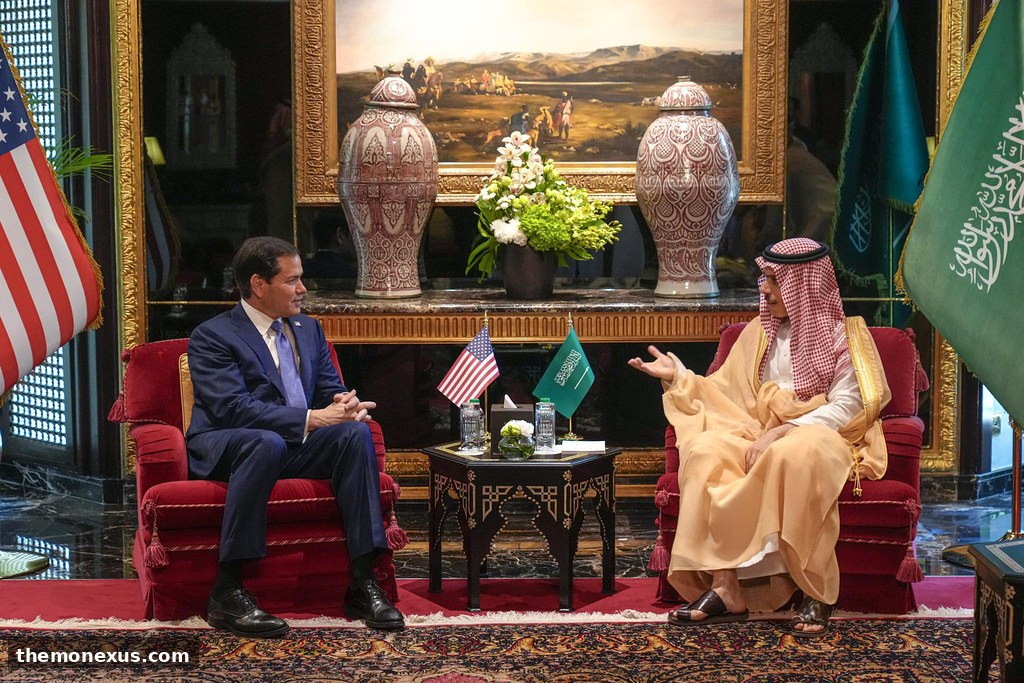
At 21:37 UTC on 17 June 2026, the United States and Iran finalised a memorandum of understanding not in a gilded foreign ministry, not in a hotel ballroom, and not in the lakeside villa where the original ceasefire was negotiated — but electronically, as a string of authenticated messages between two governments that, until hours earlier, had been trading fire. The text is in force. The war, in the diplomatic sense, is over. The hard questions of what comes next were deliberately left for another day.
The shape of that deferral is the story. What the two sides have signed is a procedural bridge: a binding text that converts a fragile ceasefire into a documented arrangement, while reserving the contested substance — enrichment levels, sanctions sequencing, verification architecture, the fate of frozen funds, and the timetable for any normalisation track — for a follow-on round. The signing was confirmed in real time by Axios correspondent Barak Ravid, whose reporting was relayed across Telegram channels and aggregators including Disclose.tv, @wfwitness and the Polymarket news desk between 21:26 and 21:37 UTC. The timing matters: the document was originally expected to be initialed in person on Friday, but the schedule was pulled forward after mediators concluded that further delay offered no political upside and several downside scenarios. President Donald Trump, asked earlier in the day whether the deal would be signed on Friday, answered only: "You never know with deals." Hours later, it was.
A text, not a treaty
The category the parties have chosen matters as much as the content. A memorandum of understanding is, in international-legal practice, a softer instrument than a treaty: it expresses political commitment and creates monitoring obligations, but does not, in most jurisdictions, require domestic ratification or congressional consent. That asymmetry cuts in two directions. It allowed the document to be finalised quickly, without the parliamentary theatre that has stalled previous rounds. It also means the political weight of the text rests almost entirely on the willingness of each side to keep acting as if it is binding — a function of leverage, face, and the cost of walking away, not of legal architecture.
The text in force from 17 June is, on the evidence available, narrower than the framework President Trump teased in the run-up to the ceasefire. Reports that the agreement contemplated a roughly $300 billion Iranian investment fund, with reported U.S. participation, were publicly denied by the President earlier in the day. Asked about the figure, Trump dismissed it as false and stated that the United States is not investing in any such vehicle. The denial does not foreclose the existence of a separate Iranian fund, regional financing arrangements, or third-party guarantees; it forecloses one specific claim about the U.S. role. It is the kind of clarification that lands when a leaked draft has overshot what negotiators can actually deliver.
The deferral list
The items the MOU does not resolve are the items that, over the previous eighteen months, brought the region closest to a wider war. Three clusters dominate.
The first is enrichment and fissile-material stockpiles. Iran has, since the breakdown of the 2015 Joint Comprehensive Plan of Action, progressively expanded its enrichment capacity, including operations at higher efficiencies than the JCPOA permitted. The MOU, on the available reporting, commits the parties to continue talks on a verification regime; it does not specify the target enrichment level, the inventory cap, or the sequencing of any rollback against sanctions relief. That is a heavy lift pushed into a later negotiating window, and the size of the lift is the single largest variable in the durability of the present arrangement.
The second is sanctions. The U.S. sanctions architecture touching Iran is layered — primary sanctions on Iranian counterparties, secondary sanctions on third-country firms, designations tied to the IRGC, the Revolutionary Guard, and the Ministry of Defence. The MOU is reported to commit to a sequenced process of relief, but the timetable, the conditions, and the legal mechanism (executive waivers, OFAC general licenses, congressional action) are not public. The question of whether the U.S. Treasury or the Department of State can, on its own authority, deliver the relief that the text implies, is the kind of detail that has sunk previous rounds.
The third is the regional security envelope. The ceasefire was negotiated against the backdrop of an active exchange of fire involving Iran, Israel, and U.S. forces in the Gulf, and against a long tail of proxy confrontations. The MOU is described as ending the war, not as reshaping the regional posture of Iran's partners in Lebanon, Iraq, Yemen, and the Gulf. How that residual network is governed — and by whom — is the question that will determine whether 17 June 2026 is remembered as a settlement or as a pause.
The mediator's hand
The acceleration of the signing is itself a piece of information. The original schedule envisaged a Friday in-person ceremony; the electronic alternative was a downgrade in optics but an upgrade in speed. Mediators, by multiple accounts relayed through the Polymarket news stream at 15:24 UTC, were pushing to bring the signing forward to as early as the same day. The argument for acceleration was straightforward: the ceasefire was holding on the ground, the political conditions for an in-person signing were not improving, and the longer the text remained unsigned, the more each side's domestic audience had time to harden around a maximalist position.
The mediator's hand, in this telling, is doing two kinds of work. It is compressing the calendar so that momentum, once generated, is not lost to incident. It is also creating distance between the announcement and the substance — a feature, not a bug, of the electronic-signing format. A deal signed by email can be characterised, in domestic politics, as preliminary. A deal signed in a hall, with handshakes photographed, cannot be walked back without a cost that no leader wants to pay. The form of the signing is a hedge against its content.
What the two sides bought
For the United States, the MOU converts a tactical halt into a strategic pause. The military bill of the preceding months — operations in the Gulf, the deployment cycle around the Fifth Fleet, the cost of forward presence in Iraq and the Levant — was rising in ways that the budget arithmetic of 2026 could not sustain indefinitely. A text that stops the kinetic clock, even if it does not resolve the underlying disputes, is a procurement document as much as a diplomatic one. It allows the Pentagon to draw down surge deployments, allows the Treasury to begin the legal work of sequenced waivers, and gives the White House a narrative line that does not require a victory declaration.
For Iran, the MOU produces something rarer: an explicit, dated entry by the United States into a negotiation that Iran has insisted, on and off for two decades, must take place. The text does not concede any of Iran's red lines on enrichment, on the legal character of its nuclear programme, or on the legitimacy of its defensive industries. It does require Iran to accept, in exchange, a process — verification, monitoring, the presence of inspectors on terms yet to be agreed. The wager is that a process is more controllable, and more reversible, than the alternative: a kinetic cycle in which every round of escalation is harder to climb down from than the last.
The losers, on the available evidence, are the actors whose leverage depended on the war continuing. A regional security industry — private military contractors, the lobbying architecture around sanctions enforcement, the political coalitions that built around maximalist positions in several Western capitals — loses a constituency. The Israeli security debate, which had oriented itself around the proposition that the only acceptable end-state was the complete denuclearisation of Iran's programme, has to absorb the fact that a U.S.-brokered text is now the operative baseline. That absorption will not be graceful.
The structural frame
What 17 June reveals, in plain terms, is the durability of the old logic of great-power deal-making in the Middle East. The U.S. and Iran do not share a border, do not share a language of statecraft, and do not share a body of custom on how nuclear questions are settled. They do share a vocabulary of escalation and de-escalation that has been refined across five decades, and they have, in this round, used it competently. The MOU is a product of that vocabulary. It does not represent a break with the past; it represents the past's most recent working compromise.
The harder question is whether the working compromise can be embedded in a regional order that the parties around them — Israel, the Gulf states, Turkey, the Iraqi state, the Levantine parties — are willing to live inside. The MOU does not, by its own terms, address them. It is, in form and in declared scope, a bilateral instrument with a regional effect that the parties have not yet agreed to manage. That is the next negotiation, and it has not begun.
The honesty paragraph
The sources available to this publication at the time of writing are dominated by real-time wire and aggregator reporting — the Axios scoop, the Polymarket news desk, and the Telegram channels that relayed them. The full text of the MOU has not, as of the publication of this article, been published. The dollar figure associated with a possible Iranian fund was denied by the President but the underlying vehicle, if it exists, has not been described in detail. The enrichment target, the verification architecture, the sanctions timetable, and the regional security framework are all reported as items for a later round; they are not in the text as signed. Readers should treat the present arrangement as a procedural bridge, not as a settlement of the underlying disputes. The ceasefires that hold are the ones whose terms the parties can describe to their own publics without losing office; the present text, deliberately, has not yet been put to that test.
— Monexus will continue to track the verification negotiations, the Treasury's sequenced-relief work, and the regional response as the next round of talks takes shape. The structural question — whether the MOU is the spine of a new arrangement or the polite preamble to the next escalation — will be answered in the coming months, not in the document signed in pixels on the evening of 17 June 2026.
Wire provenance
This editorial synthesis draws on the following public wire/social posts:
- https://t.me/disclosetv
- https://t.me/wfwitness
- https://en.wikipedia.org/wiki/Memorandum_of_understanding
Follow the event.
These dated source records provide context. They do not retrospectively verify this archive article.
Separate what the nuclear watchdog reported from what it could not determine after the June 2025 strikes.